The Grand Spanish Tour
from $27,200 per person
San Sebastián guide
Pintxos at the bar, tasting menus in the hills, and the fish, cheese, cider and txakoli of the coast between them.
By Ramin Jafari · Facts checked
San Sebastián eats pintxos at the bar, the gilda first, and the fish of its coast, with Idiazabal cheese, a txuleta from the grill, bacalao al pil pil and the burnt cheesecake of La Viña, and a glass of txakoli or cider. Its kitchens run from the counters of the Parte Vieja to three restaurants with three MICHELIN stars. This guide covers the dishes, the tables we would point you to, and the market, the wine and the cider, with what we can arrange around each.
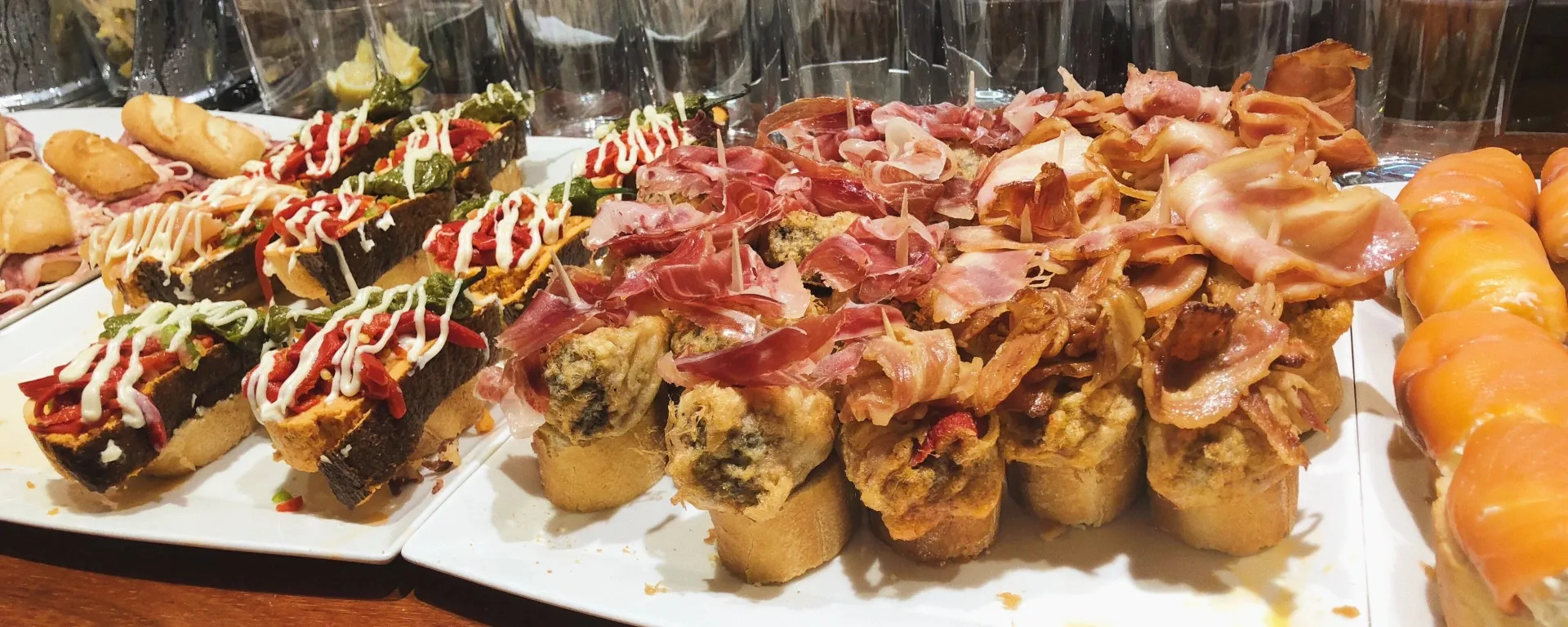
Basque cooking at both ends, the pintxo at the bar and the tasting menu, built on the produce of the sea and the hills.
Going out for pintxos is the city’s own tradition: several bars, one or two pintxos at each, and whatever is on the counter or the blackboard. The best known is the gilda, an olive, a guindilla pepper and an anchovy on a stick, named, the story goes, after Rita Hayworth’s film of the 1940s. The tourist board counts 19 MICHELIN stars within 25 kilometres of the City Hall, and the same produce runs from the bars to those dining rooms, simple at one end and inventive at the other.
That produce is the sea’s and the hills’: the hake, and its kokotxas, the barbels under the jaw that the MICHELIN Guide calls one of the finest dishes of the Basque kitchen; the wild mushrooms that fill the markets in autumn; and Idiazabal, the cheese made from the raw milk of Latxa and Carranzana sheep, smoked or not. Among the dishes to know, too: the txuleta, the beef chop from the grill, bacalao al pil pil, and the burnt cheesecake Santiago Rivera created at La Viña.
The city also cooks in private, in its gastronomic societies, the members’ kitchens of the old town. The tourist board’s own experience opens one to a small party for a three-hour lunch, cooking with the members or watching from the table, which we can arrange for you, subject to availability.
A selection, from three-star tasting menus to a pintxo counter. We reserve these, and others, around your plans.
Alto de Miracruz, east of the centre
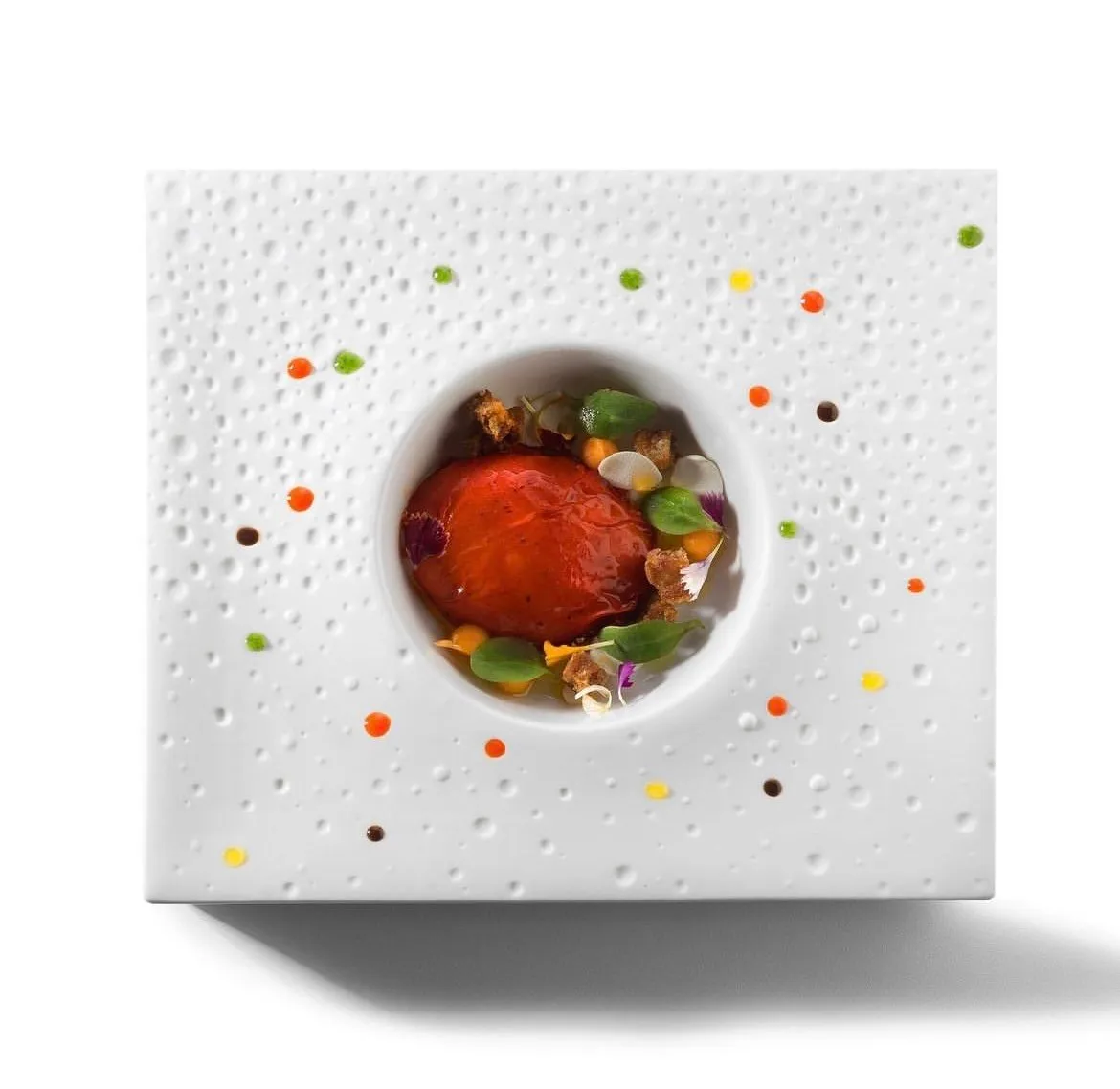
Juan Mari Arzak and his daughter Elena run the restaurant in the house his grandparents built in 1897 as a wine cellar and tavern, which his mother made a dining room of Basque and Donostian cooking. He was one of the cooks who founded the New Basque Cuisine in 1976, and the house won its third MICHELIN star in 1989. The Guide describes a laboratory with a flavour workbench of more than a thousand ingredients, a tasting menu with wines to match or a seasonal carte, and a list of more than 3,000 wines.
Monte Igeldo, over the Bay of Biscay
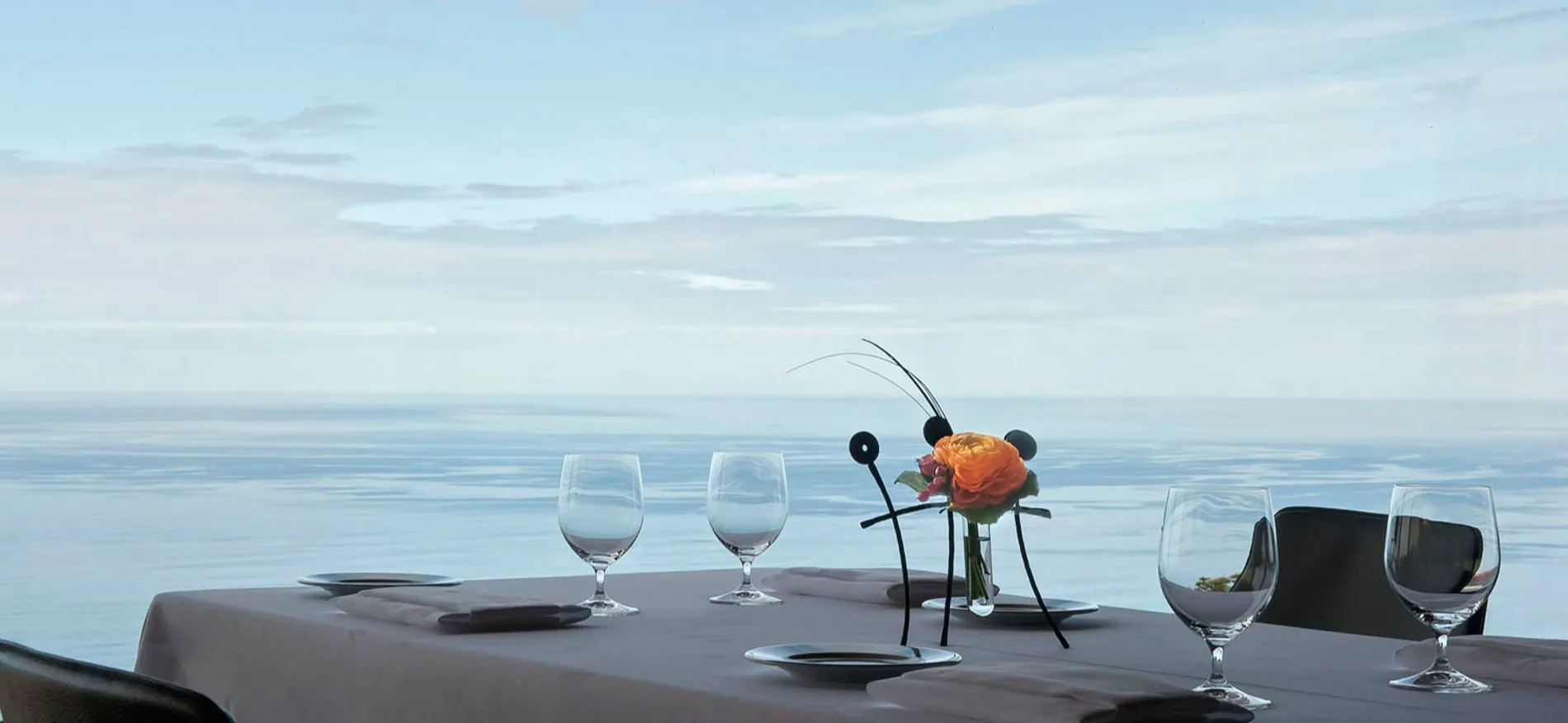
Pedro Subijana, one of the founders of the New Basque Cuisine, cooks in the house on the slope of Monte Igeldo that is also Hotel Akelarre, with the Bay of Biscay below the windows. Two tasting menus, whose dishes can be combined with the staff’s advice, and a cellar of more than 700 wines.
Parte Vieja
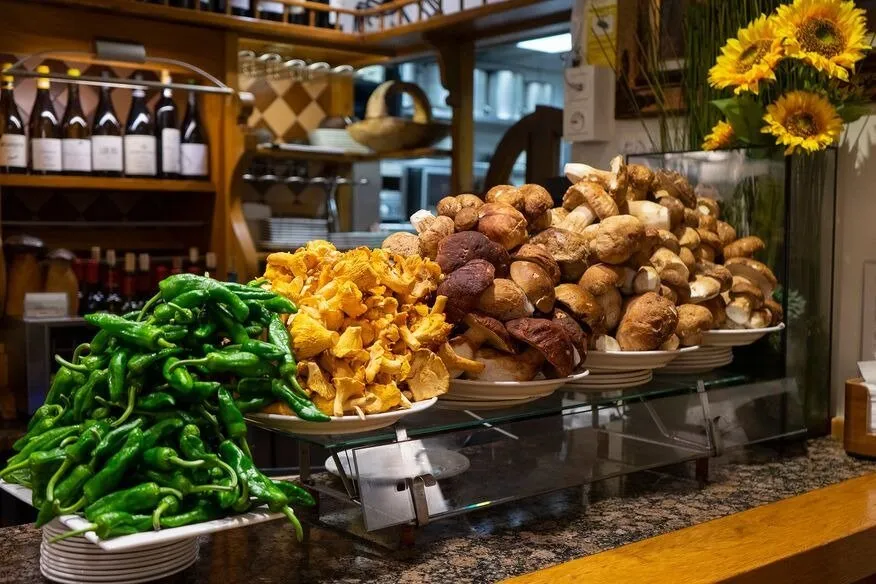
Founded by Jose and Amaia on San Jerónimo as a Basque bar with a counter of pintxos and a restaurant built on good produce, Ganbara is still one of the leading addresses of the Parte Vieja. The MICHELIN Guide credits the quality of its pintxos for its success, and below the bar keeps an intimate dining room in the cellar.
The road up Monte Igeldo
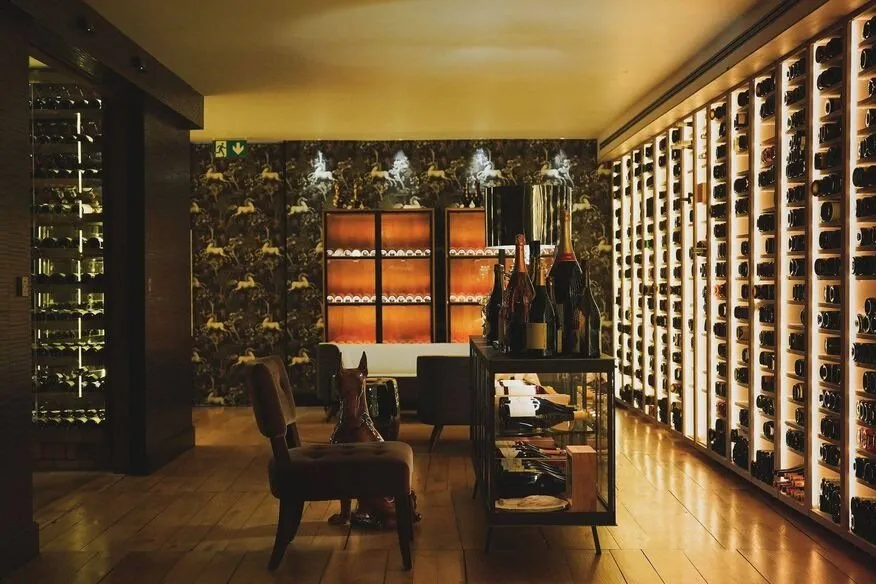
A farmhouse on the slope up to Monte Igeldo, in the MICHELIN Guide for Basque cooking that keeps to tradition while it evolves, and known above all for its cellar: thousands of bottles from more than twenty countries, built up since Txomin Rekondo turned his love of wine into his life in 1964, with Martín Flea as its sommelier. The terrace looks over La Concha Bay.
Hondarribia, about 23 km east
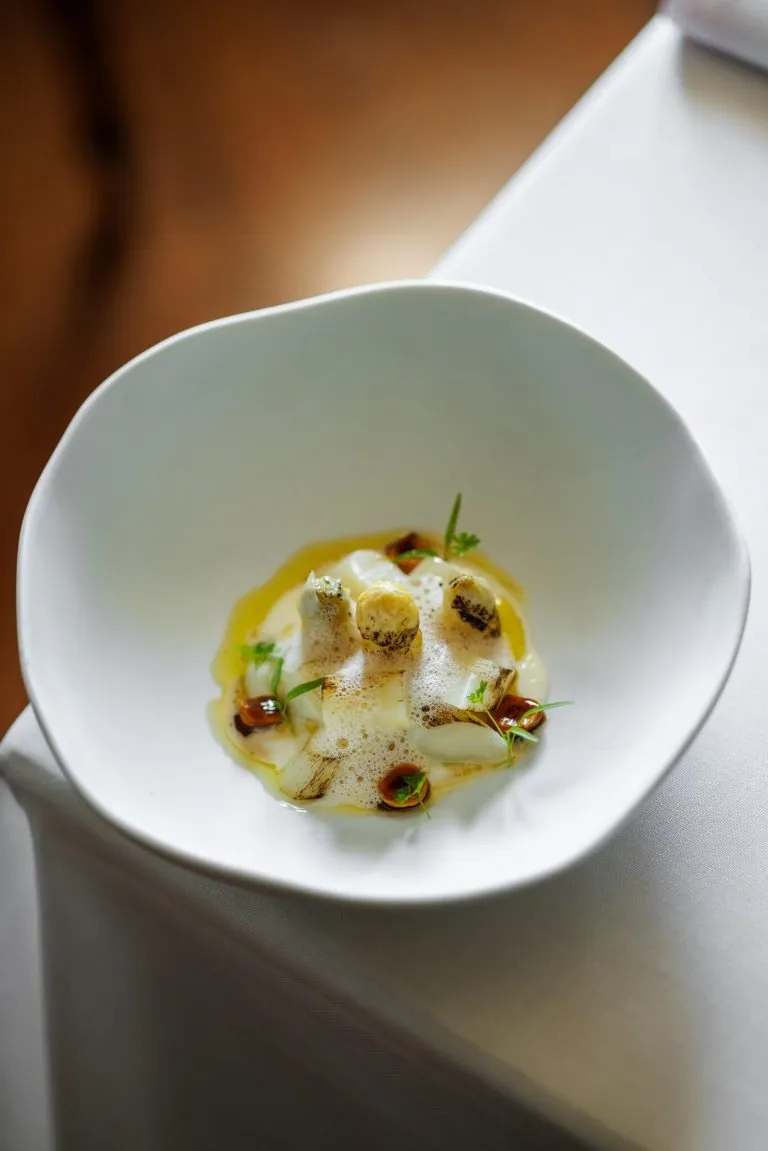
The Txapartegi brothers, Gorka and Kepa, cook by their grandmother Julia’s rule that the shorter the distance between the soil and the stove, the better: what they call Bidasoa cooking, Basque tradition from a contemporary angle, with the charcoal grill and aged fish at its heart, a cheese trolley and a terrace. A taberna and a gastronomic dining room share the house, and Hondarribia’s old town of palaces and emblazoned houses is worth the afternoon.
The market, the wine of the coast and the cider of the hills: each can fill a morning, or a day out of the city.
The Parte Vieja, on the Boulevard
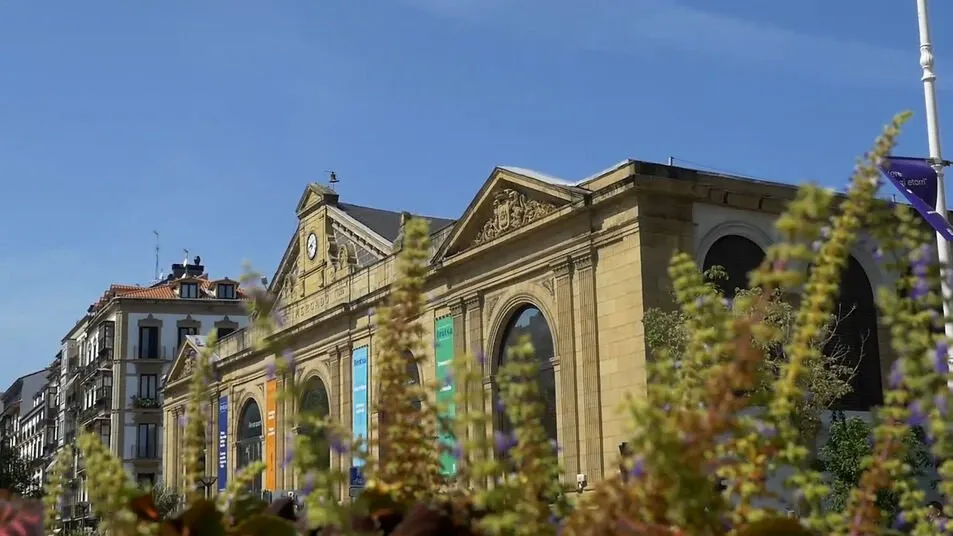
The old town’s market takes its name from the breach in the city walls through which Anglo-Portuguese troops took San Sebastián on 31 August 1813, and dates from 1870, with a fish hall behind. The tourist board describes traditional stalls of small local producers, homemade cheeses and wild mushrooms among them, and the city’s best-known chefs choosing their produce here and at San Martín beside the residents. A morning there with a guide and a tasting, on request.
Getaria, about 25 km west
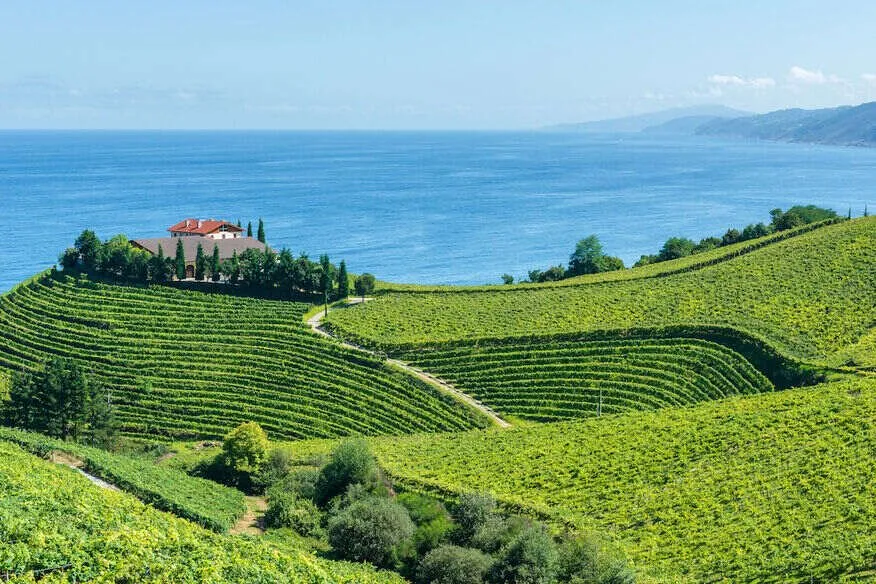
The white wine of the coast comes from the vineyards around Getaria, a Denominación de Origen since 1989, and its makers pour it with salted anchovies and bonito in oil when you visit their wineries. A private visit to a family winery, with a tasting, on request; Getaria, the fishing town of Elcano and Balenciaga, is a day out in itself.
Astigarraga and Hernani, inland
In the orchards inland, mainly at Astigarraga, Hernani, Urnieta and Usurbil, the cider houses keep the txotx: the new cider poured straight from the barrel into the glass. They are open throughout the year, and from mid-January to late April, the txotx season, is when the city goes. A dinner at one, on request.
Further south, about 140 kilometres by road, lies La Rioja, Spain’s first Qualified Designation of Origin, with the Rioja Alavesa on the Basque bank of the Ebro: see our La Rioja page and wine tasting in Rioja, and, to compare it with the Ribera del Duero, wine travel in Spain.
from $27,200 per person
from $16,800 per person
from $15,300 per person
When to go, where to stay, the food, the sights and three days in the city.
Pintxos and three-star tables, the bay under sail, the Belle Époque city, Getaria and La Rioja.
Four days, day by day: the bay, the market and the old town, Getaria, and San Telmo.
Season by season and month by month, with the festivals, the crowds and the rain to plan around.
Beyond San Sebastián: our culinary and wine tours across Spain, our guide to Spanish gastronomy, the best wine regions of Spain, and luxury hotels in Spain.
Tell us your dates and who is travelling. Everything else we can work out together.
Plan your San Sebastián trip Our San Sebastián page
Usually answered within one business day.