Guía de Isora
The Ritz-Carlton Abama
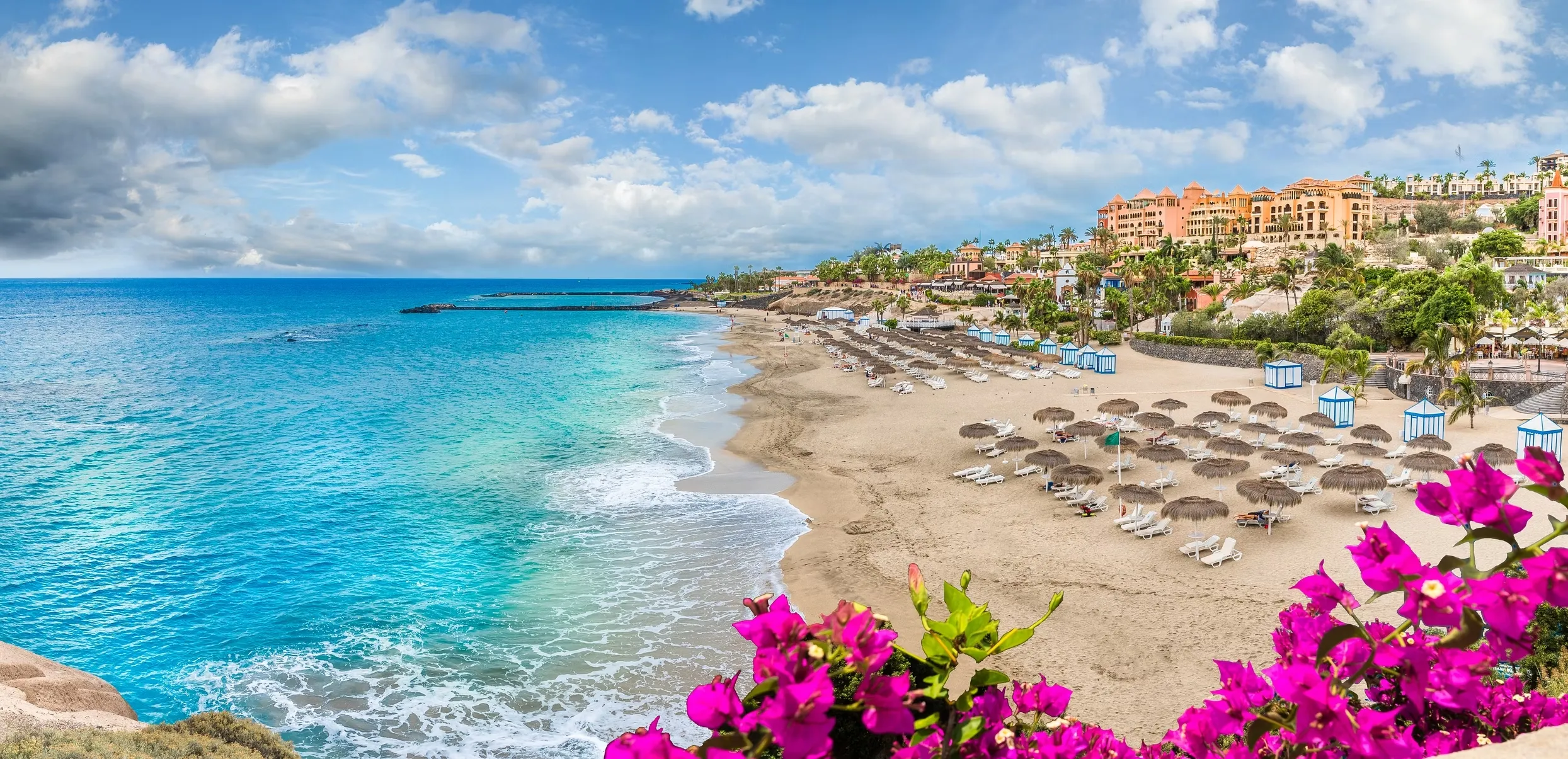
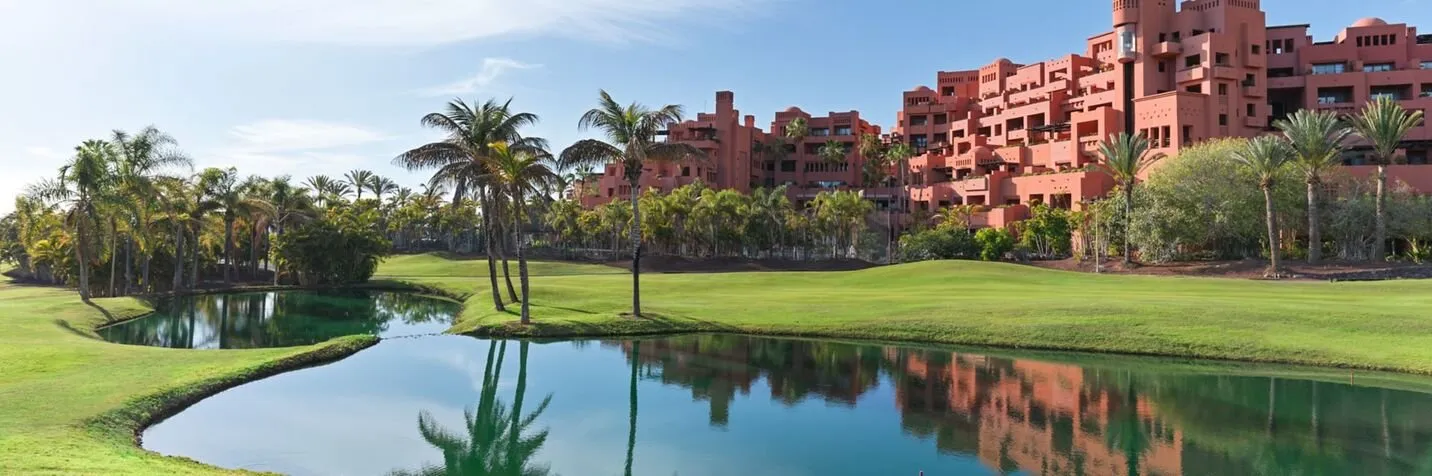
A terracotta citadel above its own beach at Guía de Isora, with 462 rooms and villas in a 400-acre estate, ten places to eat and Dave Thomas's course in the grounds.

Spain
One island, or several in one journey.
Plan your trip to the Canary IslandsExplore the Canary Islands
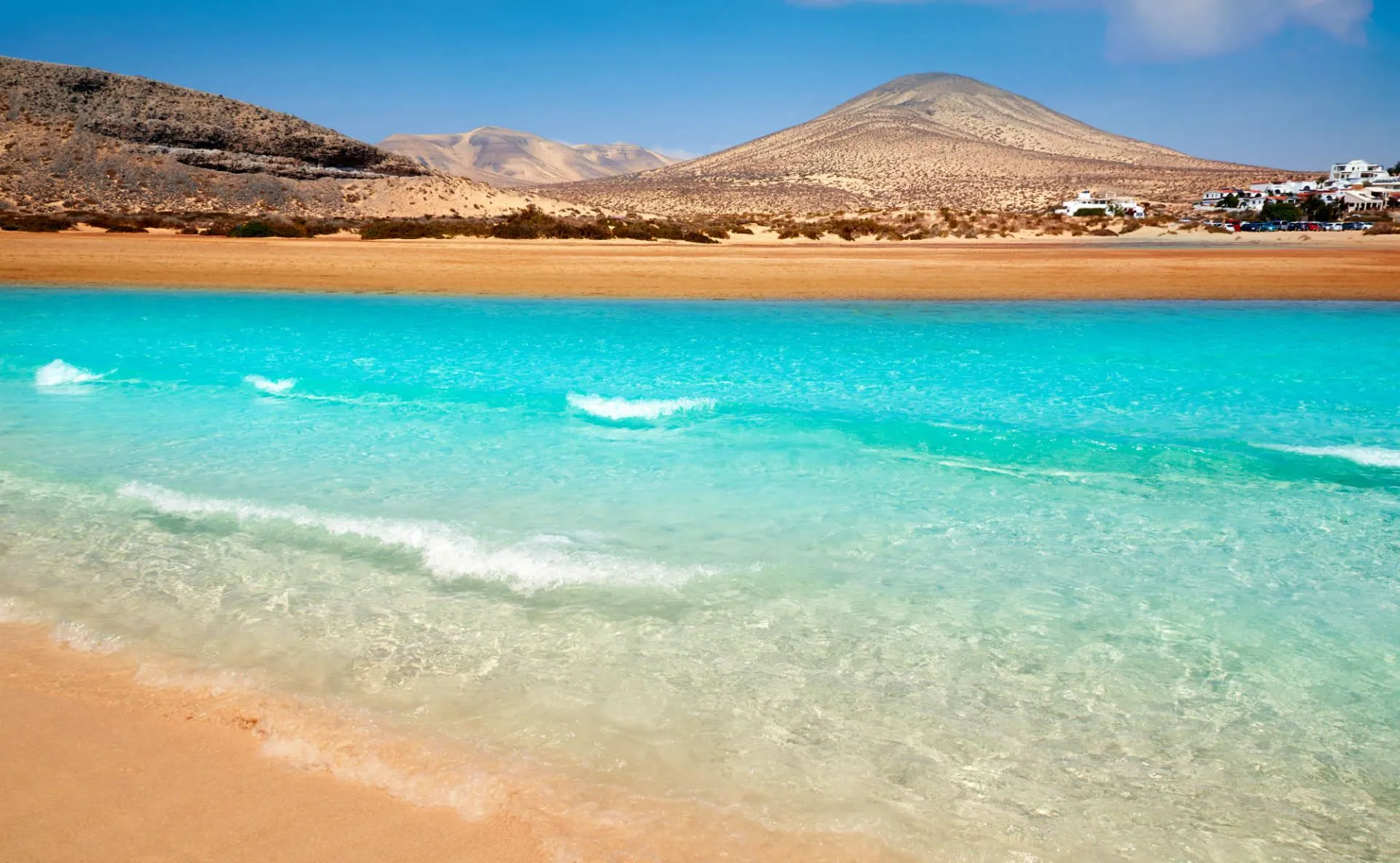
The lagoon at Sotavento, Fuerteventura
Eight Atlantic islands off the coast of north-west Africa, each with its own character: volcanoes and laurel forest, long sandbars and black-sand coves, and some of the clearest night skies in Europe. Avelia plans private, tailor-made time in the Canary Islands.
01Where to go
Tenerife and Lanzarote have a guide of their own here. We arrange the other six just as readily — they simply have no page on this site yet, and the note below each says what they are like.
Island
Gran Canaria
A continent in miniature, with Las Palmas and its old quarter in the north, ravines and pine forest in the middle, and the Maspalomas dunes in the south; the Risco Caído cultural landscape has been on the World Heritage List since 2019, and 43 per cent of the island is a biosphere reserve. Best for a city and a beach on the same island.
Island
Fuerteventura
The oldest and second largest island, low, open and dry, with more than 100 km of undeveloped coast on its west side and the long sandbars of Jandía in the south; a biosphere reserve since 2009. Best for beaches, wind and water sports, and space.
Island
La Palma
The green, steep island: laurel forest, a volcanic ridge and the Roque de los Muchachos at 2,426 m, high enough for one of the northern hemisphere's observatories; the whole island has been a biosphere reserve since 1983. Best for walking and for the night sky.
Island
La Gomera
Small, round and cut by deep ravines, with Garajonay National Park at its centre — a laurel forest that has almost disappeared from southern Europe and North Africa, on the World Heritage List since 1986 — and the whistled language Silbo Gomero, listed by UNESCO in 2009. Best for walking and for quiet.
Island
El Hierro
The smallest and most westerly, a biosphere reserve since 2000 that has run on its own wind and water since 2014, with cliffs, juniper bent flat by the wind and some of the clearest diving in the archipelago. Best for getting away from everything.
Island
La Graciosa
The eighth island, reached by boat from Órzola on Lanzarote: the only inhabited island of the Chinijo archipelago, inside the largest marine reserve in the European Union at 700 km². Best as a day out from Lanzarote, or a night or two of nothing at all.
02Inspiration
Each of these is arranged privately for your dates, subject to availability.
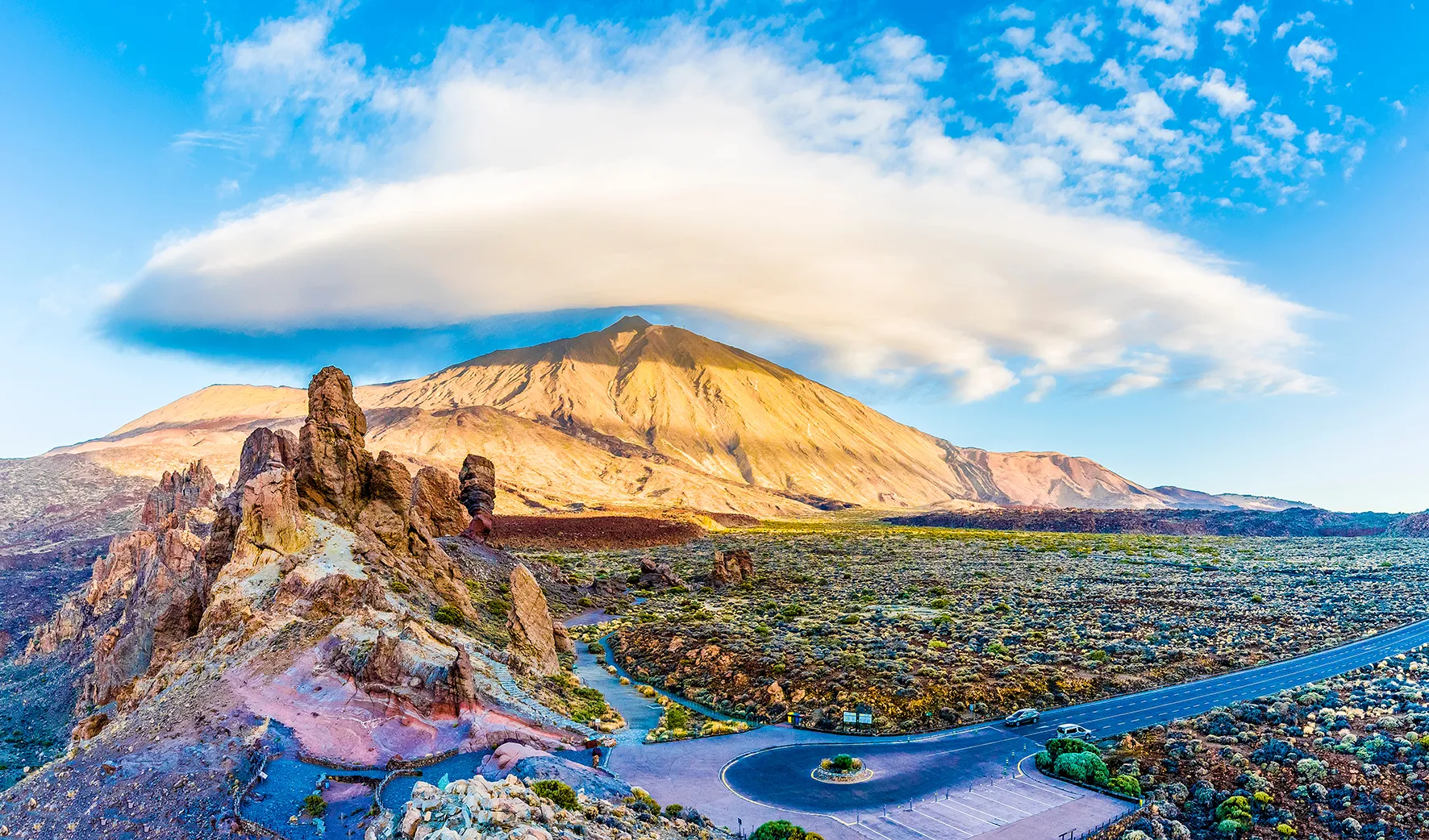
Spain’s highest mountain, one of the world’s largest historic lava fields, and skies dark enough for a telescope.
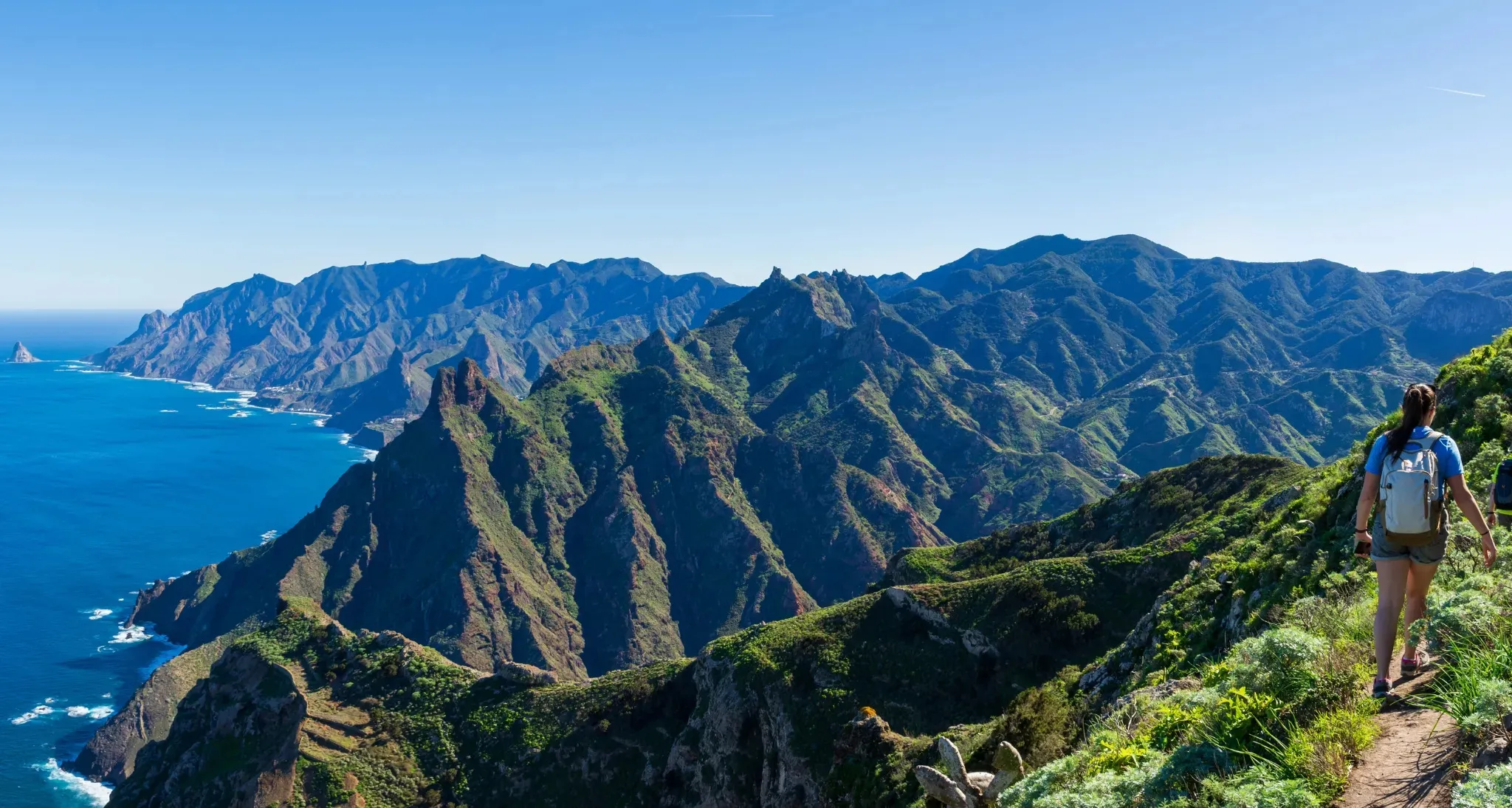
Laurel forest that has all but vanished elsewhere, ridge paths above the sea, and gardens made out of quarries and lava.
Days on the water — sailing, diving, whales — and the islands’ own cooking, from volcanic wines to fish landed that morning.
03Featured hotels
Three places we recommend across the islands, on Tenerife and Lanzarote. We arrange stays on the other six just as readily.
Guía de Isora
A terracotta citadel above its own beach at Guía de Isora, with 462 rooms and villas in a 400-acre estate, ten places to eat and Dave Thomas's course in the grounds.
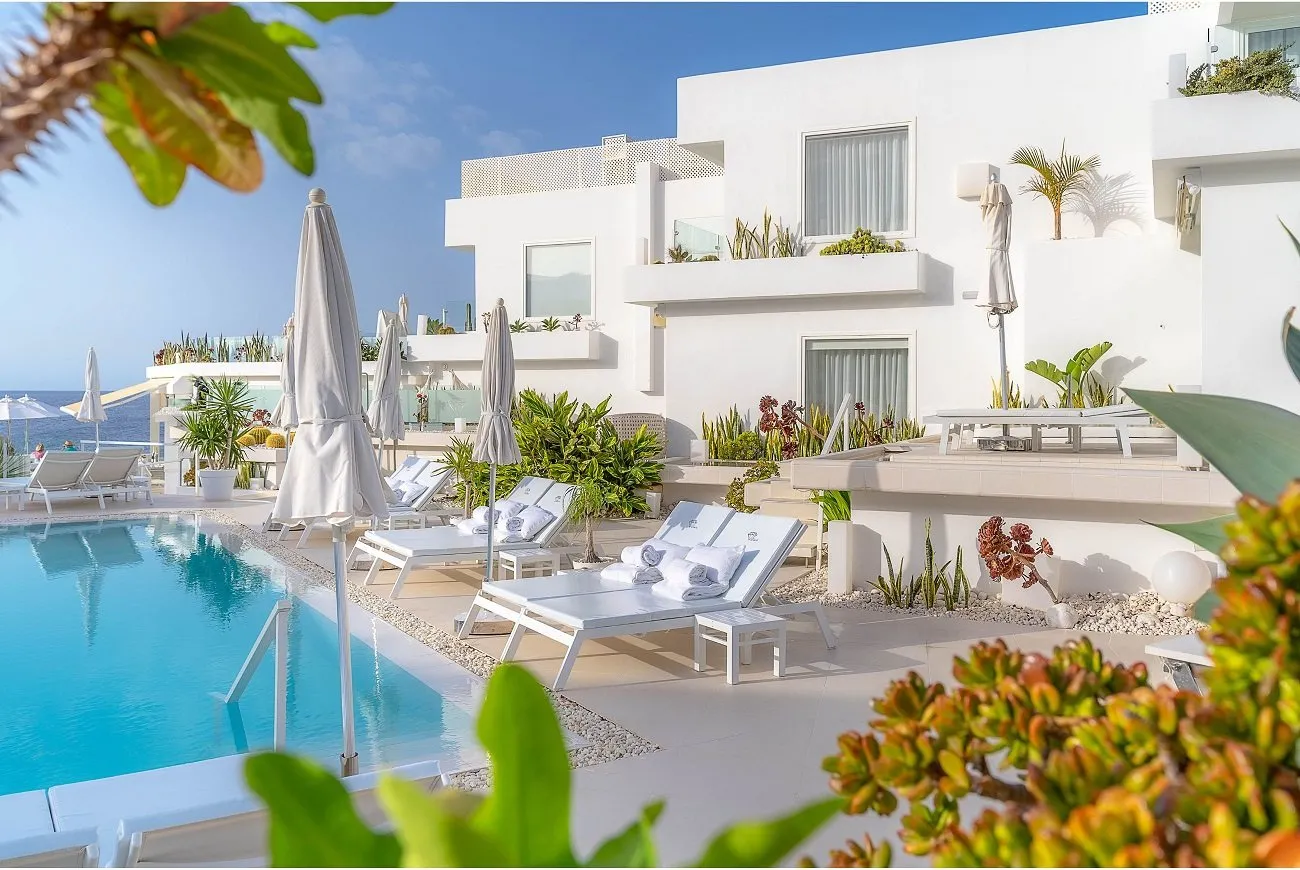
Puerto del Carmen
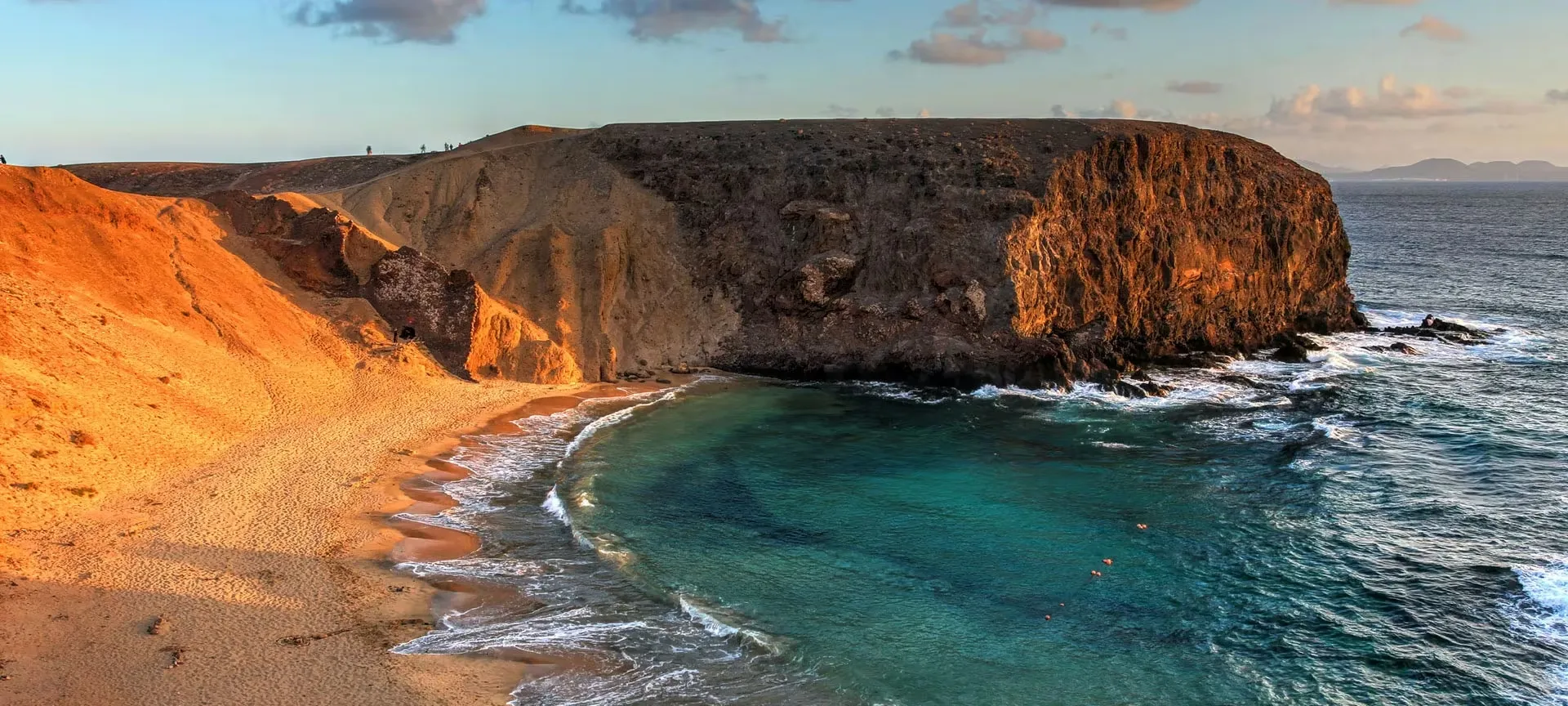
Twenty-five suites on the seafront at Puerto del Carmen, all facing the sea, most with a private terrace and a jacuzzi, and a gourmet restaurant at the water's edge.
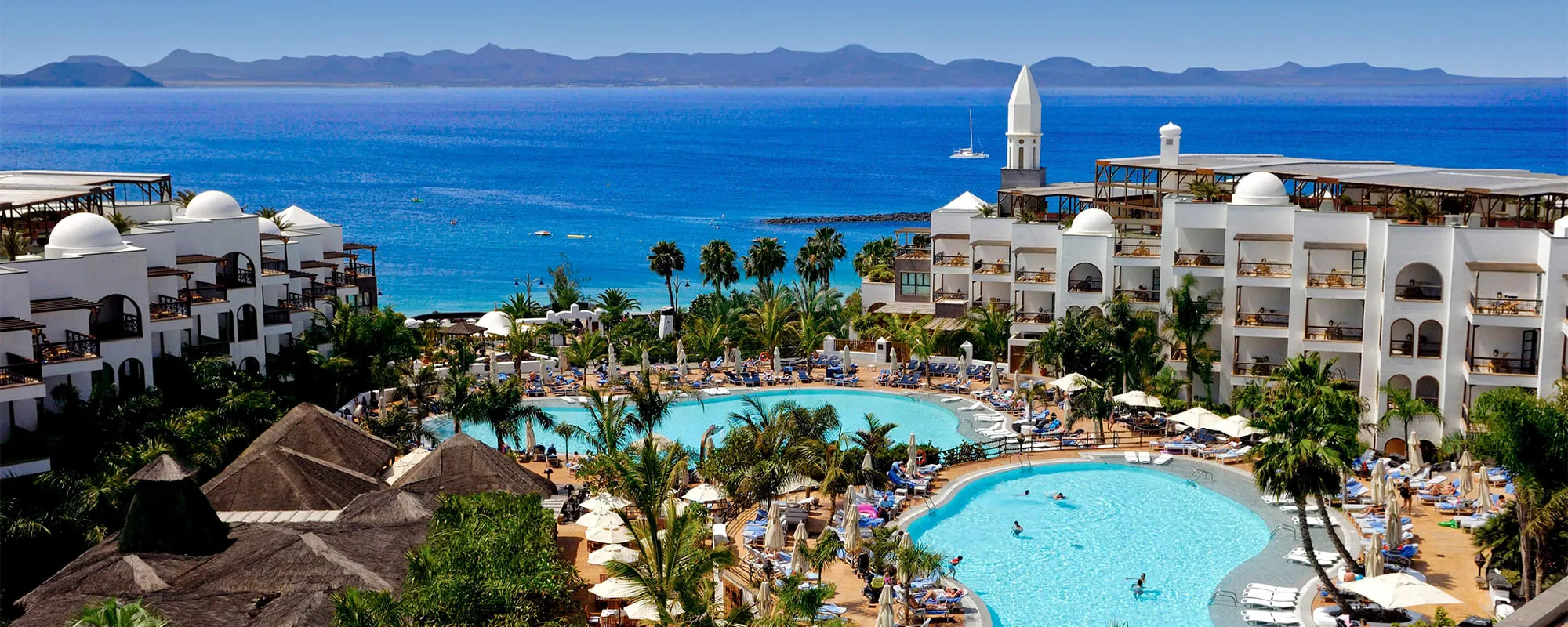
Playa Blanca
A five-star Lujo suite resort of 330 suites on the seafront at Playa Blanca, with nine restaurants, a thalassotherapy centre and a large open-air children's park.
| The Ritz-Carlton Abama | Lani's Suites De Luxe | Princesa Yaiza | |
|---|---|---|---|
| Area | Guía de Isora | Puerto del Carmen | Playa Blanca |
| Setting | Above its own beach at Guía de Isora, on the south-west coast | On the seafront at the east end of the Avenida de las Playas | On the seafront promenade at Playa Blanca |
| Star category | Five-star Gran Lujo | Not confirmed | Five-star Lujo |
| Rooms | 462 | 25 suites | 330 suites, from 55 m² |
| Beach | Abama Beach, 100 m of golden sand, by funicular or on foot | The small beach of La Peña del Dice below the terrace | On the beachfront at Playa Dorada |
| Pool | Several outdoor pools, including a lagoon pool and one among the villas | One pool between the two wings, with a solarium above the shore | Not confirmed |
| Spa and wellness | A 2,500 m² spa and fitness centre, with a thermal circuit | Lani's Salon, a beauty and health centre, and a fitness room | Thalassotherapy centre; gym, tennis, padel, football and basketball courts |
| Dining | Ten places, including M.B, which holds two MICHELIN stars | Lani's Gourmet Restaurant, at the water's edge, open to non-residents | Nine restaurants, with produce from the group's own Finca de Uga |
Facts from the hotels' official websites and official tourism sources, checked 1 October 2026. A dash means we have not confirmed that detail.
Map data © OpenStreetMap contributors
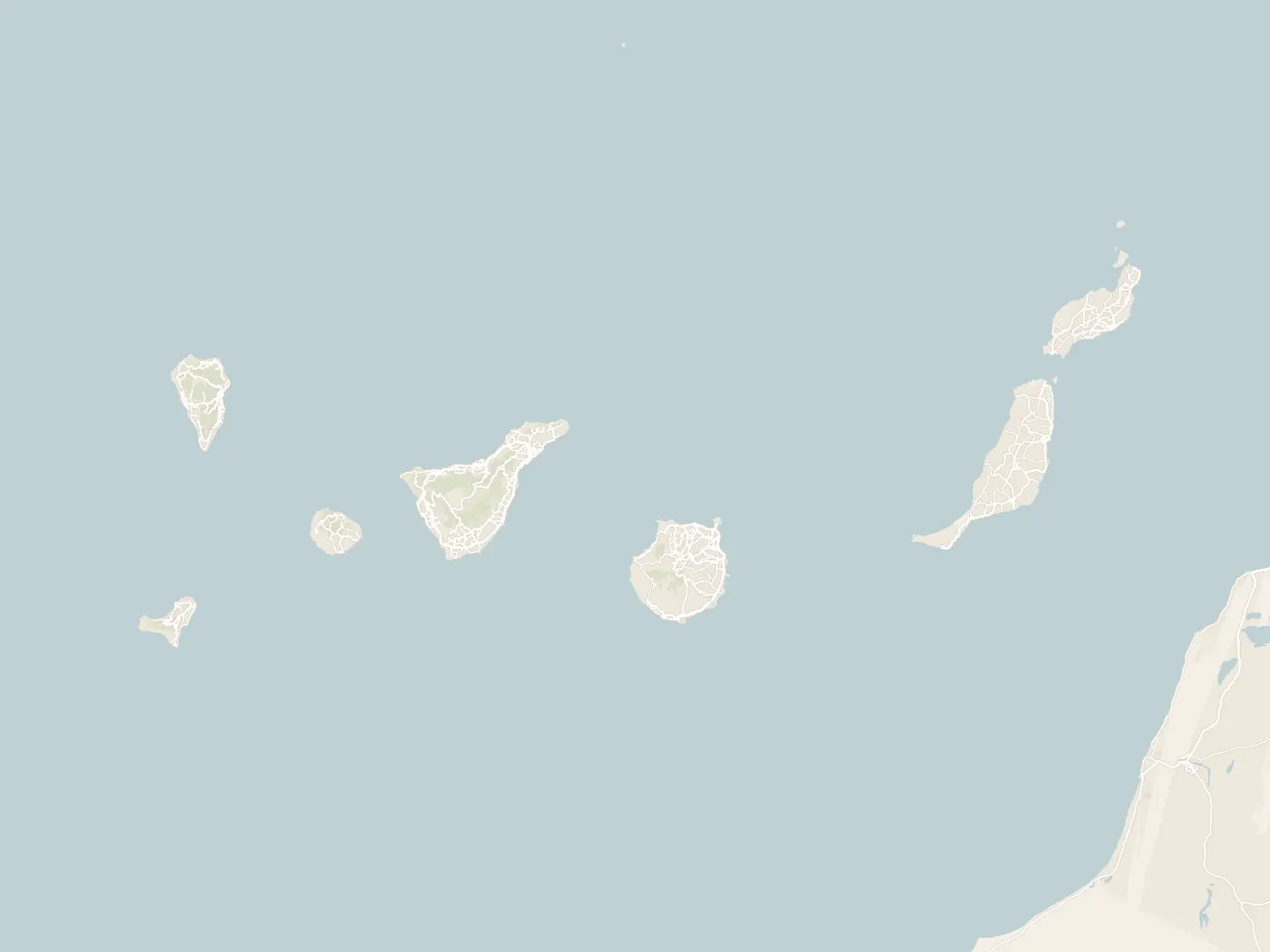
The map is the archipelago rather than one island: our three featured hotels, the four national parks — Teide and Garajonay on the western islands, Timanfaya and Caldera de Taburiente — and, under “Show places”, the four airports that fly you in. The islands run roughly 500 km from El Hierro in the west to Lanzarote in the east, which is why the hops between them are short.
04Seasons
Warm, dry and clear: highs of about 23–25°C (73–77°F), with rain falling to almost none. The best weeks for walking, and for the tajinastes in flower on Teide.
EventsDía de Canarias on 30 May, a public holiday across the archipelago, with folk music, dancing and craft fairs.
Hot, dry and reliably sunny, with average daytime highs from 26°C (79°F) in June to 29°C (84°F) in August and essentially no rain on the eastern islands. The season for the water.
Busy: the school holidays are the islands' busiest weeks, and the trade winds blow hardest now — welcome on the beach, less so at a table outside. We reserve boats and tables well ahead.
The sea is at its warmest and the light softens: highs ease from about 29°C (84°F) in September to 24°C (75°F) in November, with the first rain in October.
The mildest winter in Spain: highs of about 21–22°C (70–72°F) and the year's rain, on three or four days a month. The high ground can have snow while the coast is in shirtsleeves.
EventsCarnival, from February, with parades and street bands in Santa Cruz de Tenerife, Las Palmas and Arrecife, then in the smaller towns on the following weekends.
Island by island: our Lanzarote page and our best time to visit Spain guide.
05Shape your trip
Each route is a starting point, tailored to you.
4days
7days
10days
06In their words
Our experience in visiting five islands over four weeks was seamless. The suggested itinerary was thoughtful and collaborative.
Andrew Chiodo
His recommendations on accommodations, restaurants, hiking and biking guides, tour guides, etc. were spot on. We truly enjoyed this trip, and this was due in great part to Ramin's efforts.
Paul Oetter
07Planning with Avelia
We help you choose which island to start from, whether to add a second or a third, and how to move between them — then shape the days on each one around what you actually want from them.
Tell us your dates, interests, preferred pace and any practical requirements.
We prepare a tailored proposal and refine it with you, with a quoted trip price and clear inclusions.
Once you approve the proposal and complete the agreed booking requirements, we confirm your arrangements. We coordinate the details and support you while you travel.
Your proposal sets out the arrangements included in your trip.
08Questions
Every trip is priced individually. After discussing your plans, we prepare a tailored proposal with a quoted trip price and a clear outline of what is included.
Seven to ten nights suits most trips. If you want more than one island, two or three is the balance we recommend: each move costs most of a day once transfers, crossings and check-in are counted. With a single week, one island and a day trip is usually the better trip.
Any month works — this is the mildest winter in Spain, and the summer is dry rather than punishing. March to May and September to November are the most comfortable for walking and sightseeing; June to August is the beach and boat season, and the busiest.
Yes, and it is a common shape: a few days in Madrid or Andalusia at one end, then the islands. The four main island airports have direct flights from across Europe and from the Spanish mainland, so the change of pace does not cost a whole day. Our luxury trip planning page explains how a multi-stop trip comes together.
Yes. The sea is warm all year, the drives are short, and the volcanic landscape and the whale-watching hold children’s attention. We plan the days around who is travelling, and we say plainly when a hotel is adults only. See our luxury family trips to Spain.
A driver on each island for the days out, and flights or ferries between islands: the hops are short, and the ferry is often the better choice between neighbours, such as Lanzarote to Fuerteventura, which crosses in 25 to 35 minutes. Private boat transfers and helicopter flights can be arranged where they save real time or are worth taking for themselves.
The Canary Islands are part of Spain and of the Schengen area. Citizens of the United States and the United Kingdom do not need a visa for tourism for stays of up to 90 days in any 180-day period. Longer stays, or travel for work, study or residence, need a visa arranged in advance. Visa-free visitors also meet the EU’s Entry/Exit System, which since April 2026 registers fingerprints and a photograph at the border in place of a passport stamp, and will need ETIAS, an online travel authorisation the EU is introducing; the EU’s own travel-europe.europa.eu page gives its current status. Check your own nationality’s requirements before you book.
Both. We plan complete trips, and we also arrange a stay on its own: a hotel matched to you, with transfers, a guide or a few reservations added if you wish.
Avelia suits travellers who want a private, well-paced trip planned around them: the right island and the right hotel, guides who know the ground, tables and tickets taken care of, and one point of contact from the first conversation until you are home.
Tell us your dates and who is travelling. Everything else we can work out together.
Plan your trip to the Canary Islands
Usually answered within one business day.