The end of the Camino de Santiago, in green Galicia: the Cathedral and its
Pórtico de la Gloria, an old town on the World Heritage List since 1985, the
Mercado de Abastos, and the Atlantic coast beyond. Avelia plans private,
tailor-made time in Santiago, as a stay of its own or as part of a wider
journey through Spain.
Each of these is arranged privately for your dates, subject to availability.
The Cathedral
The Cathedral with a private guide: Master Mateo’s Pórtico de la Gloria, the baroque Obradoiro, the museum and its Renaissance cloister, and the stone roofs, climbed with the Cathedral’s own guides.
More of the Cathedral
The Pórtico de la Gloria — Master Mateo’s portico of painted granite, its lintels set in place on 1 April 1188; numbers inside are limited, so we reserve the visit as soon as your dates are fixed. See the Cathedral among our 12 treasures of Spain.
The Obradoiro — the baroque west front Fernando de Casas built between 1738 and 1750, framed by the bell tower and the Carraca tower, above the square it names.
The roofs — the Cathedral’s own guided hour over its stepped stone roofs and up the Carraca tower, some 72 m high; usually in Spanish, other languages on request.
The museum and the Pazo de Xelmírez — the Cathedral’s collection and treasury around its cloister of 1521–1559, and the medieval palace beside it, its great hall carved with a royal banquet.
By night — the Cathedral’s own night visit, about 90 minutes inside the basilica with its specialists, the Pórtico de la Gloria and its gallery included.
The botafumeiro — the great censer, 53 kg and swung by eight men, flies only on the feast days the Cathedral publishes, and is out of use during the present restoration; we check its calendar before you travel.
San Martiño Pinario — the Benedictine monastery facing the Cathedral, founded soon after the Apostle’s tomb was found; its church is, with the Cathedral, the finest of Galician baroque. Its cloisters with a guide, on request.
The old town and its table
The old town on foot with a guide, the Mercado de Abastos with a chef, the taverns of the Rúa do Franco and the Raíña, a tasting menu at a Michelin-starred table, and the Museo do Pobo Galego.
More of the old town and the table
The old town with a guide — squares and narrow streets of Romanesque, Gothic, Renaissance, baroque and neoclassical buildings, on the World Heritage List since 1985, on a private walk.
The Mercado de Abastos with a chef — the city’s market, built in 1941 and its most visited place after the Cathedral: shellfish, fish, cheese and farm produce in the morning, then a cooking class with what you chose.
The Franco and the Raíña — two parallel streets of taverns, the Franco’s going back to the inns that fed medieval pilgrims, where the house wine still comes in cups with a generous tapa; with a local expert.
Michelin-starred tables — a tasting menu at one of the city’s starred restaurants, or an evening across several tables, from pulpo á feira to modern Galician cooking, reserved ahead.
The Museo do Pobo Galego — the museum of Galician life, open since 1977 in the convent of San Domingos de Bonaval, with Domingo de Andrade’s triple spiral staircase; outside opening hours on request, subject to what the museum allows.
Galician crafts — a morning with a weaver or a potter in their workshop, on request.
The coast and the Camino
The last miles of the Camino on foot, Cape Fisterra at the end of the land, Albariño and the shellfish beds of the Rías Baixas, a waterfall in the oak woods inland, and a day at a spa.
More of the coast and the country
The Camino’s last miles — a day’s walk into the city on one of the Camino’s routes, with a guide; the Pilgrim’s Office grants the Compostela for 100 km walked, or 200 km by bicycle.
Cape Fisterra — the Camino’s km 0 at the lighthouse of 1853, 89 km on by the pilgrims’ own way, where the Romans thought the world ended; by road along the Ría de Muros e Noia, with a seafood lunch in a fishing port.
The Rías Baixas — Albariño at a winery of the D.O. Rías Baixas, whose Consejo Regulador dates from 1988, and a morning on the beach with the women who gather cockles and clams, on request.
The Toxa waterfall — inland at Silleda, a walk through chestnut and oak woods to the foot of the falls where the Toxa meets the Deza, then lunch in the country.
The oak woods — a quiet morning walk in one of Galicia’s oak forests with a naturalist guide, on request.
Romanesque Galicia — country churches beyond the city with an art historian, on request.
A slower day — a spa day by the sea, or at one of Galicia’s spa towns, on request.
02Seasons
When to go
JanJ
FebF
MarM
AprA
MayM
JunJ
JulJ
AugA
SepS
OctO
NovN
DecD
Best months
The wettest months
Mild and green, often wet
Spring March to May
Fresh and green: highs rise from about 15°C (59°F) in March to 19°C (66°F) in May, and it still rains on thirteen or fourteen days a month.
EventsThe Ascensión fiestas, the city's second after the Apostle's: a week of concerts and a cattle fair in May, with pulpo á feira at stalls in the oak wood of Santa Susana.
Summer June to September
The warmest and driest months: highs of about 22–25°C (72–77°F), nights of 11–13°C (52–55°F) and rain on six to eight days a month. The season for the coast.
EventsThe Festas do Apóstolo in the second half of July: fireworks on the night of the 24th, then St James's Day, also Galicia's own day, on the 25th — a Sunday in 2027, a Holy Year.
Autumn October and November
Highs ease from about 18°C (64°F) in October to 14°C (57°F) in November, with nights of 7–10°C (45–50°F). A good season for the museums and the table.
Rain: the rain returns in earnest: October and November bring more than 200 mm each, on fourteen or fifteen days a month. Pack a coat and good walking shoes.
Winter December to February
Cool rather than cold: highs of about 11–13°C (52–55°F), nights near 4–5°C (39–41°F), and frost on three to five nights a month.
Rain: December is the wettest month of the year, with 261 mm of rain on sixteen days, and January is not far behind. Keep the Cathedral and the museums for the wettest days.
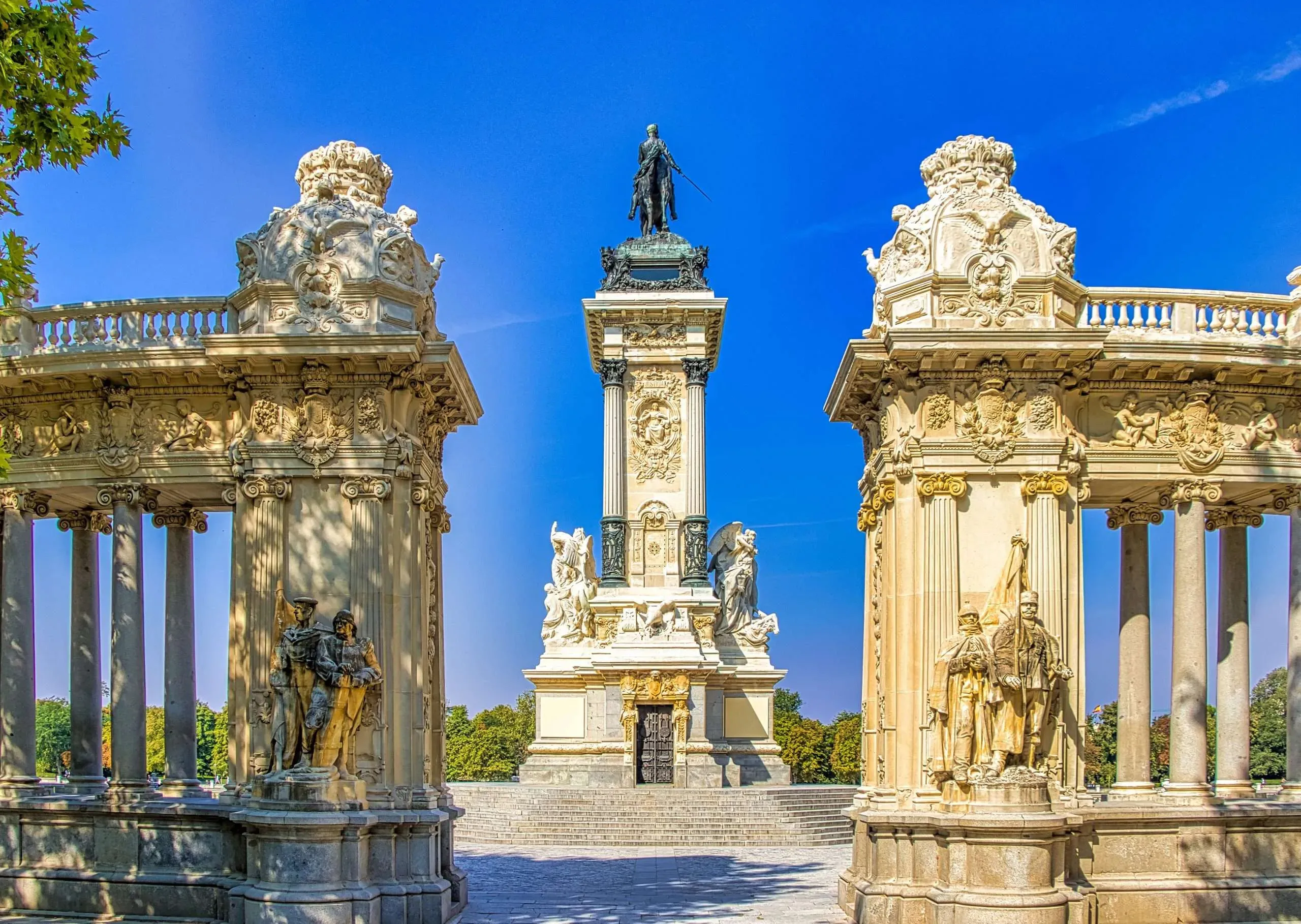
By high-speed train or a direct flight: the Prado and the Retiro, on the World Heritage List since 2021, and the Royal Palace. Best for the start or the end of a trip.
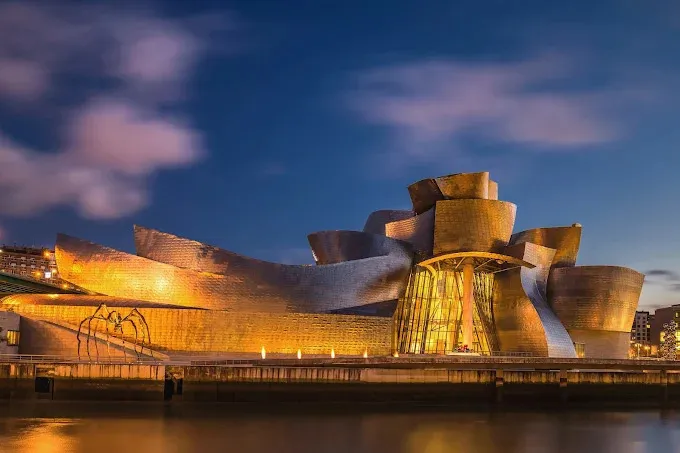
A direct flight: Frank Gehry's Guggenheim, open since 1997, and the Seven Streets of the old town with their pintxo bars. Best for art, and as the way into the Basque Country.
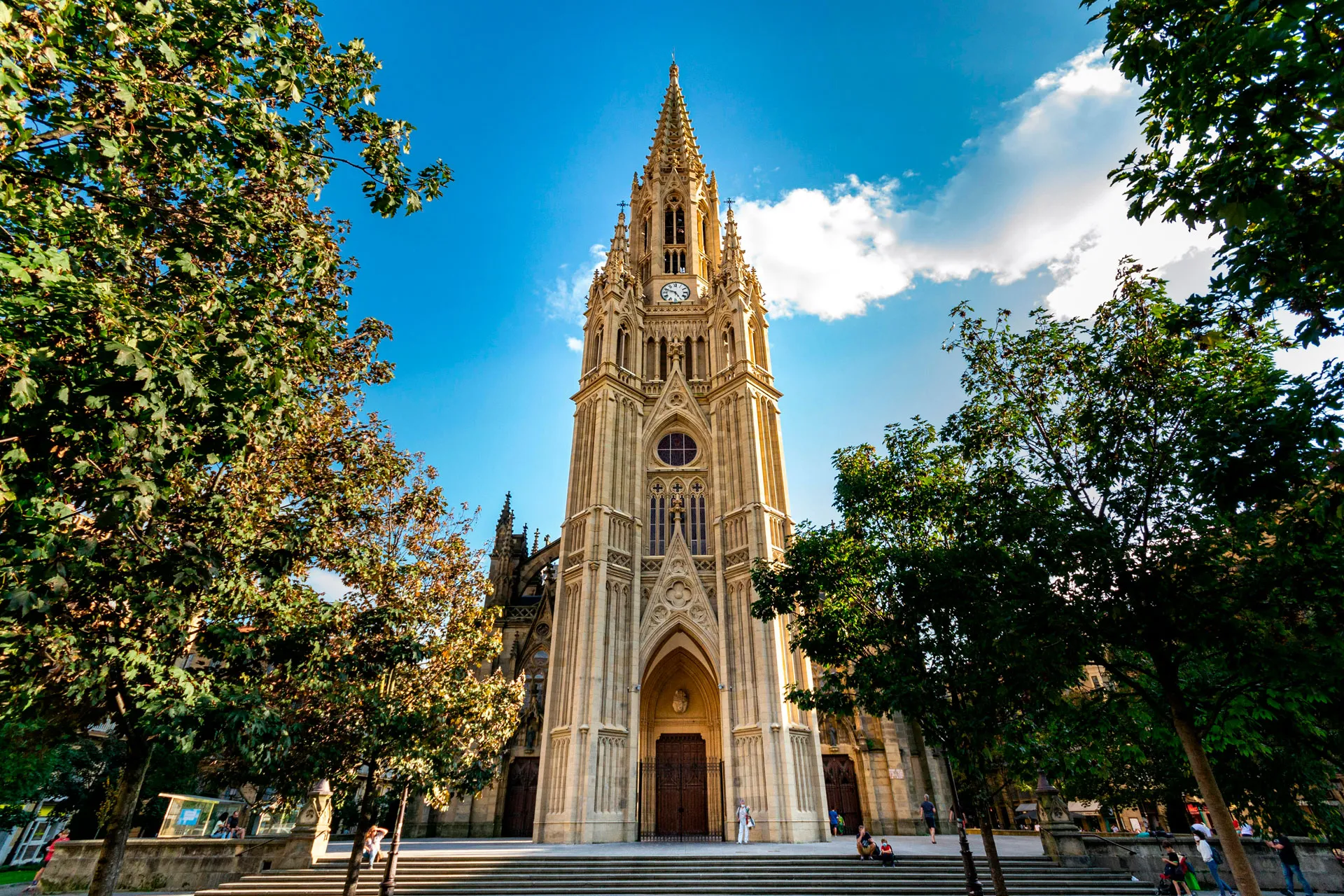
Along the coast beyond Bilbao: the Bay of La Concha, the old town between the sea and the Urumea, and a European Capital of Culture in 2016. Best for food, and for the sea.
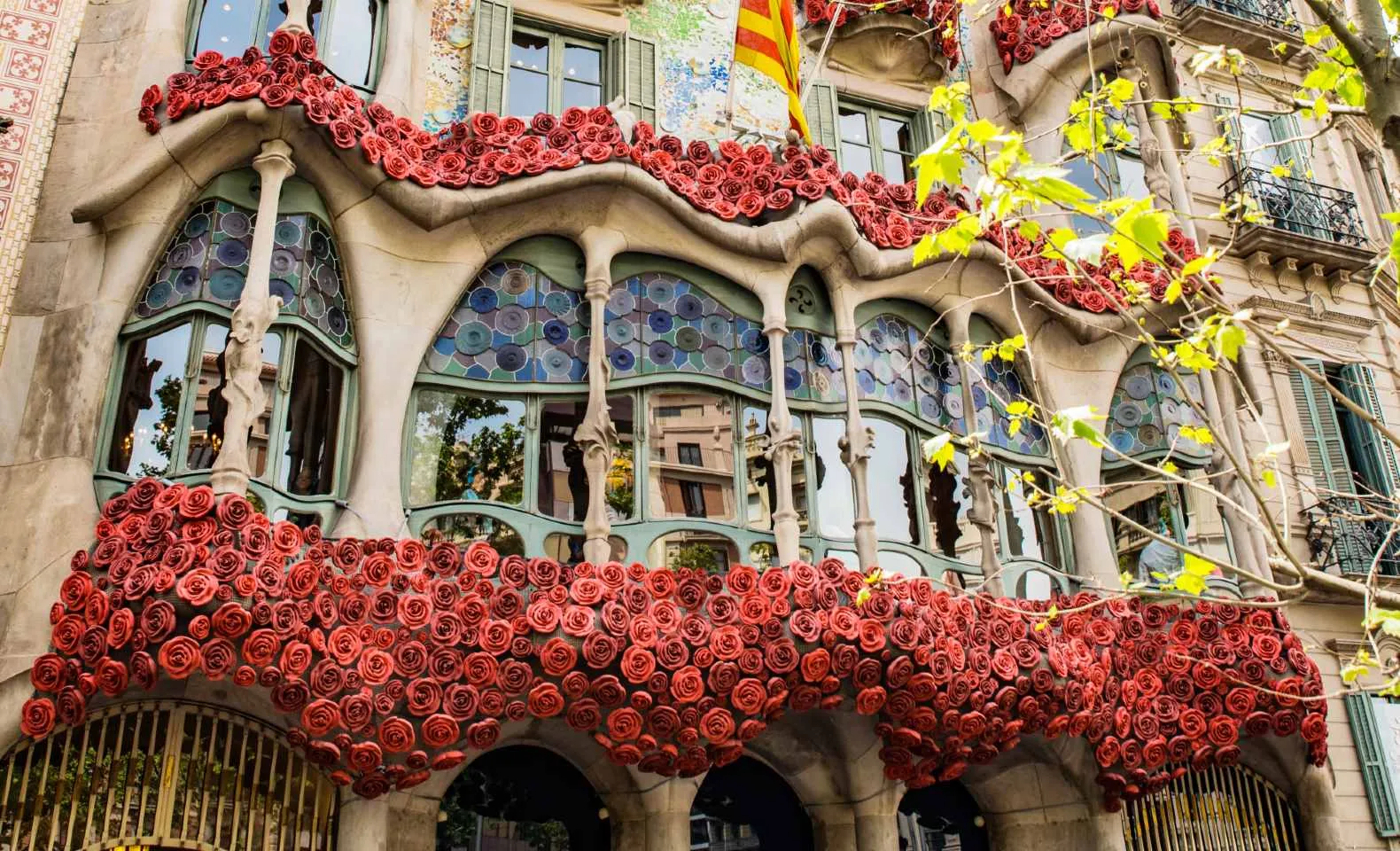
A direct flight: Gaudí's city, seven of his works on the World Heritage List, the Gothic Quarter and the sea. Best for architecture, and the Mediterranean after the Atlantic.
04Planning with Avelia
How we plan your time in Santiago
We help you choose the right hotel, balance guided visits with time to explore, and fit Santiago into your wider journey — or shape a stay in the city itself.
1
Share your plans
Tell us your dates, who is travelling and the pace you like, and whether Santiago is a stay of its own or part of a route with Madrid, Bilbao or San Sebastián.
2
Shape your trip with us
Before any payment, we send a written proposal with a quoted trip price and what it includes — such as a hotel in the old town, an art historian for the Cathedral, and an Albariño tasting — and refine it with you.
3
Travel with our support
Once you approve the proposal and complete the agreed booking requirements, we confirm your arrangements. We coordinate the details and support you while you travel.
Peace of mind
Financially protected. Your payments for a package trip are covered against our insolvency by a guarantee with AXA. Plan with peace of mind
What we can arrange
Your proposal sets out the arrangements included in your trip.
Hotels matched to you — historic or contemporary, in the old town or in the green country around it, and restored manor houses on request.
Private transport — chauffeur-driven premium cars for the airport, about 10 km out, and the station, days out to Fisterra and the Rías Baixas, and the drive to your next stop in Spain; high-speed trains where they suit better.
Private guides — art historians and specialist guides for the Cathedral, its museum and the old town.
Experiences — the market and a cooking class with a chef, Albariño tastings, the shellfish beds, a day on the Camino.
Tables and tickets — reservations from Michelin-starred dining rooms to old-town taverns, and the Cathedral’s roof, night and Pórtico visits booked ahead.
Special occasions — honeymoons, anniversaries and family trips, planned around who is travelling.
Where to taste Spain, its wine regions, and sample culinary itineraries.
05Questions
Questions we are asked
What does it cost to have a tailor-made trip designed by Avelia Travel?
Every trip is priced individually. After discussing your plans, we prepare a tailored proposal with a quoted trip price and a clear outline of what is included.
How many nights should we spend in Santiago de Compostela?
We recommend four days for the city itself, and a week if you would like days at Cape Fisterra, on the coast and in the Rías Baixas.
When is the best time to visit Santiago de Compostela?
June to September, the warmest and driest months, with the city’s great fiestas in the second half of July. Spring is mild and green but often wet, and October to February bring the most rain. 2027 is a Holy Year: the Cathedral opens its Holy Door on 31 December 2026.
Can I include Santiago de Compostela in a larger Spain itinerary?
Yes. High-speed trains run to Madrid, and Santiago’s airport has direct flights to Bilbao and Barcelona, and to Seville, Málaga and Mallorca, among others. The coast and the Rías Baixas are close enough for days out.
Do you only plan full itineraries, or can you help with just a hotel?
Both. We plan complete trips, and we also arrange a stay on its own: a hotel matched to you, with transfers, a guide or a few reservations added if you wish.
Is Avelia right for me?
Avelia suits travellers who want a private, well-paced trip planned around them: the right places in the right order, hotels chosen for them, guides who know the ground, tables and tickets taken care of, and one point of contact from the first conversation until they are home.
Start planning your time in Santiago de Compostela
Four days in Santiago, or a week with the coast and the Rías Baixas: tell us your dates and who is travelling.