Centro histórico
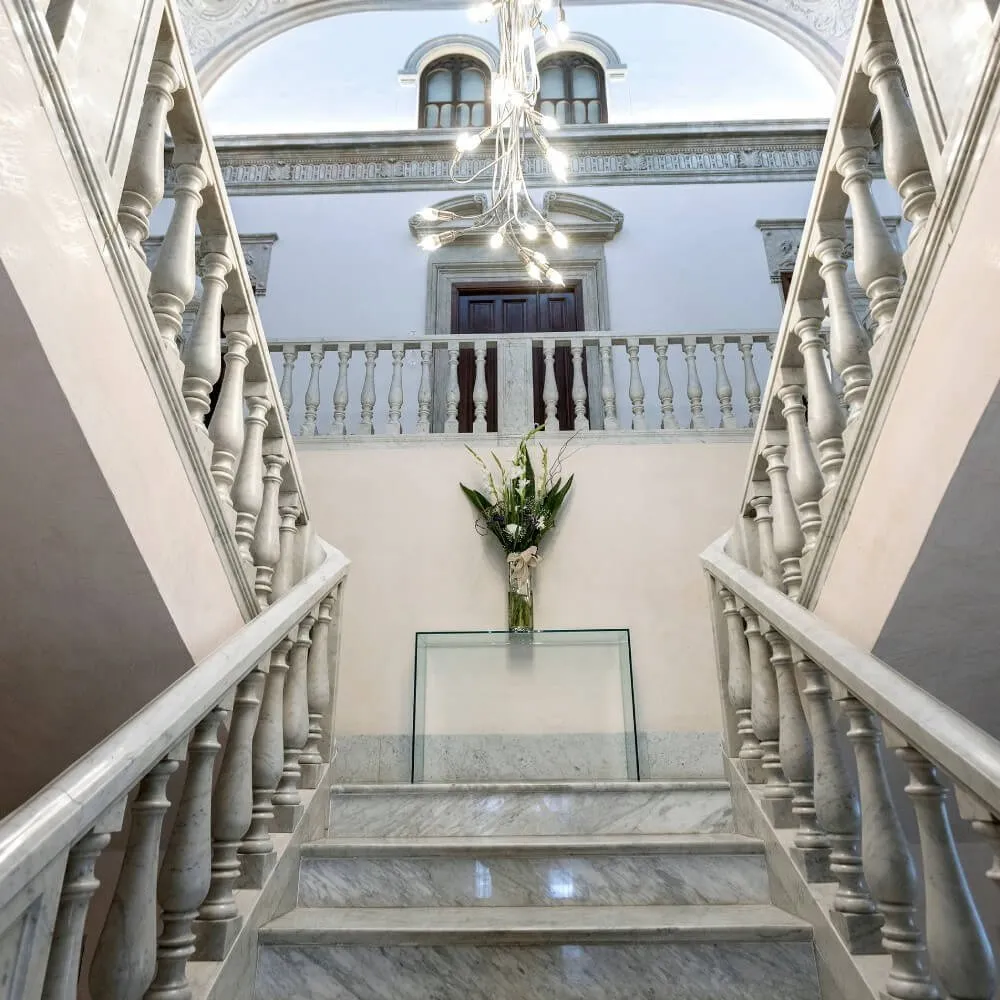
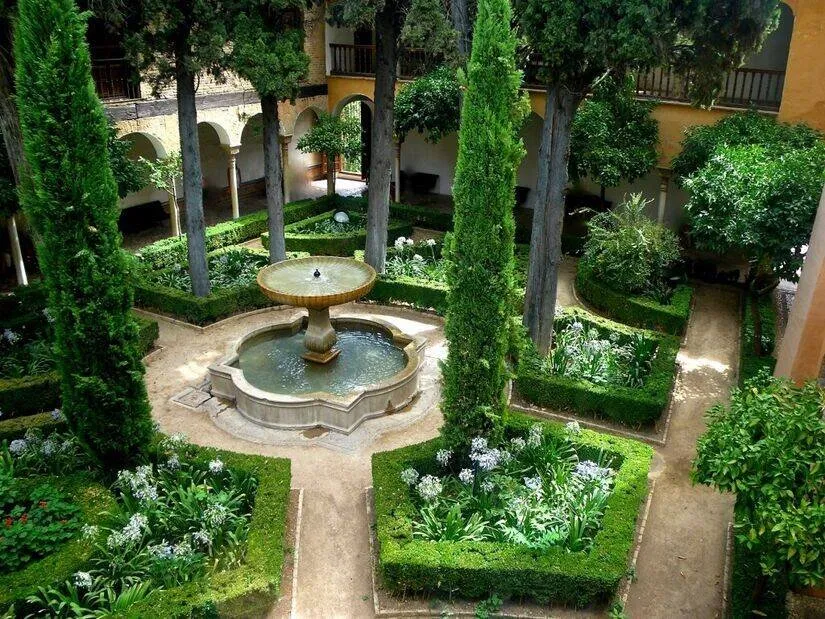
Palacio de los Patos
A 19th-century palace in the city centre, with a contemporary second building, a garden restaurant and a spa.
Granada guide
Moorish palaces and Renaissance churches, tapas and flamenco, with the snows of the Sierra Nevada behind.
By Ramin Jafari · Facts checked
Granada is the city of the Alhambra: the Nasrid palace-city on its hill, the Albaicín’s lanes facing it across the Darro, and flamenco in the caves of Sacromonte. Spring and autumn suit it best, and it pairs easily with Seville, Córdoba, Marbella or a day in the Sierra Nevada on a journey through southern Spain.
When to go
Spring and autumn suit Granada best.
From March to May the average high climbs from about 19°C (66°F) to 25°C (77°F), and from September to November it falls back from 29°C (84°F) to 17°C (63°F): the weather for the Generalife’s gardens, the Albaicín’s lanes and dinner outdoors. Spring is also the season of Semana Santa, from 21 to 28 March in 2027, the crosses of the Día de la Cruz in early May, and the Corpus fair.
By June the average high is 31°C (88°F), and in July and August 34–35°C (93–95°F): see the Alhambra early in the morning or on its night visit, and spend the middle of the day indoors. Winter is bright and cold, with frost on about half of January’s nights, and brings skiing in the Sierra Nevada, Spain’s highest resort, 31 km from the city.
Our Granada page goes season by season, and the best time to visit Spain looks at the whole country.
Where to stay
A 19th-century palace, a bank turned hotel and a twenty-room house on a garden square: the three hotels we recommend in Granada, all in the historic centre.
Centro histórico
A 19th-century palace in the city centre, with a contemporary second building, a garden restaurant and a spa.
Centro histórico
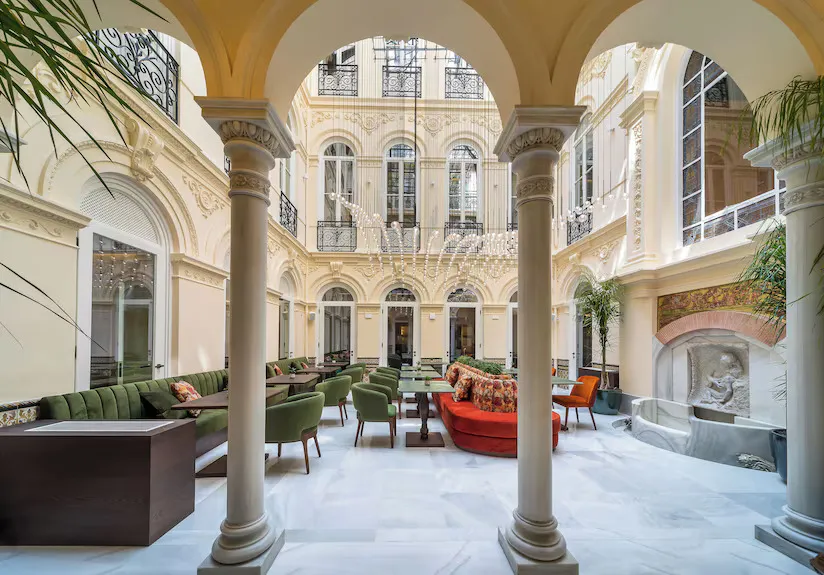
A five-star Gran Lujo house of 38 rooms in the old Rodríguez-Acosta bank, facing the Cathedral, with a rooftop bar and a spa under a brick vault.
Centro histórico
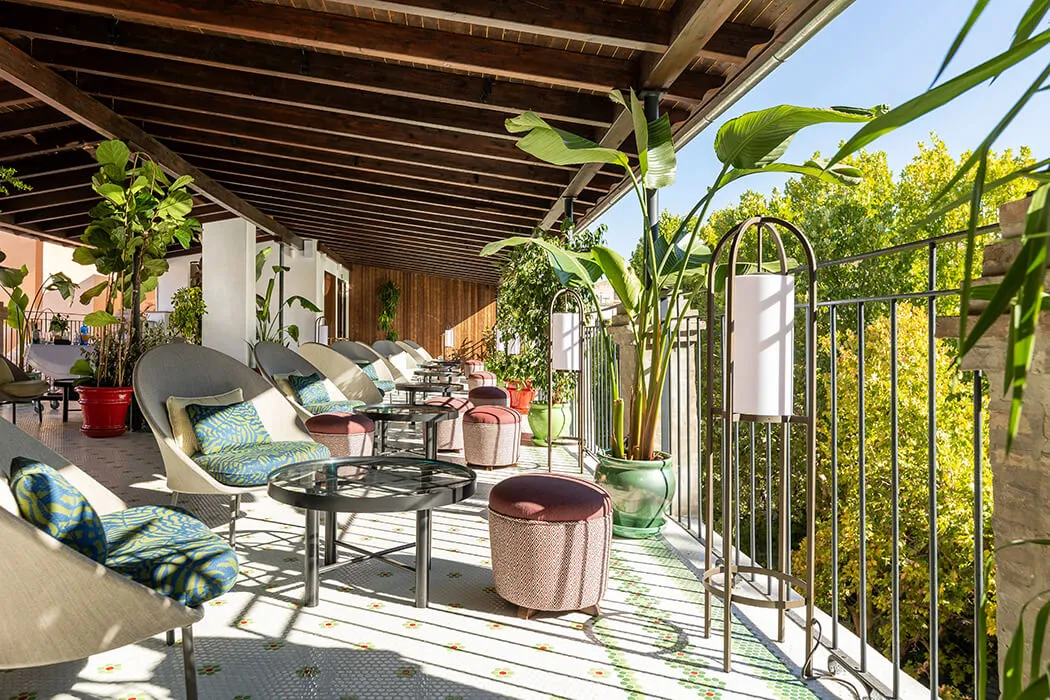
A twenty-room five-star Gran Lujo house on the Plaza de la Trinidad, with a rooftop bar and a heated pool.
They are a selection, not the whole choice. Our Granada accommodation overview compares them, and we arrange others to suit you, among them the cármenes of the Albaicín, houses with walled gardens, many now restored as places to stay. For the rest of the country, see luxury hotels in Spain, our top five-star hotels and our boutique hotels.
Food
Granada is a tapas city: in most of its bars a tapa comes free with each drink.
Faralá, chef Cristina Jiménez’s restaurant on the Cuesta de Gomérez below the Alhambra, gained a MICHELIN Star in the 2026 guide. Its three tasting menus update Granada’s traditional recipes with the produce of the province, and we can reserve dinner there with a flamenco show.
Among the city’s own dishes: the remojón, a salad of salt cod and orange; habas con jamón, broad beans with the ham of Trevélez; the tortilla del Sacromonte; and, for dessert, piononos.
We can arrange a tapas route with a sommelier through the Albaicín and the Realejo, the old Jewish quarter at the foot of the Alhambra, or a private tasting of Andalusian wines, on request: see our culinary and wine tours and our guide to Spanish gastronomy, and for wine further north, wine tasting in La Rioja.
Sights
The Alhambra first, then the quarters around it: five places no first visit should miss, and what we can arrange around them, on request and subject to availability.
On the Sabika hill
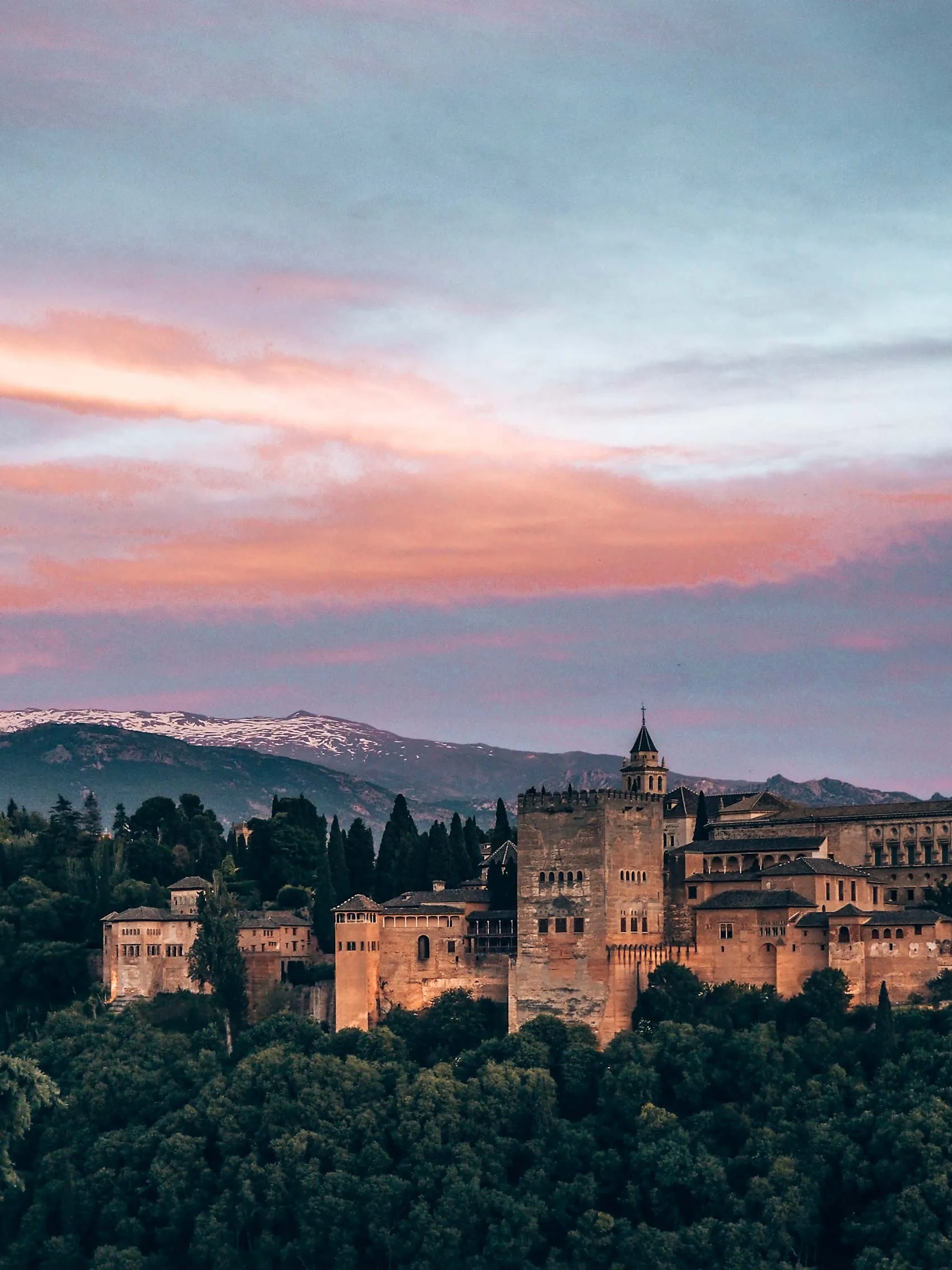
Al-Ahmar, founder of the Nasrid dynasty, settled in Granada in 1238 and began the Alhambra we know today: palace, citadel and fortress at once, at its height in the second half of the 14th century. UNESCO calls it the only preserved palatine city of the Islamic period. The visit takes in the Nasrid Palaces, the Alcazaba and the gardens of the Generalife, the emirs’ country residence, and the Palace of Charles V, begun in 1526, which holds the Alhambra Museum and the Museum of Fine Arts.
Demand is high, so we reserve the visit as soon as your dates are set, with a licensed guide accredited at the Alhambra. After dark, the Alhambra’s own night visit opens the Nasrid Palaces, and the Generalife’s gardens open on spring and autumn evenings.
Across the Darro from the Alhambra
Granada’s court sat in the Albaicín before it moved up to the Alhambra, and UNESCO calls the quarter the best-preserved illustration of a Hispano-Muslim city in the south of Spain, its narrow streets and small squares little changed. Its cármenes, houses with an orchard and garden, hide behind white walls, and its slopes climb to the miradores. San Nicolás is the best known for the Alhambra at sunset; the quarter has many quieter ones. We arrange a walk with a historian, or a photographer for the evening.
Beyond the Albaicín
The most distinctive of Granada’s quarters, in the city’s own words: known the world over for its cave houses and its views, and regarded as a cradle of flamenco. Prickly pear covers its slopes, the sun turns its small white houses deep red at dusk, and its zambras, caves used as tablaos, stage flamenco. We book an evening in one, with dinner arranged around it if you wish. UNESCO has listed flamenco as intangible cultural heritage since 2010; if Seville is on your route, see also private flamenco in Seville.
The city centre
The Royal Chapel holds the remains of Isabella of Castile and Ferdinand of Aragon, the Catholic Monarchs, under a marble tomb by the Florentine Domenico Fancelli, finished in 1517, and those of their daughter Joanna and her husband Philip. Its sacristy keeps Flemish paintings from the Queen’s own collection, by Rogier van der Weyden, Dieric Bouts and Hans Memling. The Cathedral beside it, begun in 1523, calls itself one of the high points of the Spanish Renaissance; Diego de Siloé designed its main chapel as a great rotunda. We arrange a guide for both.
The Realejo
Not a true carmen, the city notes, but a “garden of gardens”: a neoclassical villa begun in 1845 on the site of the Discalced Carmelite convent where St John of the Cross was prior, and the city’s own since 1957. The villa is kept for municipal receptions and ceremonies and is not open to visitors; its gardens are open to all.
Beyond the sights:
There is more among the experiences on our Granada page, the Alpujarras and an olive-oil estate among them. For private guides across the country, see our architecture and cultural tours; for a trip built around an occasion, our honeymoons in Spain and family trips.
Three days
Three days cover the essentials at an easy pace, from a private transfer on arrival to a farewell dinner. Each is a starting point we shape around you.
Day 1
Time to settle in, or the hotel’s spa.
Sunset
The Alhambra at sunset from the Mirador de San Nicolás.
Evening
A drink on a rooftop that looks to the Alhambra, then dinner.
Day 2
Morning
The Alhambra and the Generalife with a private guide.
A tapas route with a sommelier, or a gourmet table, with a tasting of wines.
Evening
Flamenco in a zambra in Sacromonte.
Day 3
Morning
A hammam, or a treatment at the hotel’s spa.
The Albaicín on foot with a historian, and Granada’s crafts in the Alcaicería.
Or
The Sierra Nevada with a mountain guide, or a balloon at dawn over the cave country of Guadix.
Dinner
A farewell dinner at Faralá, Granada’s MICHELIN-starred restaurant.
 Photo: Elena.laps, CC BY-SA 4.0
from $9,814 per person
from $27,279 per person
from $16,811 per person
from $9,408 per person
When to go, our itineraries, and Spain's leading destinations and hotels.
The palaces, castles and fortresses worth the journey, region by region.
The national parks, from the Picos de Europa to the volcanoes of the Canaries.
More city guides: Seville, Barcelona, Madrid, Mallorca and San Sebastián, or all our Spain guides. Across Spain: our luxury destinations and why personalisation matters.
Tell us your dates and who is travelling. Everything else we can work out together.
Plan your Granada tripOur Granada page
Usually answered within one business day.