Spain guide
Spain's national parks
Ten of the sixteen, from limestone peaks and glacial lakes to wetlands, plains and volcanoes.
By Ramin Jafari · Published · Facts checked
Spain has sixteen national parks. The ten here run from the limestone peaks of the Picos de Europa and the Pyrenees, through the wetlands of Doñana, the plains of Cabañeros and the Sierra Nevada, to the volcanoes, laurel forest and sea of the islands. For each, here is what it is like and when it is at its best; the guides, the permits and the stays around them are ours to arrange.
At a glance
- National parks
- Sixteen, from the Picos de Europa to the Canary Islands
- The first
- Covadonga, now the Picos de Europa, and Ordesa, both in 1918
- World Heritage
- Doñana, Teide, Garajonay, and Ordesa, shared with France
- Best time
- Late spring to early autumn in the mountains; the Canaries all year
The north
The mountains of the north
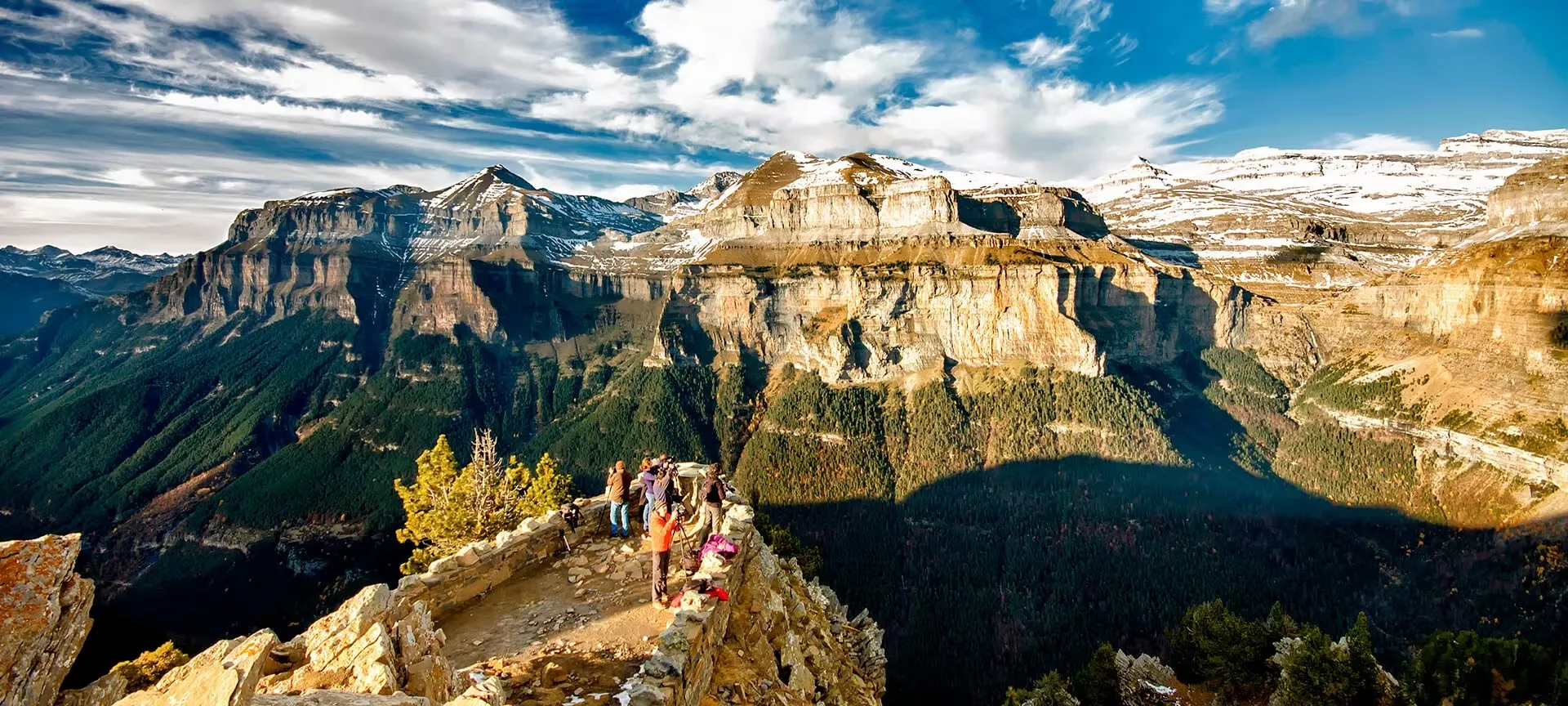
Three mountain parks: the limestone of the Picos de Europa, the canyon of Ordesa under Monte Perdido, and the lakes of Aigüestortes in the Catalan Pyrenees.
Asturias, Cantabria and Castilla y León
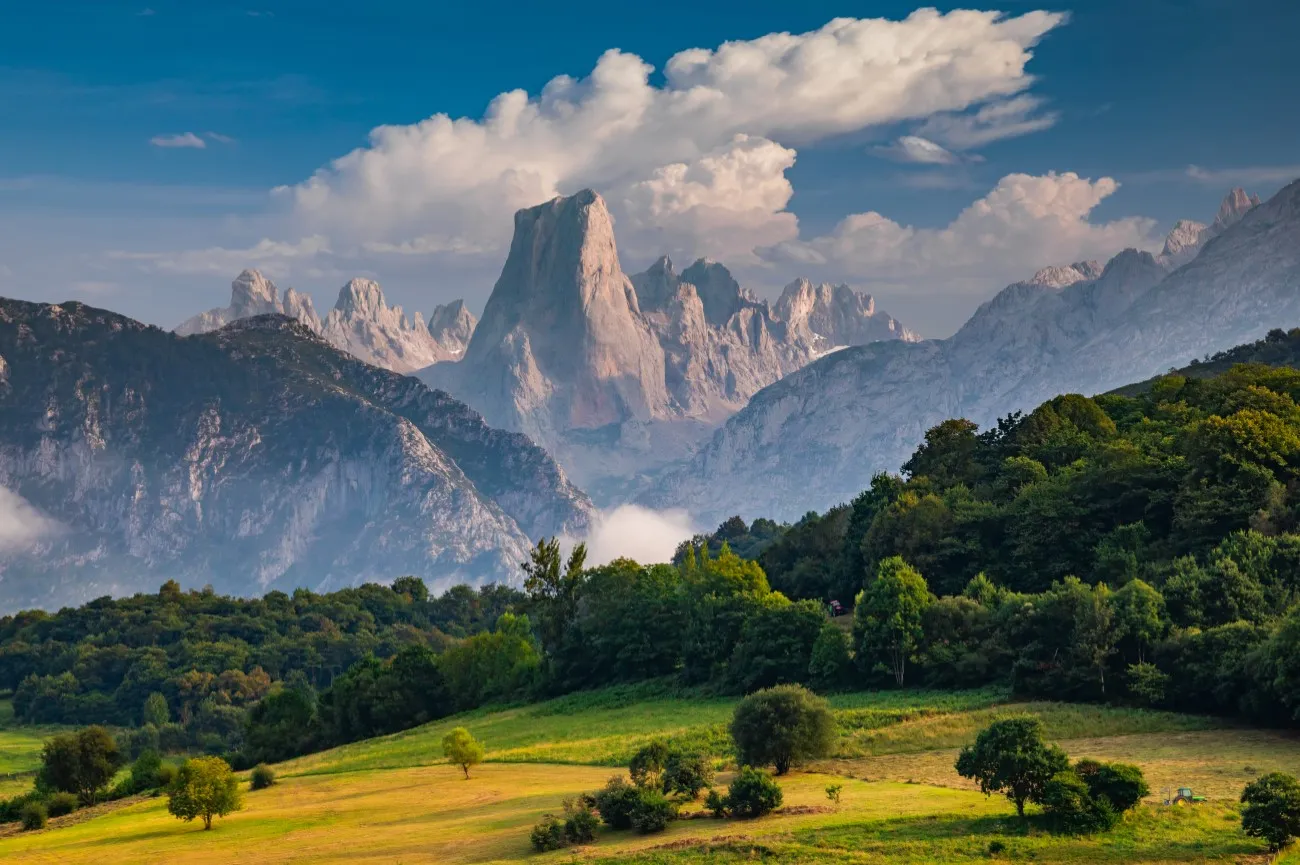
The Naranjo de Bulnes Picos de Europa National Park
- Best time
- Spring to early autumn
- Declared
- 1918, as the Montaña de Covadonga
- Highest point
- Torrecerredo, 2,646 m
One of Spain’s first two national parks, it took its present name in 1995 and covers some 66,000 hectares of limestone mountains across three regions. The peaks include the Naranjo de Bulnes, the Picu Urriellu, at 2,519 metres; the rock is karst, and of the lakes the glaciers left only two have survived it, Enol and La Ercina — the lakes of Covadonga.
Chamois live among the crags, roe deer and wolves in the woods, and griffon vultures and golden eagles overhead; the Cantabrian brown bear is an occasional visitor, mostly from the southern side. Walking is the way to know it, and we arrange a mountain guide for the trails. Bring good boots and a layer: the weather in these mountains changes quickly.
The Aragonese Pyrenees
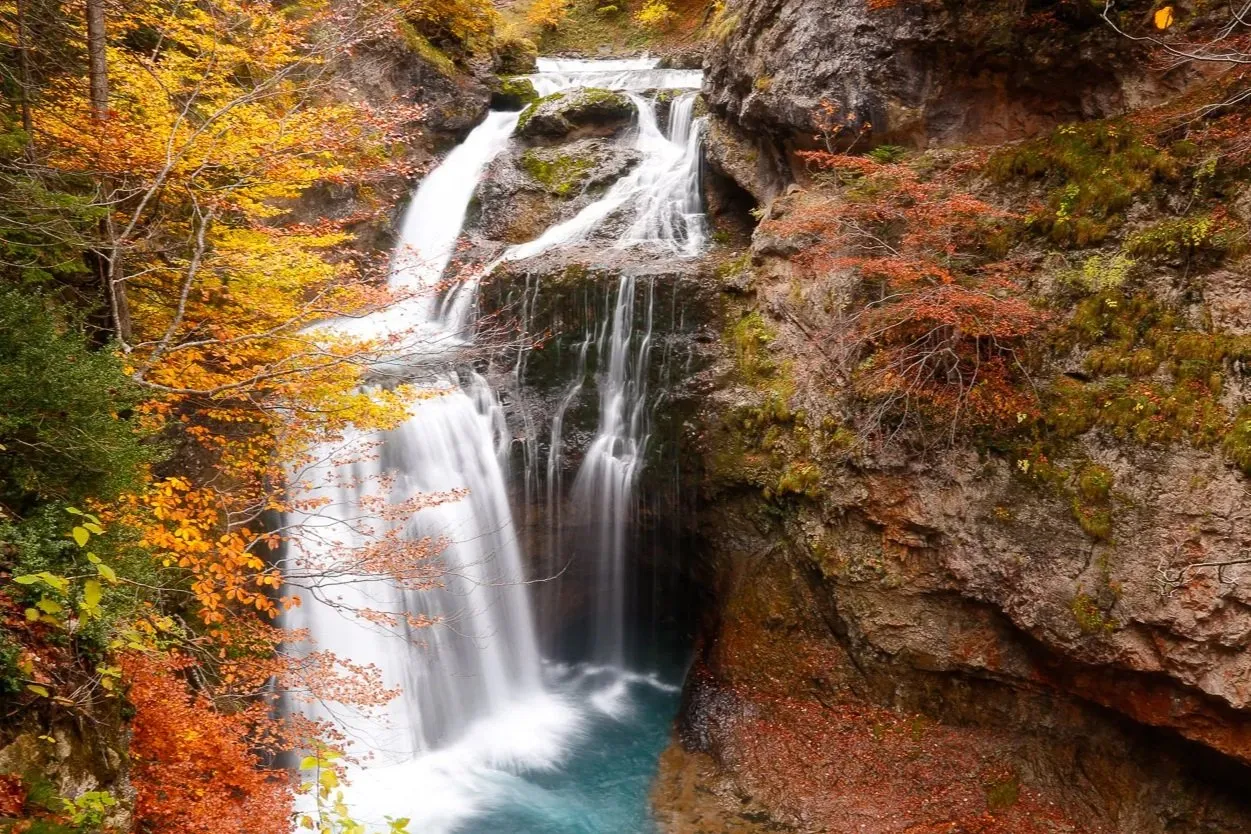
Ordesa y Monte Perdido National Park
- Best time
- Summer and early autumn
- Declared
- 1918, as the Valle de Ordesa
- World Heritage
- Since 1997, shared with France
Monte Perdido, at 3,355 metres the park’s highest point and the third-highest summit of the Pyrenees, crowns what the ministry calls the highest limestone mountain in Europe. Below it the Arazas has cut the canyon of Ordesa, with beech woods on its slopes; the Faja de Pelay, a ledge along its southern side, looks out over it.
The valley’s walks are its waterfalls: the Cola de Caballo in the cirque of Soaso, the stepped Gradas de Soaso, the Estrecho, La Cueva and Arripas. From the second half of October the woods turn. In the busiest months the valley is closed to private cars; we arrange the way in from Torla, and a guide for the higher paths.
The Catalan Pyrenees
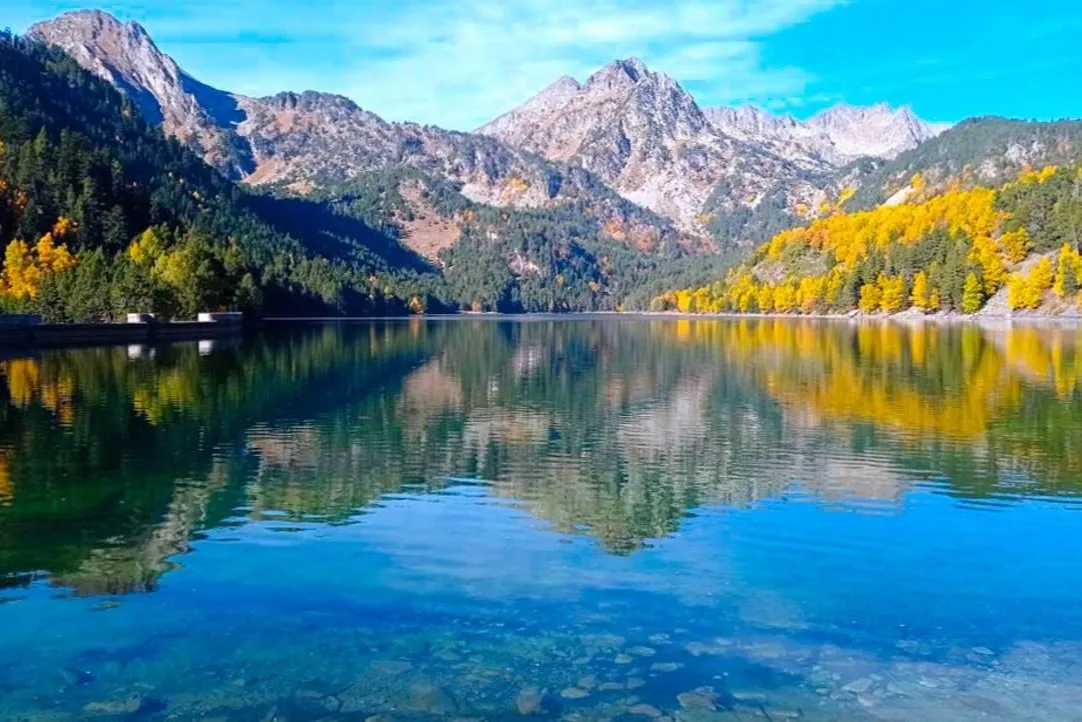
The Estany de Sant Maurici Aigüestortes i Estany de Sant Maurici
- Best time
- Summer and early autumn
- Declared
- 1955, Catalonia's only national park
- Known for
- Lakes, streams and the crags of Els Encantats
The park’s name holds its two signatures: the aigüestortes, the meandering streams of the high valleys, and the Estany de Sant Maurici, one of some 200 lakes. Around them are waterfalls, peat bogs and screes under the crags of Els Encantats, and forests of mountain pine, fir and Scots pine, with birch and beech among them that turn gold in autumn.
The park is entered from Espot or from the Vall de Boí, whose Romanesque churches are on the World Heritage List. We arrange a mountain guide for the day, and a stay in the valleys around it.
The south and the centre
Wetlands, plains and the Sierra Nevada
Doñana’s marshes on the Guadalquivir, the woodland and open raña of Cabañeros, and above Granada the highest summits of the Iberian Peninsula.
Huelva and Seville
Doñana National Park
- Best time
- Late spring or autumn
- Declared
- 1969
- World Heritage
- Since 1994
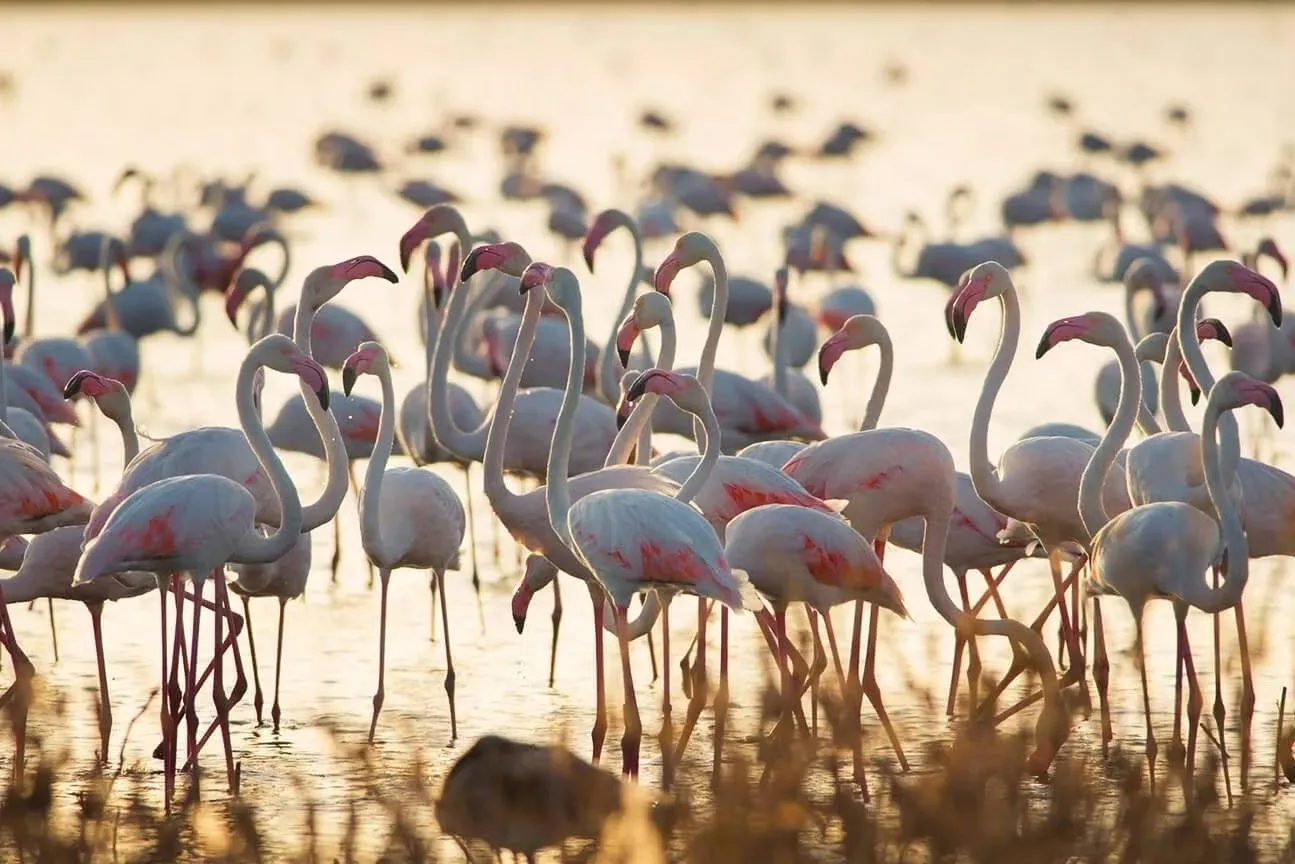
Marsh, moving dunes, scrub and beach make up the park’s 54,252 hectares, and the marsh, the largest of them, is a place of passage, breeding and wintering for thousands of European and African birds. Great flocks of flamingos and greylag geese gather there, and the park is home to two species in serious danger of extinction, the Spanish imperial eagle and the Iberian lynx.
From early autumn through the winter, geese and ducks come down from northern Europe; in spring and summer storks, herons and swallows arrive from Africa. The interior is seen with the park’s authorised guides, by four-wheel drive on two routes, or by boat up the Guadalquivir from Sanlúcar de Barrameda. We arrange either; bring binoculars.
Ciudad Real and Toledo
Cabañeros National Park
- Best time
- Spring and autumn; the red deer rut from mid-September
- Declared
- 1995
- Known for
- The raña, its open grassland
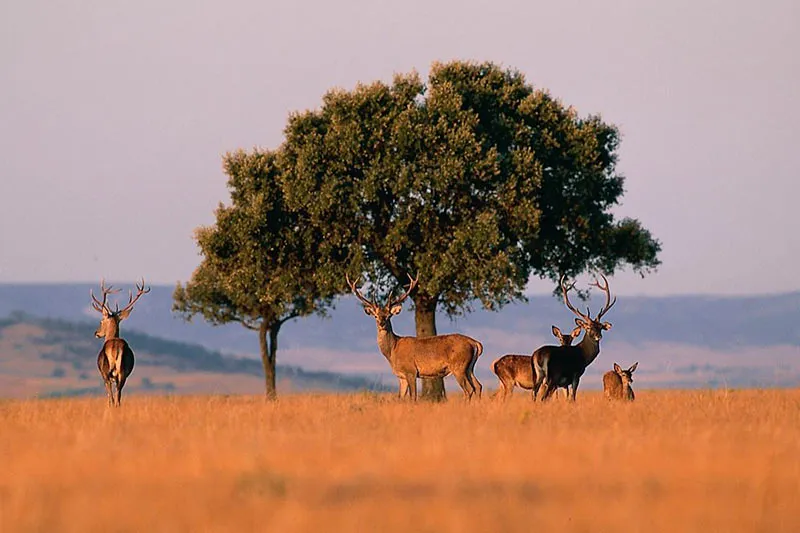
The raña is a plain of some 8,000 hectares in the park’s south-east, grassland with scattered trees — the ministry’s own word for the landscape is “African”. Around it the hills keep, intact, what the regional government calls Europe’s great Mediterranean forest.
Red deer are among its most numerous animals, and with the first autumn rains their rut, the berrea, sounds across the raña. The park holds one of the world’s most important breeding colonies of the black vulture, and the Spanish imperial eagle. Its interior is seen by four-wheel drive with an authorised guide, which we arrange.
Granada and Almería
Sierra Nevada National Park
- Best time
- Summer for walking; winter for skiing
- Highest point
- Mulhacén, 3,479 m
- Declared
- 1999
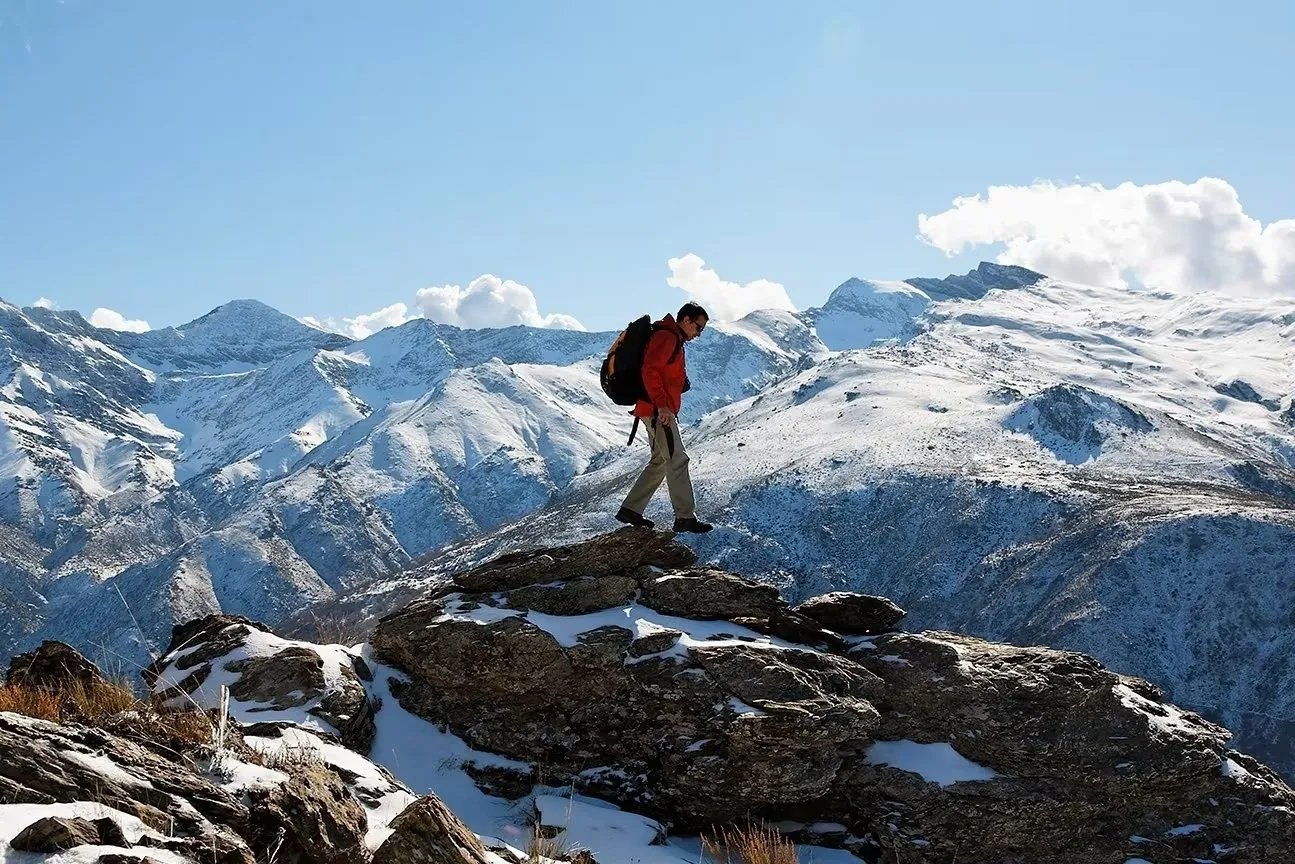
The Sierra Nevada holds the highest summits of the Iberian Peninsula. A natural park from 1989 and a biosphere reserve before that, it has more than 2,000 kinds of plant, 66 of them found nowhere else.
In winter its ski station, 31 kilometres from Granada, is the highest in Spain and the most southerly in Europe. In summer the high mountain is for experienced walkers, and the valleys above Monachil, Güéjar Sierra and Pinos Genil are gentler; with a mountain guide, either is a day from the city. Pair it with the Alhambra: our Granada guide has both.
The islands
Three parks on the Canary Islands — a volcano, a lava field and a laurel forest — and one at sea off Mallorca.
Tenerife
Roque Cinchado, with Teide behind Teide National Park
- Best time
- All year; March to May and September to November are best
- Highest point
- Teide, 3,715 m, the highest in Spain
- World Heritage
- Since 2007
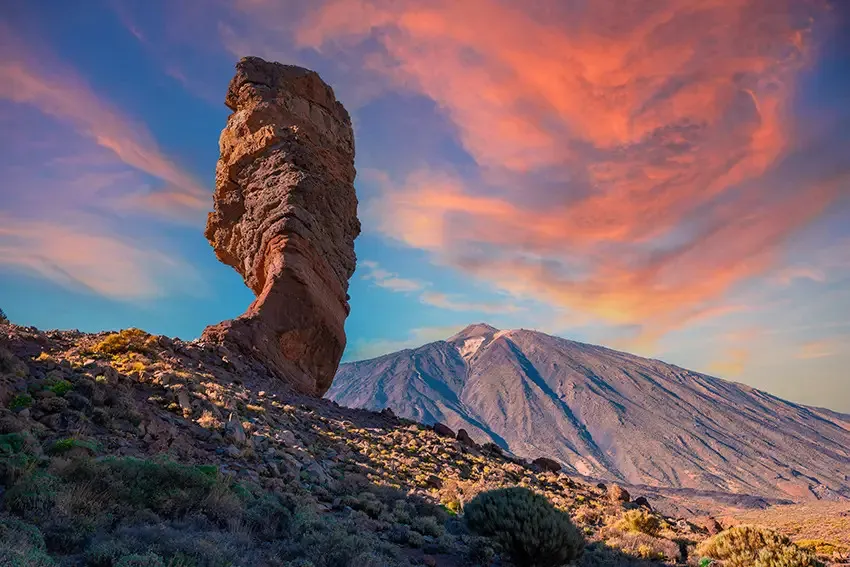
The park runs from Canary pine forest at 1,600 metres to the summit of Teide. Declared in 1954, it is the oldest and largest of the Canary parks and the most visited in Spain’s network; at its heart lies the caldera of Las Cañadas, where the lava spires of the Roques de García stand beneath the cone.
A cable car climbs in eight minutes to La Rambleta, at 3,555 metres. The last stretch to the summit needs a permit from the park, and permits go months ahead, so we apply as soon as your dates are fixed; in winter, snow can close the top for a few days. The park has held Starlight certification for its night skies since 2013, and we can arrange an evening there with a guide and a telescope. Bring a warm layer for the top in any season.
Lanzarote
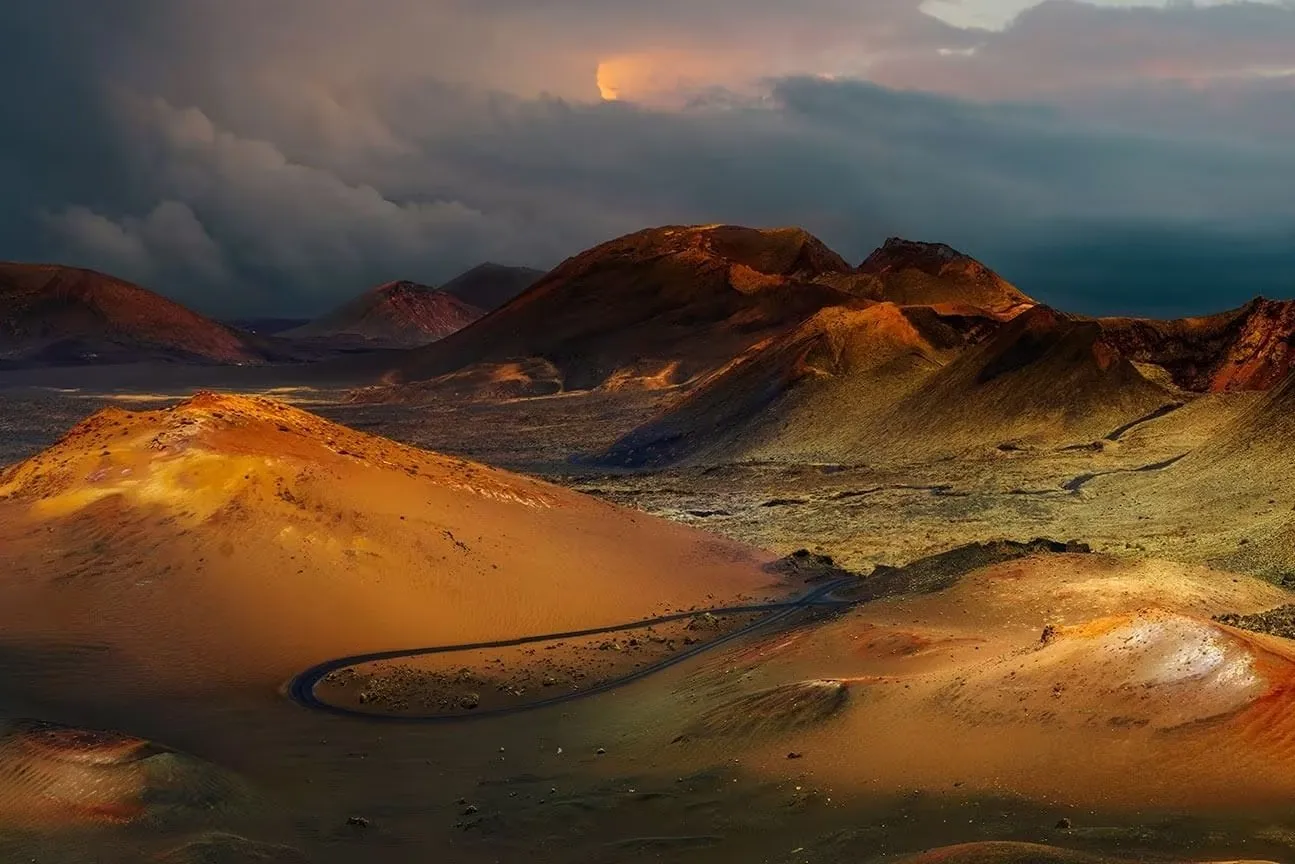
Timanfaya National Park
- Best time
- All year; March to May and September to November are best
- Allow
- About 1¼ hours at the Montañas del Fuego
- Declared
- 1974, over 5,107 hectares
The eruptions that began in 1730 lasted six years and enlarged Lanzarote by a quarter. The park keeps what they left — one of the largest historic lava fields in the world, red and black cones over a sea of lava with more than 25 craters.
At the Islote de Hilario, in the Montañas del Fuego, the ground is still hot a few metres down: the park shows it with geothermal demonstrations, and El Diablo, the restaurant César Manrique shaped there, grills meat and vegetables over a well where the heat reaches about 250 °C. The heart of the park is seen from a coach on the Ruta de los Volcanes, some 14 kilometres through the craters; the park’s own guides also lead walks on the Tremesana route and along the coast, which we request for you. There is almost no shade.
La Gomera
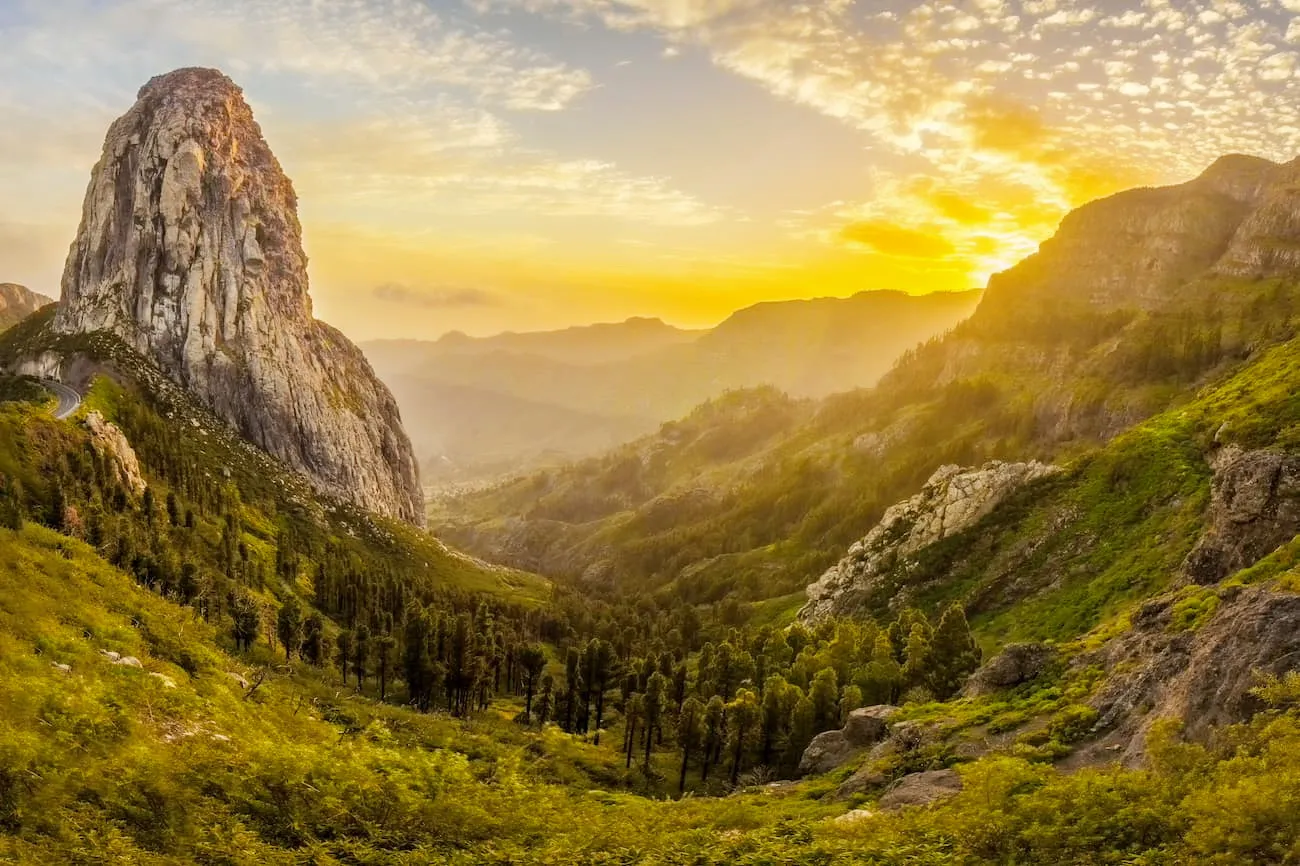
Roque de Agando, one of La Gomera's Roques Garajonay National Park
- Best time
- All year; the mists come most often in spring
- Declared
- 1981
- World Heritage
- Since 1986
The laurisilva, a laurel forest left from the Tertiary and lost from the continent as the climate changed, survives in the mist belt of the Canary Islands, and Garajonay holds its best-preserved example — more than half the islands’ mature laurel forest. The frequent mists keep the air almost constantly damp and add what the ministry calls horizontal rain. The stars, as the park puts it, are the Canaries’ two endemic pigeons, the turqué and the rabiche; around the forest stand the Roques, the great rock monuments the park counts among its values.
La Gomera is 50 minutes by ferry from Tenerife. We arrange the crossing and a guide for the forest paths, which are often wet underfoot; bring shoes with a good grip.
Off Mallorca
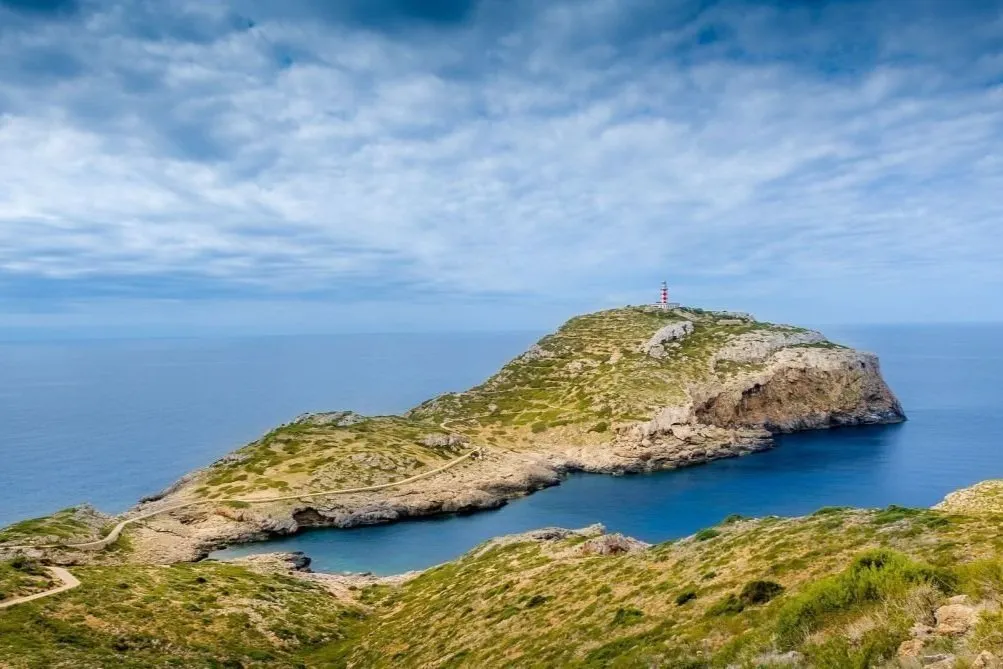
The Cabrera Archipelago
- Best time
- Summer
- Declared
- 1991; enlarged at sea in 2019
- Known for
- One of the best-kept seabeds on Spain's coast
Cabrera is a maritime-terrestrial park of islands and islets off the south coast of Mallorca. In 2019 it grew from about 10,000 to 90,800 hectares, all but 1,318 of them sea — the largest marine national park in the western Mediterranean, as the government put it then. Under the water are meadows of Posidonia seagrass; on the cliffs, important colonies of seabirds.
We arrange the crossing from Colònia de Sant Jordi in the summer months, or a boat of your own with the park’s permit. On the main island a castle, probably built at the end of the 14th century against Barbary pirates, watches over the harbour, and in the middle of the afternoon the sun fills Sa Cova Blava, the blue cave, with light. The park itself recommends the water off Sa Platgeta and s’Espalmador for snorkelling: bring a mask.
All sixteen
Spain's other six national parks
The network’s six other parks, which we arrange as readily as the ten above.
- Sierra de Guadarrama, the mountains between Madrid and Segovia, declared in 2013.
- Tablas de Daimiel, in Ciudad Real, Castilla-La Mancha, 1973.
- Monfragüe, in Cáceres, Extremadura, 2007.
- Caldera de Taburiente, on La Palma in the Canary Islands, 1954.
- Islas Atlánticas de Galicia, the islands of Cíes, Ons, Sálvora and Cortegada, 2002.
- Sierra de las Nieves, inland from Marbella in Málaga, 2021, the newest.
More Spain guides
- 12 treasures of Spain
Twelve places to see once in a lifetime, from the Alhambra to Teide.
- Spain's castles and palaces
The palaces, castles and fortresses worth the journey, region by region.
- The most beautiful coastal towns in Spain
Coastal towns from the Costa Brava to Asturias, and the best beach at each.
City guides: Seville, Barcelona, Madrid, Mallorca, San Sebastián and Granada, or all our Spain guides.
Plan your Spain trip
Tell us your dates and who is travelling. Everything else we can work out together.
Plan your Spain trip Our Spain page
Usually answered within one business day.