Dalt Vila’s Renaissance walls above the harbour, coves and clear water
all round the coast, and a quiet, green north of whitewashed farmhouses
and fortified churches. Avelia plans private, tailor-made time in Ibiza,
as a stay of its own or as part of a wider journey.
Each of these is arranged privately for your dates, subject to availability.
Dalt Vila and Phoenician Ibiza
The walled old town with a guide in the evening light, the Phoenician tombs of Puig des Molins below it, the island’s first settlement at Sa Caleta, and contemporary art inside the walls.
More of the old town and its history
Dalt Vila — the walled upper town above the harbour: bastions raised between 1554 and 1585 by two Italian engineers, streets laid out over 2,500 years, and the Cathedral at the top, looking over the port to Formentera. Best with a guide as the light goes.
Madina Yabisa — the centre in the old Casa de la Curia, facing the Cathedral, on the Islamic city that stood here from the 10th to the 13th century.
Puig des Molins — the Phoenician-Punic necropolis on the hill below Dalt Vila, in use from the 7th century BC into Roman times: thousands of tombs cut into the rock, some of them open to visit, and a museum of what was found in them.
Sa Caleta — the first Phoenician settlement on the island, founded in the 8th century BC on a small headland on the south coast and left around 600 BC for the bay where Dalt Vila stands.
Contemporary art — the MACE, in the bastion of Sant Joan inside the walls, founded in 1969 and one of Spain’s oldest museums of contemporary art, and the small galleries of the old town.
A ceramics morning — a session at the wheel with a local potter, on request.
The coast, the sea and Formentera
A boat of your own along the coast or across to Formentera, Es Vedrà from the sea or from the watchtower above it, the salt pans of Ses Salines, and the water itself — kayak, snorkel or dive.
More days at sea
A day at sea — a private boat or sailing yacht with a skipper, for the coves of the south-west, or a sunset sail with dinner on board.
Formentera — the ferry from the port of Ibiza, or a boat of your own across Es Freus to S’Espalmador, an islet of white sand reached only by sea, with lunch on the beach.
Es Vedrà — the 382-metre islet off the south-west coast, a nature reserve with Es Vedranell beside it. The walk up to the Torre des Savinar, an 18th-century watchtower on the cliff opposite, is best at sunset, with time for meditation if you wish.
Ses Salines — the natural park at the southern tip, running across the sea to Formentera: salt pans worked since Phoenician times, flamingos and herons, and the beaches below the Torre de ses Portes.
In the water — kayaking to the caves and islets of the south-west coast, snorkelling, and diving over the Posidonia meadows with a certified instructor.
The island from the air — a private helicopter flight over Es Vedrà, Ses Salines and Formentera, on request and subject to availability.
The north, the villages and the table
Walks and bike rides through the pine hills of the north, whitewashed fortress churches and farming villages, a long lunch at a finca, and the island’s own wine and olive oil.
More of the countryside and the table
Es Amunts — the protected hills of the north, nearly a quarter of the island: pine and juniper, farmed terraces, and paths down to coves such as Benirràs and Xarraca, on foot with a guide or by e-bike.
The fortress churches — Sant Miquel on its hill above the north coast, where ball pagès is danced in the courtyard in summer, the Puig de Missa above Santa Eulària, and Sant Jordi with its battlements, all built to shelter villagers from pirate raids.
The villages — Santa Gertrudis at the island’s centre, its square lined with cafés, shops and galleries; Sant Joan in the north and Santa Agnès in its valley to the west; and Balàfia, a hamlet of seven stone houses and two defence towers.
Wine and olive oil — tastings at the island’s wineries, whose Vi de la Terra Eivissa has been its own designation since 1996, and of Oli d’Eivissa, a protected geographical indication since 2020, with local cheese.
A finca lunch — a long lunch at a farm in the interior, cooked from what it grows, and a glass of hierbas ibicencas, the island’s herb liqueur, to finish.
Time to rest — a private yoga session at sunrise, and a spa day arranged around your hotel.
02Featured hotels
Where to stay in Ibiza
One hotel we recommend on Ibiza, on the cliffs of the north coast. We can also arrange other properties, anywhere on the island, to suit your preferences and travel plans. Private villas can be arranged on request.
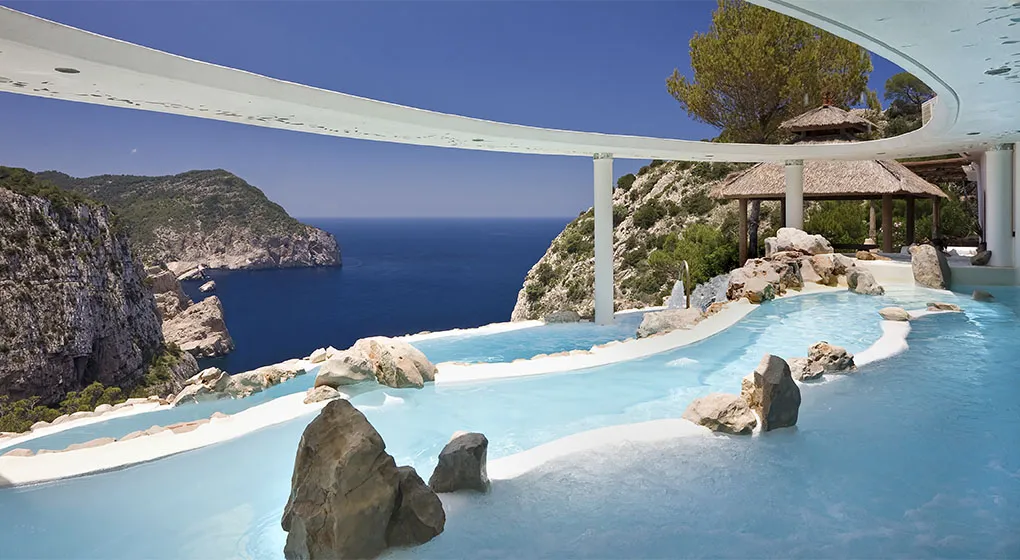
A five-star house on the cliffs at Na Xamena, on Ibiza's north coast, with 59 rooms and suites, La Posidonia Spa and the eight-pool Cascadas Suspendidas.
Our featured hotel is on the north coast, in the protected hills of Es Amunts — the greenest and quietest side of the island. Dalt Vila and Ibiza town are on the south-east coast, Es Vedrà stands off the south-west, and Ses Salines runs down to the southern tip, facing Formentera. The villages, the northern coves and the airport are under “Show places”.
Warming fast: highs rise from about 20°C (68°F) in April to 27°C (80°F) in June, with rain on three or four days a month and hardly any by June. Good for walking and the villages.
EventsThe feast at Sant Jordi de ses Salines on 23 April, Santa Eulària's spring festival on the first Sunday of May, with ball pagès, and Sant Joan's on 24 June.
Summer July and August
Hot, dry and reliably sunny: highs of about 30°C (86°F), and rain on barely one day a month. The season for the water, the boats and long evenings outdoors.
Busy: the island's busiest weeks by far — Ibiza and Formentera receive over twenty times as many visitors in July as in January. We reserve boats, beach clubs and tables well ahead.
Autumn September and October
The heat eases and the island quietens: highs fall from about 28°C (82°F) in September to 24°C (75°F) in October, and rain returns on four to six days a month.
EventsSant Miquel's feast on 29 September, at the fortress church above the north coast, with music and ball pagès, the island's traditional dance.
Winter November to March
Mild and quiet, with highs of about 16–20°C (61–68°F) and rain on three to six days a month. From mid-January the almond trees flower in the valley around Santa Agnès.
EventsSant Mateu's wine festival in December, when the farmers bring out the new wine, and the village feasts of Sant Antoni on 17 January and Santa Agnès on 28 January.
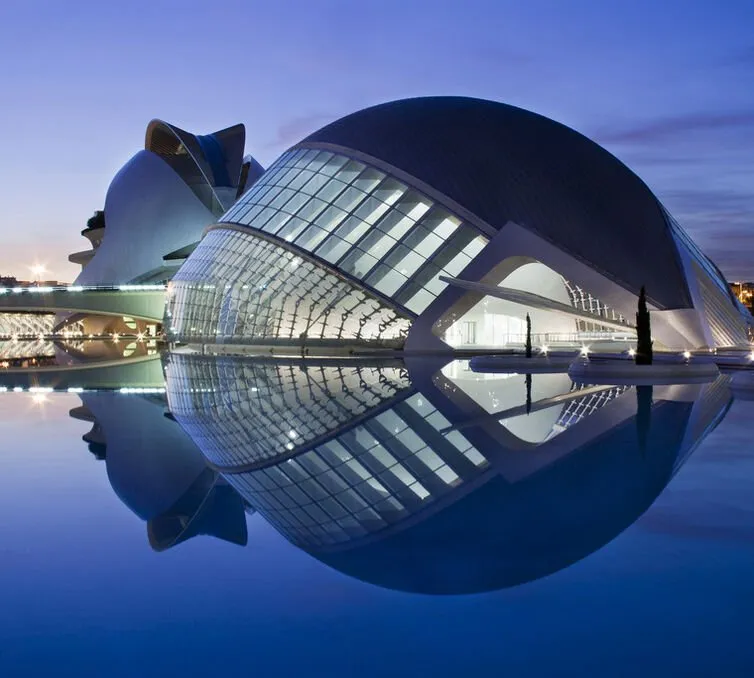
Across the water on the mainland: a Gothic silk exchange on the World Heritage List, the Ciudad de las Artes y las Ciencias, and paella from the Albufera.
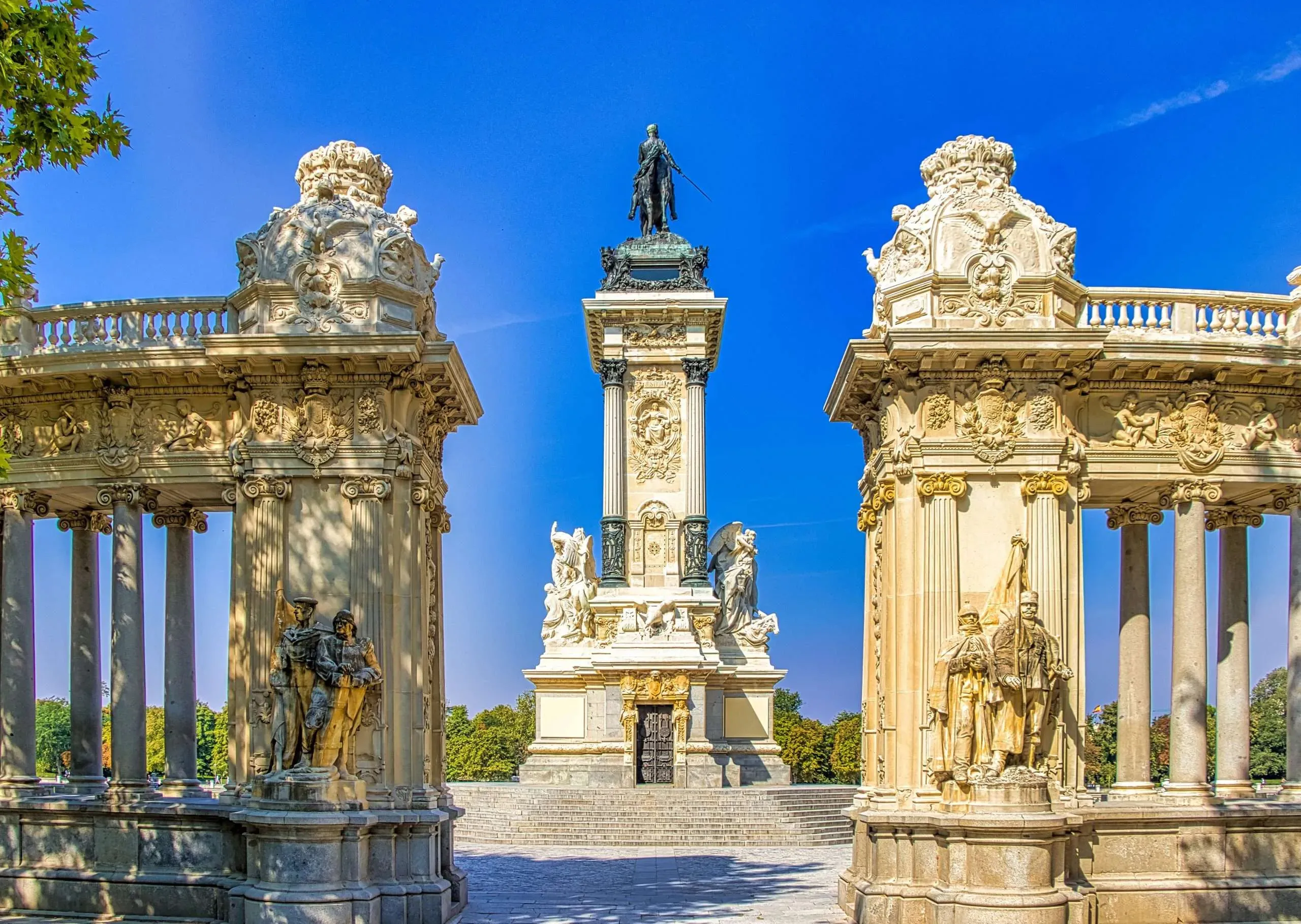
The capital, a direct flight away: the Prado and the Retiro, on the World Heritage List since 2021, and the Royal Palace.
05Planning with Avelia
How we plan your time in Ibiza
We help you choose where on the island to stay — the quiet north, the countryside or close to Ibiza town — balance days at sea with the old town and the villages, and fit Ibiza into a wider journey through the islands or the mainland.
1
Share your plans
Tell us your dates, interests, preferred pace and any practical requirements.
2
Shape your trip with us
We prepare a tailored proposal and refine it with you, with a quoted trip price and clear inclusions.
3
Travel with our support
Once you approve the proposal and complete the agreed booking requirements, we confirm your arrangements. We coordinate the details and support you while you travel.
Peace of mind
Clear before you commit. A written proposal with a quoted trip price and clear inclusions, before any payment.
Financially protected. Your payments for a package trip are covered against our insolvency by a guarantee with AXA.
One point of contact. From the first conversation to the last day, with support while you travel.
Your proposal sets out the arrangements included in your trip.
Hotels and villas matched to you — on the cliffs of the north, in the countryside or near Ibiza town, private villas on request, and not only the hotel featured here.
Private transport — chauffeur-driven transfers from the airport and around the island, and the crossings and flights on to Formentera, Mallorca and the mainland.
Days at sea — a private boat or sailing yacht, a day on Formentera and S’Espalmador, kayaking or diving along the south-west coast.
Private guides — for Dalt Vila, Puig des Molins and Sa Caleta, and for walks in the hills of the north.
Food and wine — tastings of the island’s wines and olive oil, a long lunch at a finca, and seafood by the water.
Tables and reservations — restaurants from the old town to the coves, and beach-club loungers booked ahead.
Special occasions — honeymoons, anniversaries and family trips, planned around who is travelling.
Spain's great sites for art, architecture and history, with a private guide.
06Questions
Questions we are asked
What does it cost to have a tailor-made trip designed by Avelia Travel?
Every trip is priced individually. After discussing your plans, we prepare a tailored proposal with a quoted trip price and a clear outline of what is included.
How many nights should we spend in Ibiza?
We recommend four to seven days. That is enough for Dalt Vila and the old town, a day on the water to Formentera, time in the north and its villages, and days at the hotel in between. Three or four days suits a short escape built around rest; a week leaves room for the countryside and the sea.
When is the best time to visit Ibiza?
April to June and September and October are the most comfortable. Daytime highs at the airport average about 20°C in April and 27°C in June, 28°C in September and 24°C in October. July and August are the hottest months, with highs around 30°C, and by far the busiest. From November to March the island is mild and quiet, with highs of 16–20°C and the almond trees in flower from mid-January.
Can I combine Ibiza with other islands or with mainland Spain?
Yes. The ferry to Formentera leaves from the port of Ibiza, and a boat of your own can take in S’Espalmador on the way. From Ibiza airport there are direct flights to Palma, Barcelona, Madrid and Valencia, and ferries run to the mainland. Ibiza pairs well with Mallorca or Barcelona, and further afield with the French Riviera.
Is Ibiza good for families?
Yes. Families often take a private villa, with the beaches, boat days, kayaking and snorkelling, and walks in the north planned around the children; couples come for the sunsets, the spas and the quiet of the countryside.
What is Ibiza known for?
Its old town above all: Dalt Vila’s Renaissance walls enclose a town of more than 2,500 years, and with the Phoenician settlement of Sa Caleta, the necropolis of Puig des Molins and the Posidonia seagrass meadows around the coast it makes up the UNESCO World Heritage site “Ibiza, Biodiversity and Culture”. It is known too for its coves and clear water, for Es Vedrà off the south-west coast, for the green, quiet north, and for a countryside of whitewashed farmhouses and fortress churches.
Do you only plan full itineraries, or can you help with just a hotel?
Both. We plan complete trips, and we also arrange a stay on its own: a hotel matched to you, with transfers, a guide or a few reservations added if you wish.
Is Avelia right for me?
Avelia suits travellers who want a private, well-paced trip planned around them: the right places in the right order, hotels chosen for them, guides who know the ground, tables and tickets taken care of, and one point of contact from the first conversation until they are home.
Start planning your time in Ibiza
Tell us your dates and who is travelling. Everything else we can work out together.