Andalusia · Spain

Luxury travel in Córdoba

The seat of the caliphs: the Mezquita-Catedral at the heart of an old town on the World Heritage List, the Jewish quarter, the patios, and Medina Azahara 8 km out. Avelia plans private, tailor-made time in Córdoba, as a stay of its own or between Seville and Granada.

Córdoba at a glance

Recommended stay
Two nights, or three or four with days out to the Subbética
Best seasons
March to May and September to November
Getting there
High-speed trains: Seville in about 40 minutes, Madrid in 1 h 40
Best for
The Mezquita, the Jewish quarter and the patios, Medina Azahara
In a wider trip
Pairs well with Seville, Granada, Ronda, Málaga or Madrid
World Heritage
The Mezquita and old town, Medina Azahara, and the patios festival

A trip with us typically includes hotels, private transfers, guided days and restaurant reservations, and always support while you travel.

Plan your Córdoba trip

On this page

  1. Experiences
  2. Hotels
  3. When to go
  4. Itineraries
  5. Planning
  6. FAQs
Plan your Córdoba trip

01Inspiration

Experiences in Córdoba

Each of these is arranged privately for your dates, subject to availability.
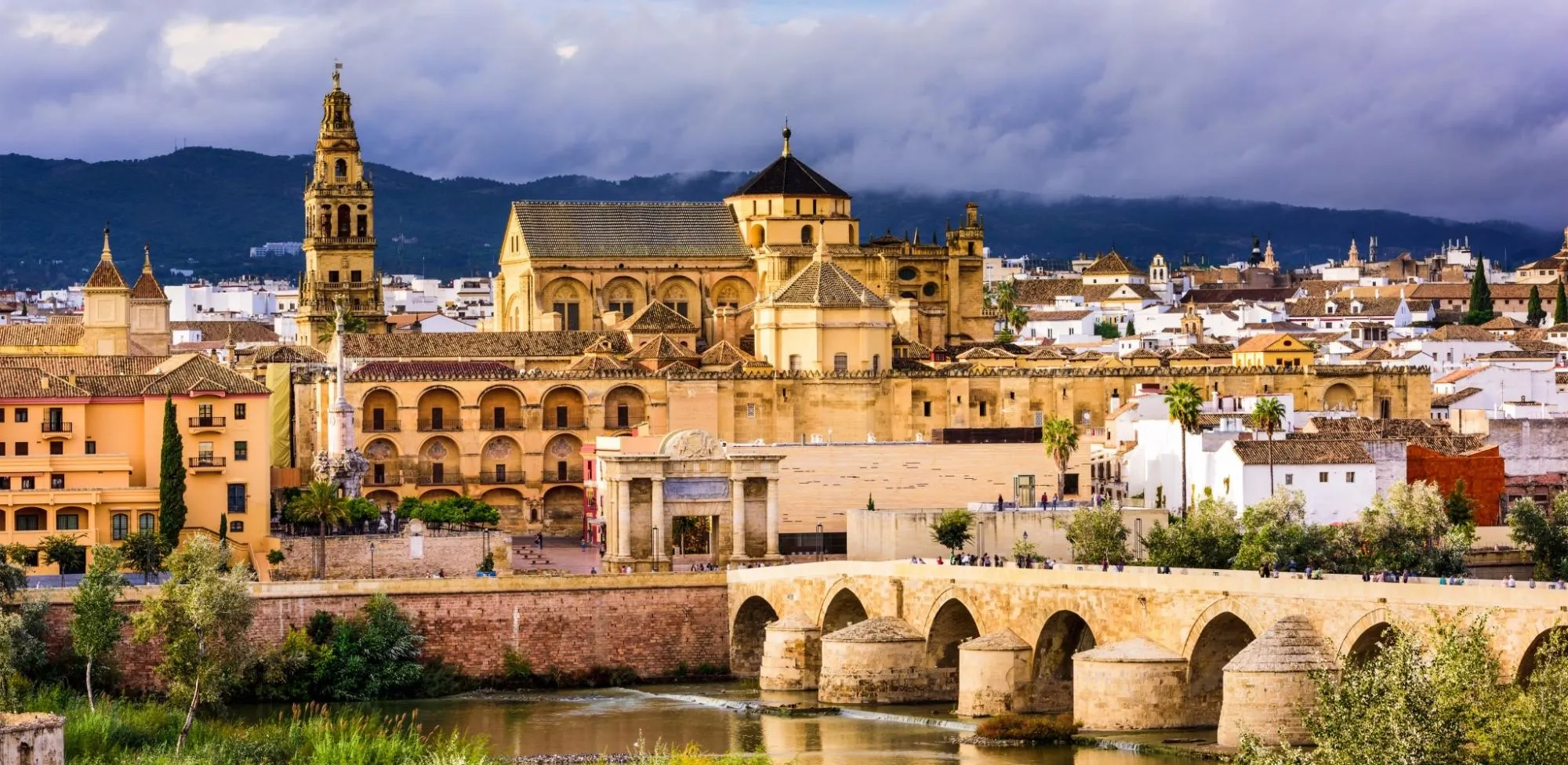
  • The Mezquita-Catedral above the old town of Córdoba under a stormy sky: the bell tower on the left, the cathedral's roofs and lantern rising from the long walls, a stone gateway, and the arches of the Roman bridge over the river in front, with dark hills behind

    The Mezquita-Catedral and the old town

    The Mezquita-Catedral with a private guide, then the old town around it: the Jewish quarter and its synagogue, the craft workshops, and the Roman bridge across the Guadalquivir.
    More of the Mezquita and the old town
    • The Mezquita-Catedral with a private guide — the mosque Abd al-Rahman I founded in 786–788 and a cathedral since 1236: its double arches of stone and brick, and the mihrab, whose mosaics came from Byzantine craftsmen.
    • The quiet first hour — the prayer hall early in the morning, before the day’s guided visits, at its quietest.
    • The bell tower — at 54 m the tallest building in the city, raised after an earthquake in 1589 around the caliphs’ minaret; the climb takes half an hour.
    • The Mezquita by night — «El Alma de Córdoba», the Cabildo’s own hour-long visit in light and sound, with commentary in nine languages, on the nights its calendar sets.
    • The Jewish quarter and the Synagogue — the only Jewish house of worship the city has kept, a Mudéjar building of 1314–1315, with a guide to the Sephardic history around it.
    • The Roman bridge at golden hour — across the Guadalquivir to the Calahorra tower, both inside the World Heritage area; with a photographer on request.
    • The workshops — a visit, on request, to one of the family workshops that still make cordobanes and guadamecíes, embossed and painted leather, or to a silversmith or a potter.
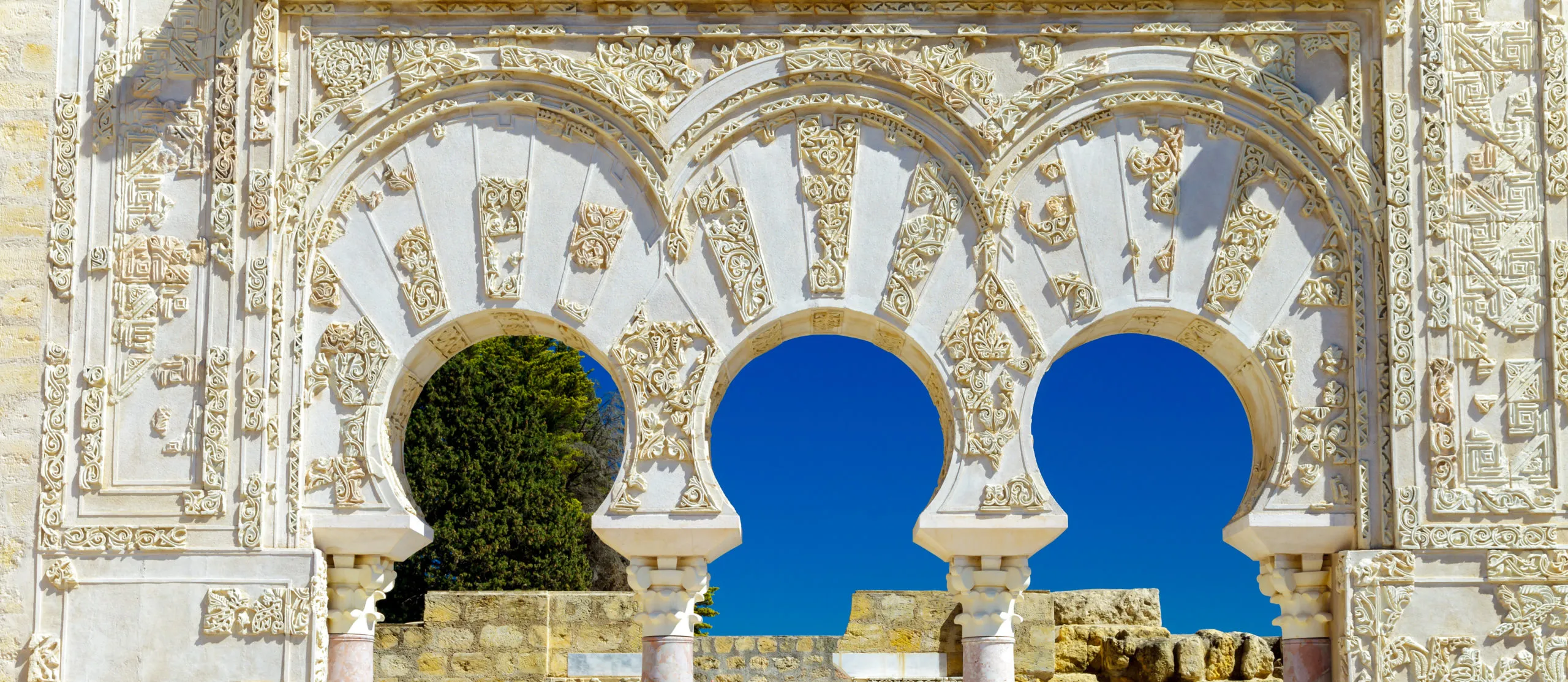
  • Three horseshoe arches of carved white stone at Medina Azahara, their voussoirs and frame covered in carved plant and geometric ornament, on pink marble columns, with blue sky and a cypress seen through them and ruined walls below

    Medina Azahara and the country

    The caliphs’ palace-city 8 km out, on the World Heritage List since 2018; then a day among the villages and olive groves of the Subbética, an olive-oil tasting, and the wines of Montilla-Moriles.
    More of the country
    • Medina Azahara with a historian — the city Abd al-Rahman III began in 936 or 940, laid waste in the civil war of 1009–1010. The visit starts at the site’s museum, with a shuttle up to the ruins, and takes two and a half to three hours.
    • Medina Azahara on a summer evening — from 21 June to 20 September the ruins reopen in the evening.
    • The Subbética — a day by car to Zuheros and Priego de Córdoba, white villages in the Sierras Subbéticas, a UNESCO Global Geopark south of the city.
    • A Roman villa — El Ruedo at Almedinilla, near Priego, with the town’s own guided visit to the villa and its museum.
    • Olive oil — a tasting at an estate outside the city, with a picnic among the trees, on request; Córdoba’s oils carry four Denominaciones de Origen, Priego de Córdoba’s among them.
    • Montilla-Moriles — the province’s own wines, fino, amontillado, oloroso and the sweet Pedro Ximénez, tasted at a bodega in the vineyards, on request, or in one of the city’s historic taverns.
    • The Sierra de Hornachuelos — a walk with a guide in the natural park west of the city, part of the Dehesas de Sierra Morena biosphere reserve.
    • On horseback — a ride through the olive groves outside the city, on request, subject to availability.
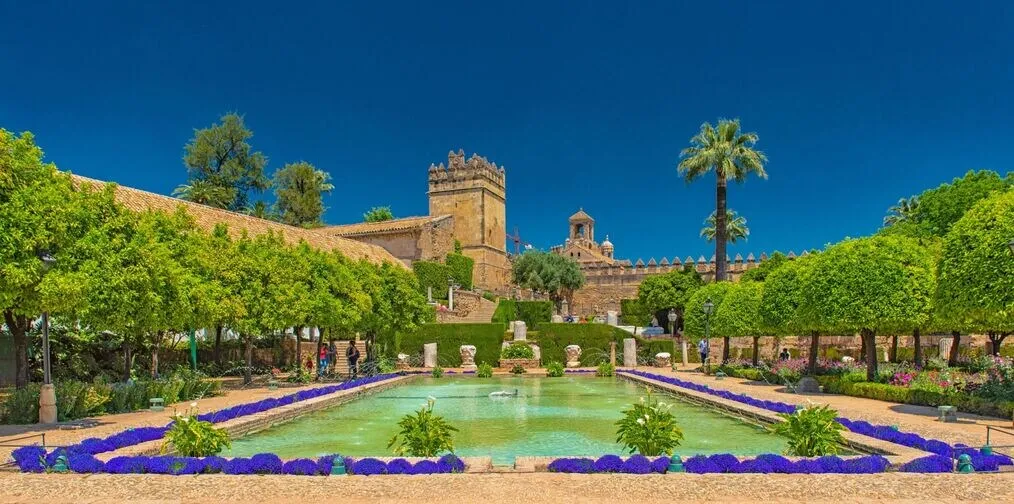
  • The gardens of the Alcázar de los Reyes Cristianos: a long pool edged with violet flowers between clipped trees and palms, and the fortress's crenellated stone tower behind it under a deep blue sky

    Gardens, patios and the table

    The Alcázar’s water gardens, the twelve patios of the Palacio de Viana and the patios festival each May; then salmorejo in a historic tavern, a Michelin-starred table, and flamenco after.

    More of the patios and the table
    • The patios — in early May, for the festival held since 1921 and inscribed by UNESCO in 2012, the patio houses open to all; the rest of the year some are open freely, and others with a guide who knows them.
    • The Palacio de Viana — twelve patios and a garden around a house lived in from 1425 to 1980.
    • The Alcázar de los Reyes Cristianos — the fortress the Catholic Monarchs lived in for eight years, with a guide, and its gardens on three terraces of pools and fountains.
    • A cooking class — the morning market with a chef, then salmorejo, flamenquín and the city’s other dishes in the kitchen.
    • The historic taverns — a route through some of the thirteen the city recognises as historic, each open for more than 75 years; a food historian on request.
    • Michelin-starred tables — a tasting menu at one of the city’s starred restaurants, reserved ahead.
    • Flamenco — an evening in an intimate venue, with seats booked ahead; UNESCO has listed flamenco as intangible heritage since 2010.
    • An Arab bath — an afternoon in a hammam, with a massage, reserved ahead.
    • The river — a boat or a kayak on the Guadalquivir, on request, subject to availability.
    • A carriage at dusk — a horse-drawn carriage through the lit streets of the old town, on request, subject to availability.

02Featured hotels

Where to stay in Córdoba

A selection of hotels we recommend in Córdoba. We can also arrange other properties to suit your preferences and travel plans.

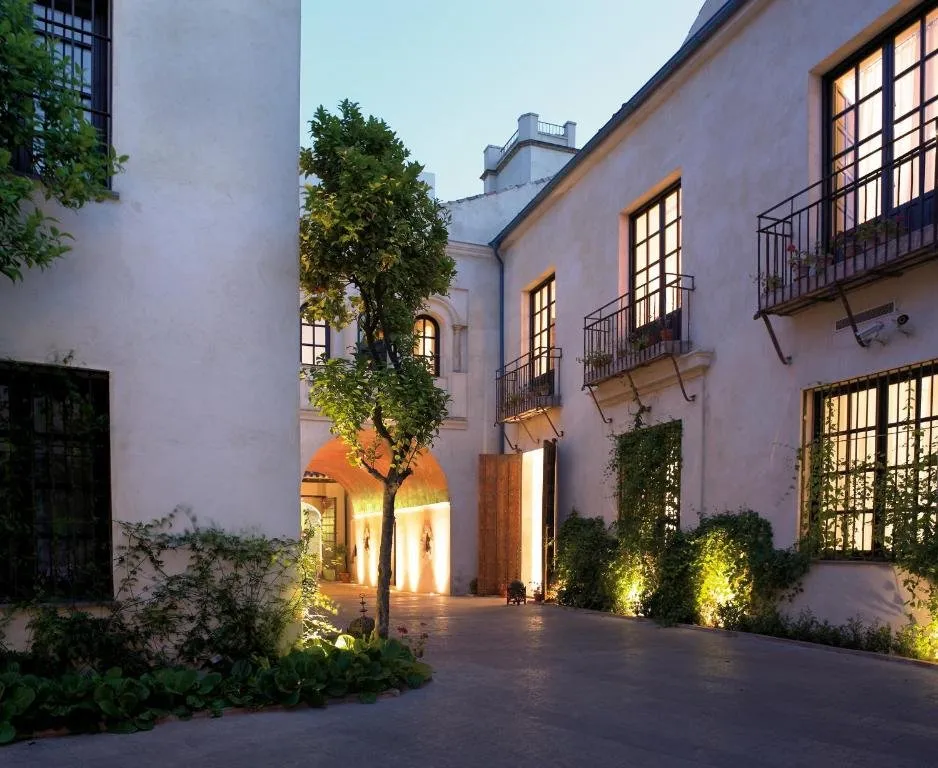
  • A courtyard of the palace at dusk: an orange tree before a lit arched passage, between white walls with iron balconies

    San Miguel-Capuchinos

    Palacio del Bailío

    A five-star Gran Lujo house of 48 rooms in the Casa del Bailío, with a Roman house beneath its courtyard, a spa and an outdoor pool.
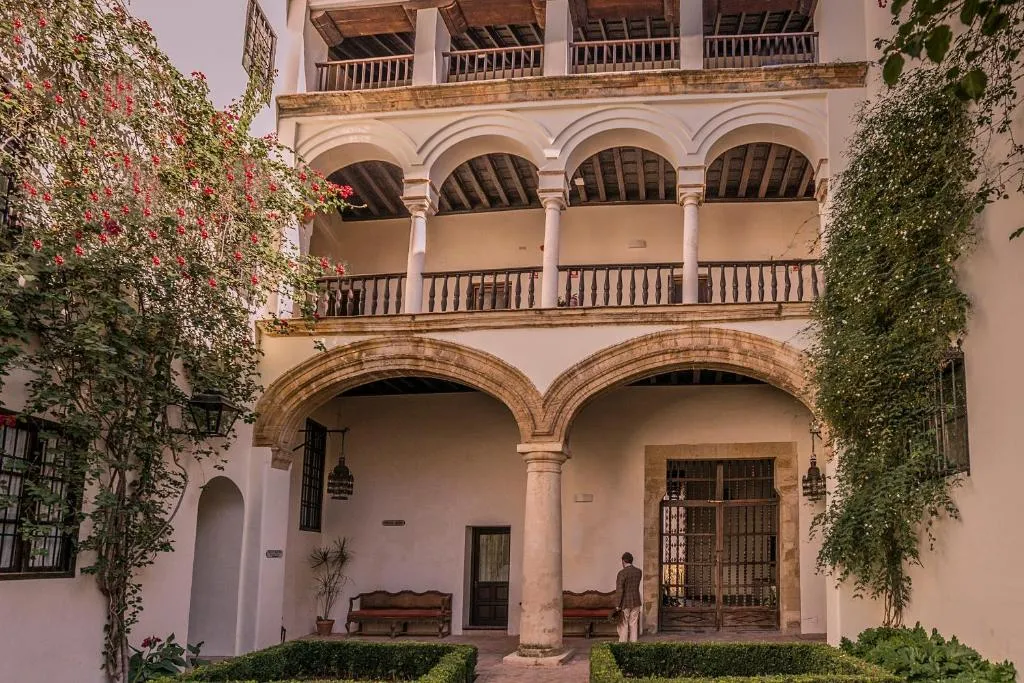
  • A patio at Las Casas de la Judería, two broad stone arches on a column below and a whitewashed gallery of slim arches above, with a bougainvillea in red flower

    Judería

    Las Casas de la Judería

    Five old houses joined around Mudéjar and Renaissance patios in the Judería, opposite the Alcázar, with two penthouse terraces and a pool open all year.

Explore where to stay in Córdoba

03Seasons

When to go

Spring March to May

Warm and bright: highs rise from about 21°C (70°F) in March to 27°C (81°F) in May, with rain on five to seven days a month. The patios are in flower in May.

EventsSemana Santa, 21 to 28 March in 2027; then the Cruces de Mayo at the turn of the month, the patios festival in early May, and the Feria at the end of it.

Summer June to August

Hot and dry, with almost no rain: highs of about 33°C (91°F) in June. Sightsee early, and again in the evening.

Heat: in July and August the average daytime high is about 37°C (99°F). Midday outdoor activity is not recommended.

Autumn September to November

Highs ease from about 32°C (90°F) in September to 19°C (66°F) in November, and the rain returns in October, on six or seven days a month.

Winter December to February

Cool, with highs of about 15–17°C (59–63°F), frost on several nights in January, and rain on six to eight days a month, most in December: a quieter time to visit.

04Shape your trip

Routes and itineraries

Each route is a starting point, tailored to you. Three of our multi-city Spain itineraries include Córdoba, priced in US dollars per person; for a day here from Seville, see our Seville luxury itinerary.

  1. 4 days

    Culture and cuisine

    Places
    Córdoba
    Suits
    A first visit built around the Mezquita and the table
    What the route includes
    • The Mezquita-Catedral with a private guide, early in the day
    • A market visit with a local chef, then a hands-on Andalusian cooking class
    • An evening of flamenco, with a wine tasting
    • A visit to a leatherworker’s or a potter’s workshop
    • The patios with a local guide, in flower in spring
    • Dinner with paired wines at one of the city’s Michelin-starred restaurants
  2. 6 days

    Art, history and the countryside

    Places
    Córdoba, with a day in the Subbética
    Suits
    History in depth, and the villages and olive groves around the city
    What the route includes
    • Medina Azahara with a private guide, an archaeologist on request
    • The Alcázar and the Jewish quarter with a specialist guide
    • An olive-oil tasting and a picnic in the country outside the city
    • The Roman bridge in the evening light, with a photographer
    • A day in Priego de Córdoba and Zuheros, villages of the Subbética
    • An afternoon at a hammam, with a massage
  3. 3 days

    Córdoba in brief

    Places
    Córdoba
    Suits
    The essentials, at an easy pace
    What the route includes
    • The Mezquita-Catedral and the Alcázar, with tickets booked ahead
    • An evening of flamenco and tapas with a local guide
    • A boutique hotel in the historic quarter
    • A morning walk through the Jewish quarter’s quiet lanes, with stops for coffee
    • Private transfers from the airport or the station

Itineraries that include Córdoba

All our Spain itineraries

Beyond Córdoba

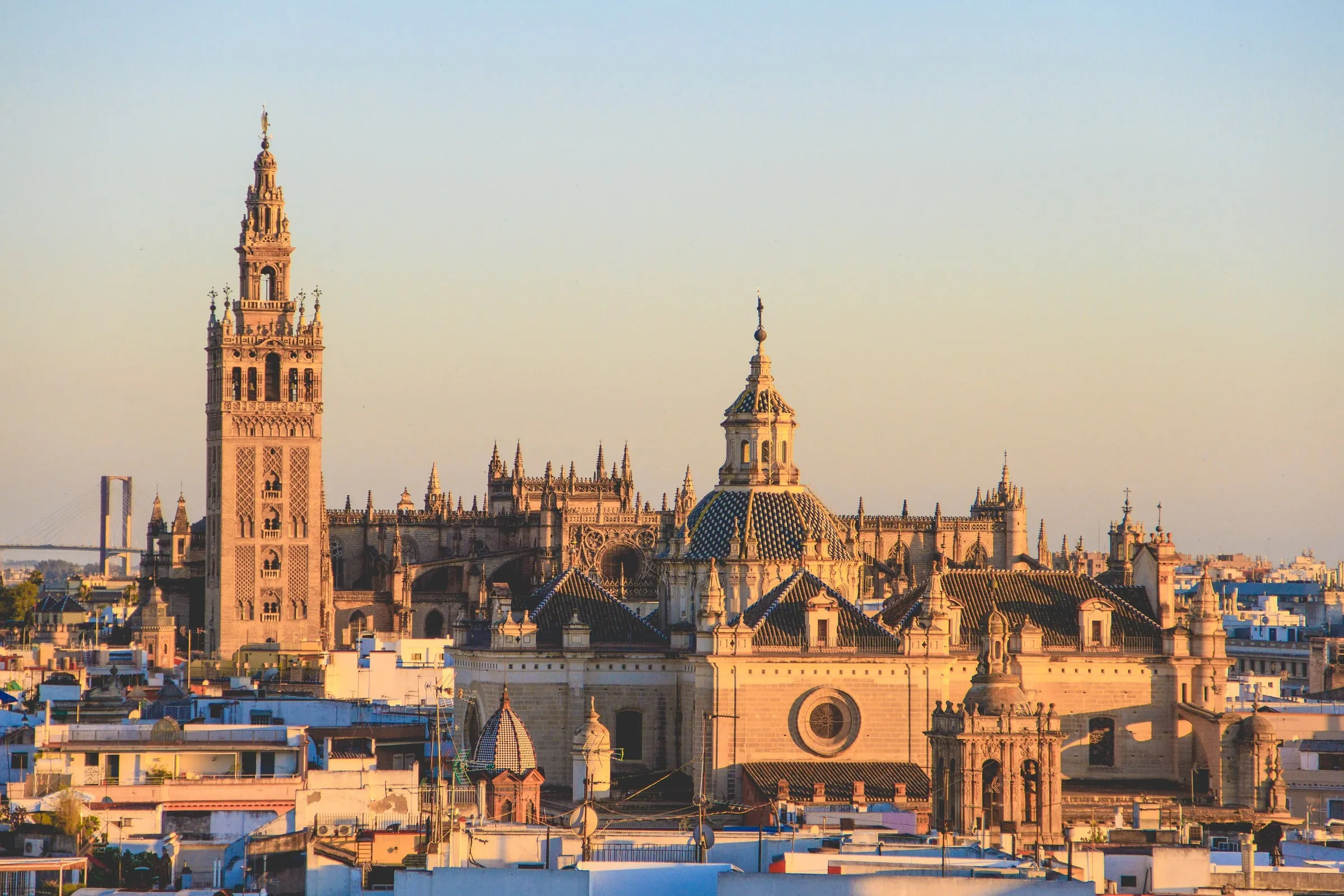
  • The Giralda bell tower and Seville Cathedral rising above the city's rooftops in golden light

    Another stay

    Seville

    About 40 minutes by high-speed train: the Cathedral, the Giralda and the Real Alcázar, on the World Heritage List together since 1987, and flamenco in Triana. Best for three nights, before or after Córdoba.
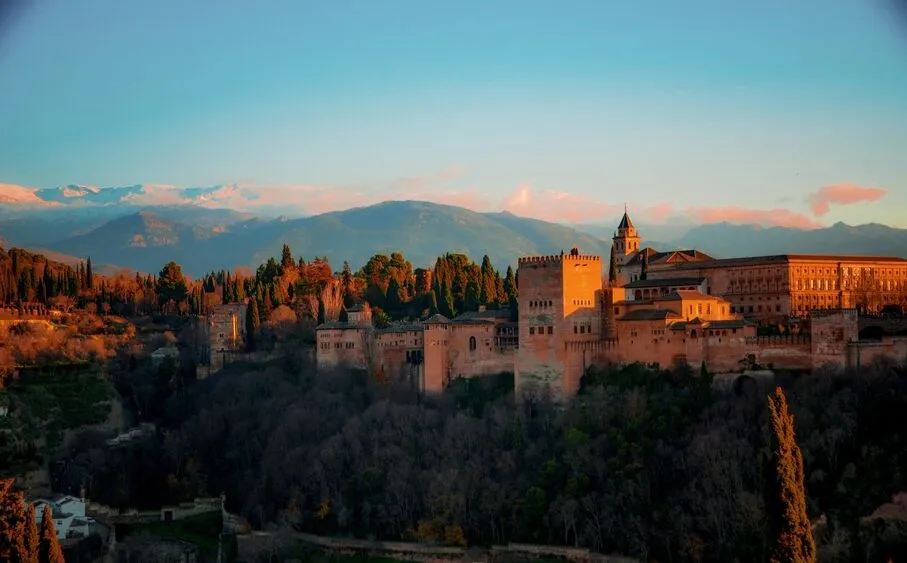
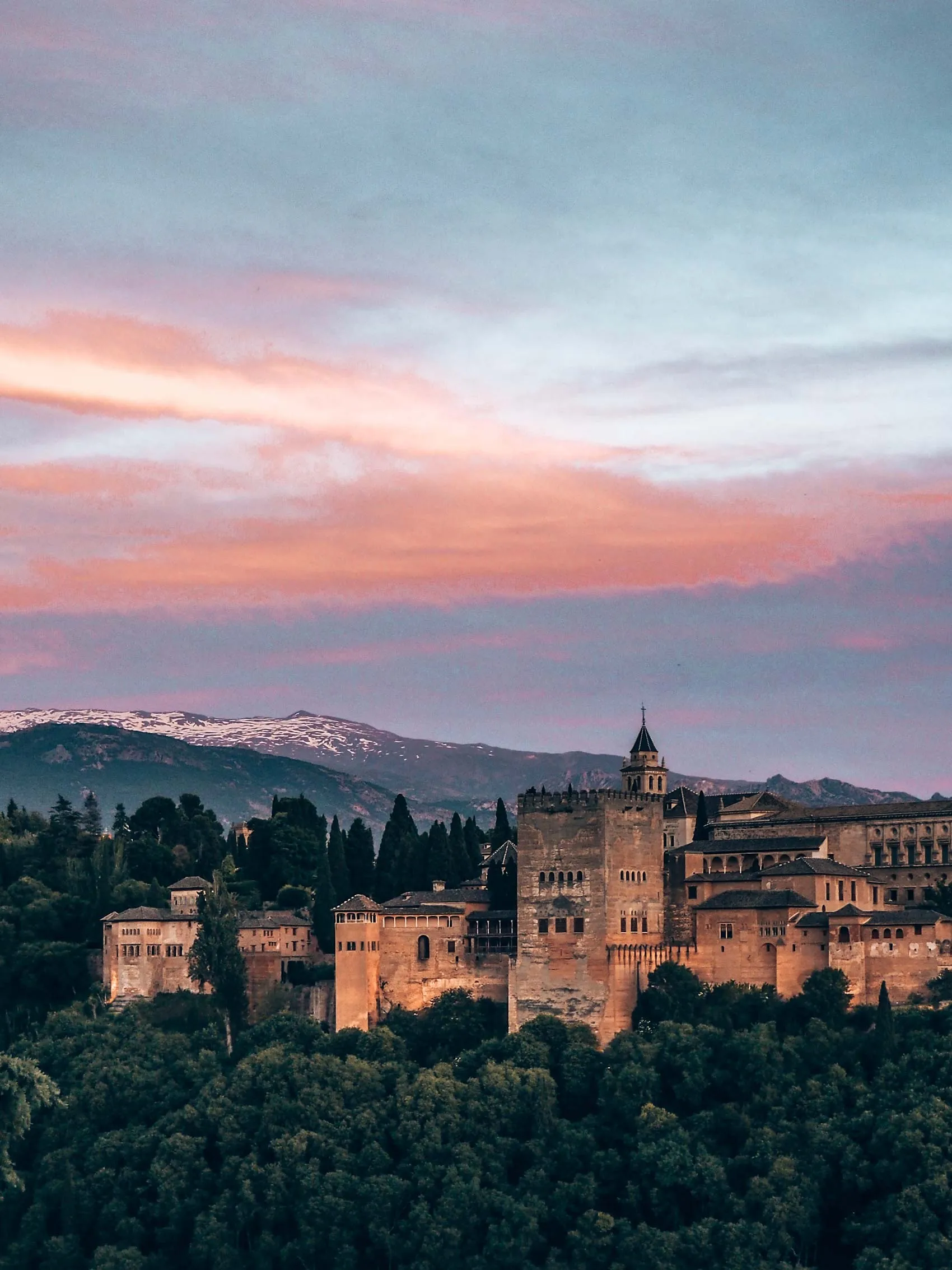
  • The Alhambra on its wooded hill in Granada, its towers and palace walls lit orange at sunset, with the snow-capped Sierra Nevada behind

    Another stay

    Granada

    An hour and a half by high-speed train: the Alhambra and the Generalife above the Albaicín, the old Moorish quarter, with the Sierra Nevada behind. Best for two or three nights; we reserve the Alhambra as soon as your dates are fixed.
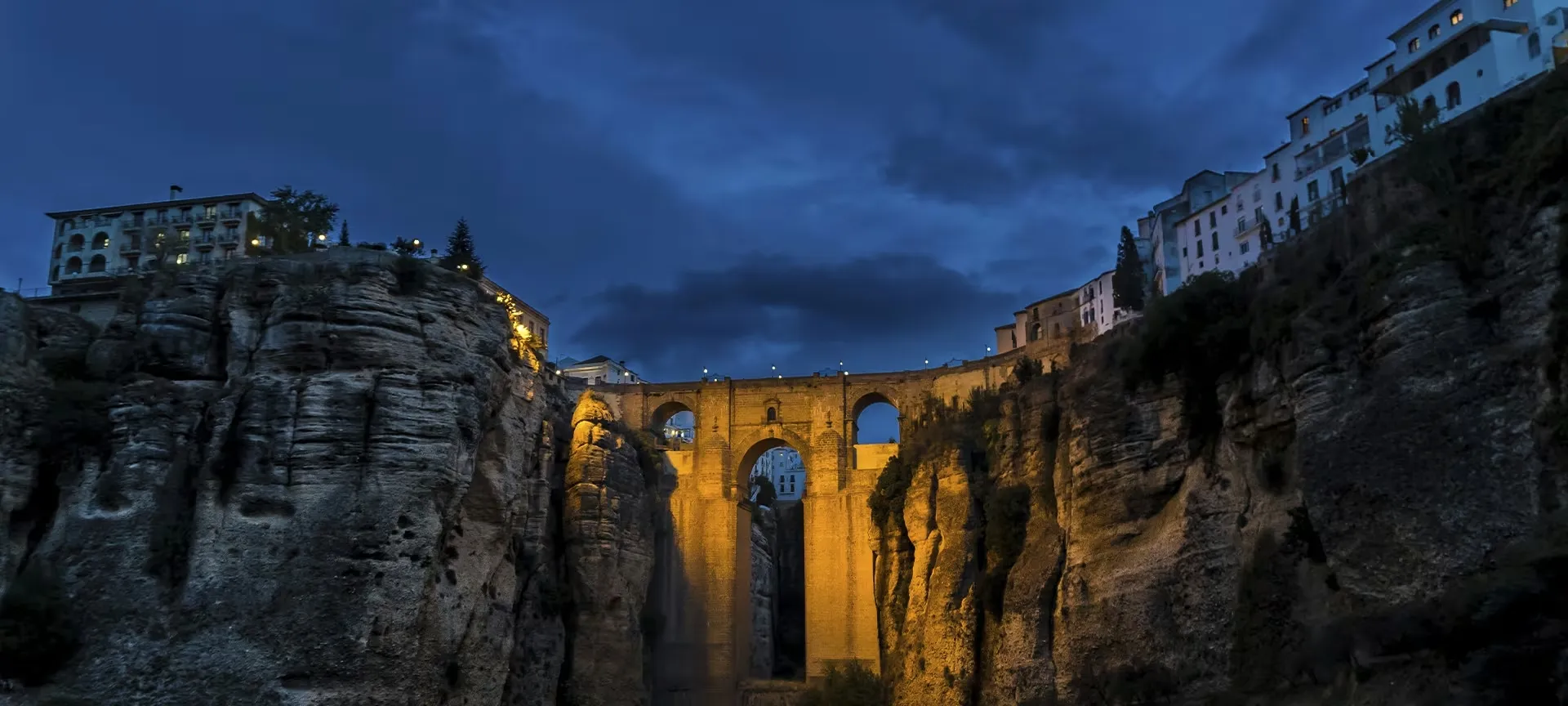
  • Ronda's Puente Nuevo lit gold at dusk, spanning the gorge between sheer cliffs, with white houses along the clifftops

    Another stay

    Ronda

    By road through the olive groves and white villages, as our Charm of Andalusia goes: a town split by a gorge 100 m deep, the Puente Nuevo across it, finished in 1793. Best for a night on the way to the coast.
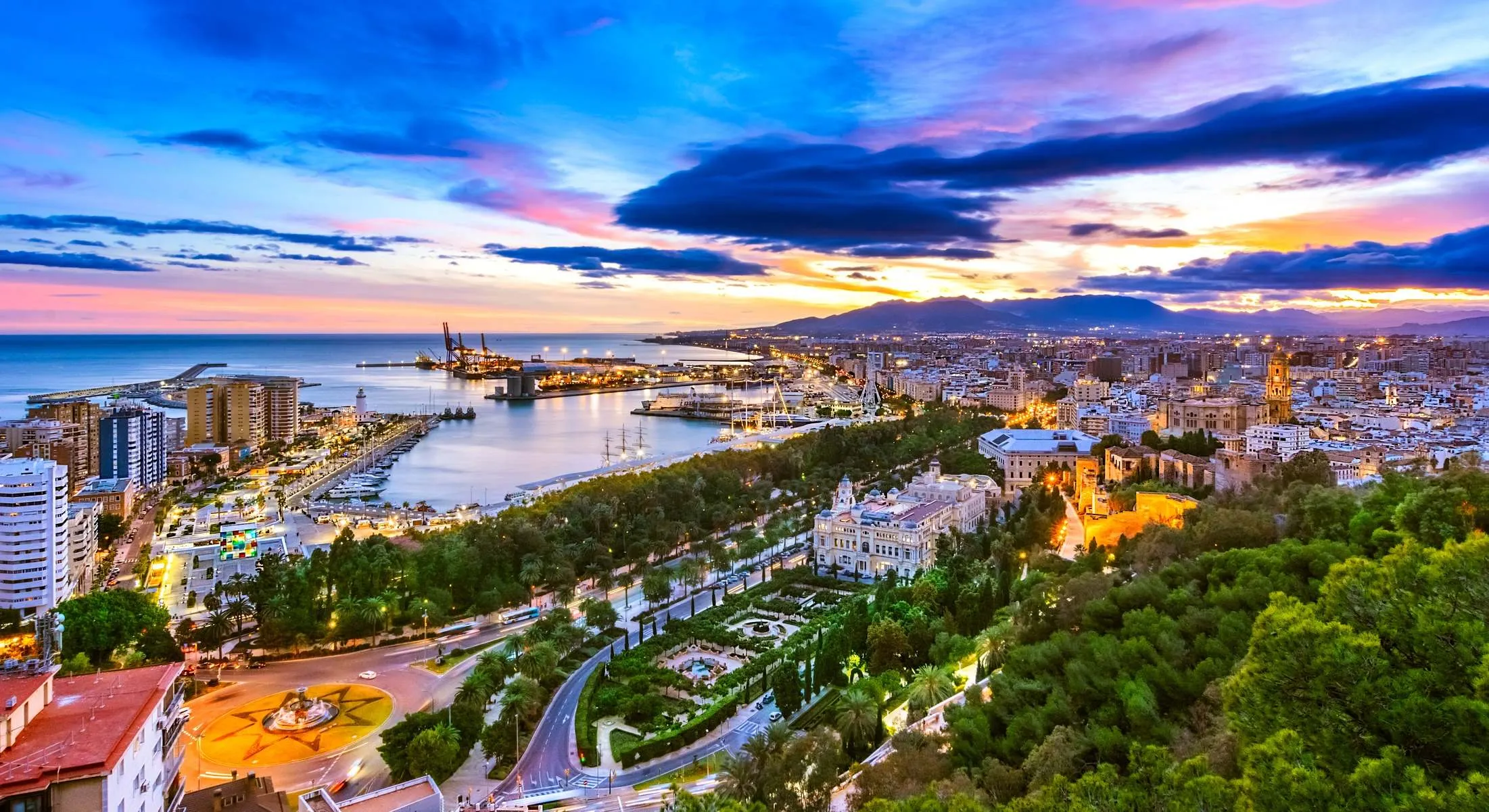
  • Málaga from the hill above it at dusk: gardens and lit streets below, and the port and the city spreading along the bay under a purple sky

    Another stay

    Málaga

    By high-speed train: Picasso's birthplace, the Museo Picasso, open since 2003, the Alcazaba above the port and the Centre Pompidou. Avelia is based here. Best for arriving and leaving, and for art.
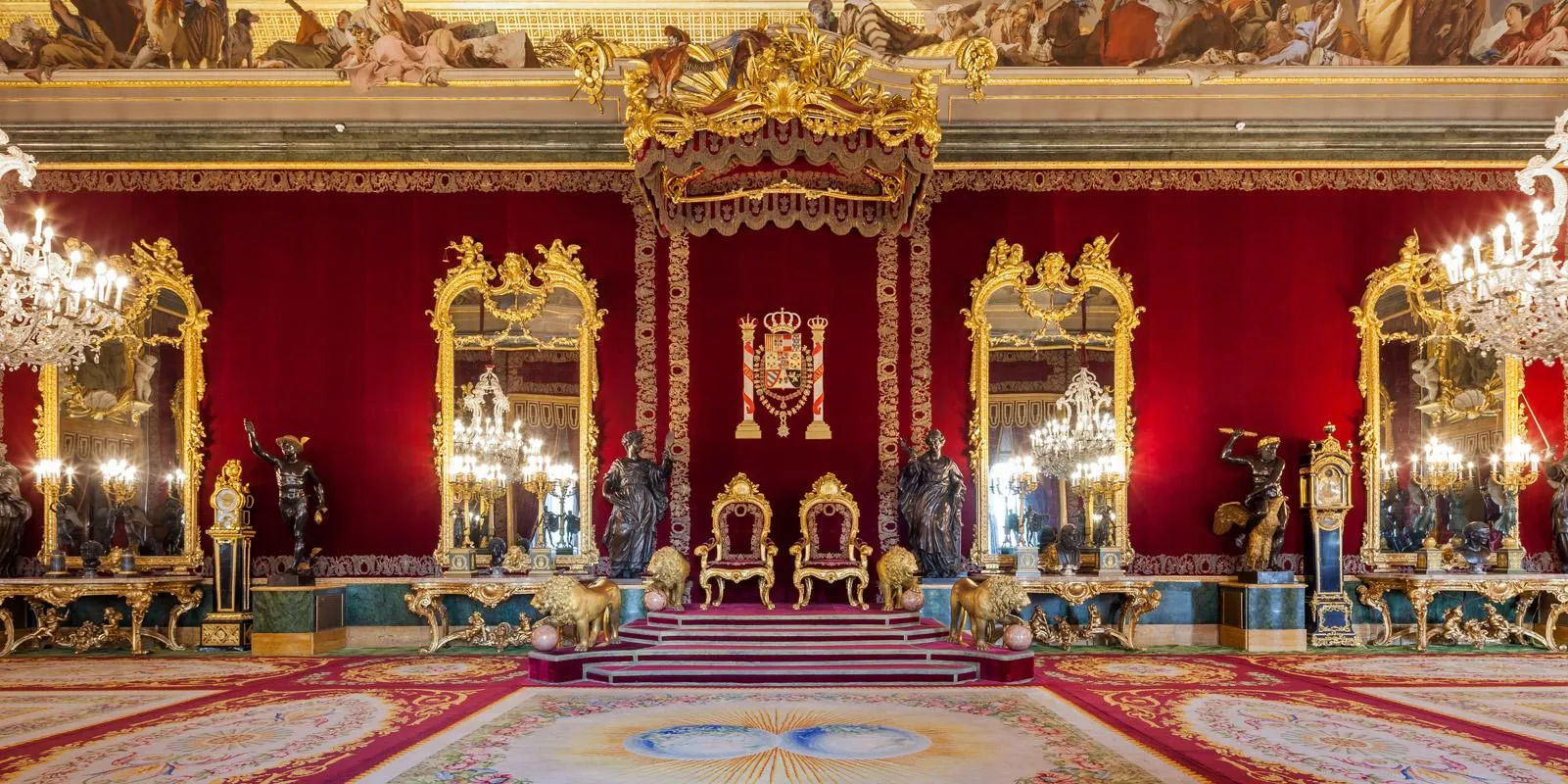
  • A throne room hung in red velvet: two gilded thrones on a red-carpeted dais beneath a gilt canopy, bronze lions at the steps, gilt mirrors and chandeliers along the walls and a painted ceiling above

    Another stay

    Madrid

    1 hour 40 by high-speed train: the Prado and the Retiro, a World Heritage landscape since 2021, and the Royal Palace. Best for the start or the end of a trip, as our Grand Spanish Tour does it.

05Planning with Avelia

How we plan your time in Córdoba

We help you choose the right hotel, balance guided visits with time to explore, and fit Córdoba into your wider journey — or shape a stay in the city itself.

  1. Share your plans

    Tell us your dates, who is travelling and the pace you like, and whether Córdoba is a stay of its own or a stop on a route with Seville, Granada or Madrid.

  2. Shape your trip with us

    Before any payment, we send a written proposal with a quoted trip price and what it includes — such as a historic house in the old town, an art historian for the Mezquita-Catedral, and a Montilla-Moriles tasting — and refine it with you.

  3. Travel with our support

    Once you approve the proposal and complete the agreed booking requirements, we confirm your arrangements. We coordinate the details and support you while you travel.

Peace of mind

Financially protected. Your payments for a package trip are covered against our insolvency by a guarantee with AXA. Plan with peace of mind

What we can arrange

Your proposal sets out the arrangements included in your trip.

  • Hotels matched to you — palaces and historic houses in the old town, in the right street for you, and not only the ones featured here.
  • Private transport — chauffeur-driven premium cars for airport and station transfers, days out to Medina Azahara, the Subbética or Montilla, and the drive to your next stop in Andalusia; high-speed trains where they suit better.
  • Private guides — art historians and specialist guides for the Mezquita-Catedral, the Jewish quarter and Medina Azahara, and an archaeologist on request.
  • Experiences — flamenco, a cooking class, olive-oil and Montilla-Moriles tastings, the patios with someone who knows them, an afternoon at a hammam.
  • Tables and timed entry — reservations from Michelin-starred dining rooms to the historic taverns, and tickets for the Mezquita-Catedral and its bell tower booked ahead.
  • Special occasions — honeymoons, anniversaries and family trips, planned around who is travelling.

Spain guides

06Questions

Questions we are asked

What does it cost to have a tailor-made trip designed by Avelia Travel?

Every trip is priced individually. After discussing your plans, we prepare a tailored proposal with a quoted trip price and a clear outline of what is included.

How many nights should we spend in Córdoba?

We recommend two nights for Córdoba itself, enough for the Mezquita-Catedral, the old town and Medina Azahara, and three or four if you would like a day in the Subbética’s villages and olive groves.

When is the best time to visit Córdoba?

March to May and September to November. May is the city’s own month, with the Cruces de Mayo, the patios festival and the Feria; in July and August the average high is about 37°C, so sightseeing moves to the early morning and the evening. Winter is cool and quieter.

Can I include Córdoba in a larger Spain itinerary?

Yes. Córdoba sits on the high-speed line between Madrid and the rest of Andalusia, so it fits easily between Seville and Granada, or on the way south from Madrid. Valencia is about three hours away by high-speed train, and the Canary Islands a flight from Seville.

Do you only plan full itineraries, or can you help with just a hotel?

Both. We plan complete trips, and we also arrange a stay on its own: a hotel matched to you, with transfers, a guide or a few reservations added if you wish.

Is Avelia right for me?

Avelia suits travellers who want a private, well-paced trip planned around them: the right places in the right order, hotels chosen for them, guides who know the ground, tables and tickets taken care of, and one point of contact from the first conversation until they are home.

Start planning your time in Córdoba

Two nights in Córdoba, or three or four with days out to the Subbética: tell us your dates and who is travelling.

Plan your Córdoba trip

Usually answered within one business day.

Córdoba in pictures

Rows of columns in the prayer hall of the Mezquita-Catedral, carrying two tiers of horseshoe arches striped in red brick and pale stone, bronze lamps hanging on long chains beneath a white vaulted ceiling on the left
The prayer hall, Mezquita-Catedral