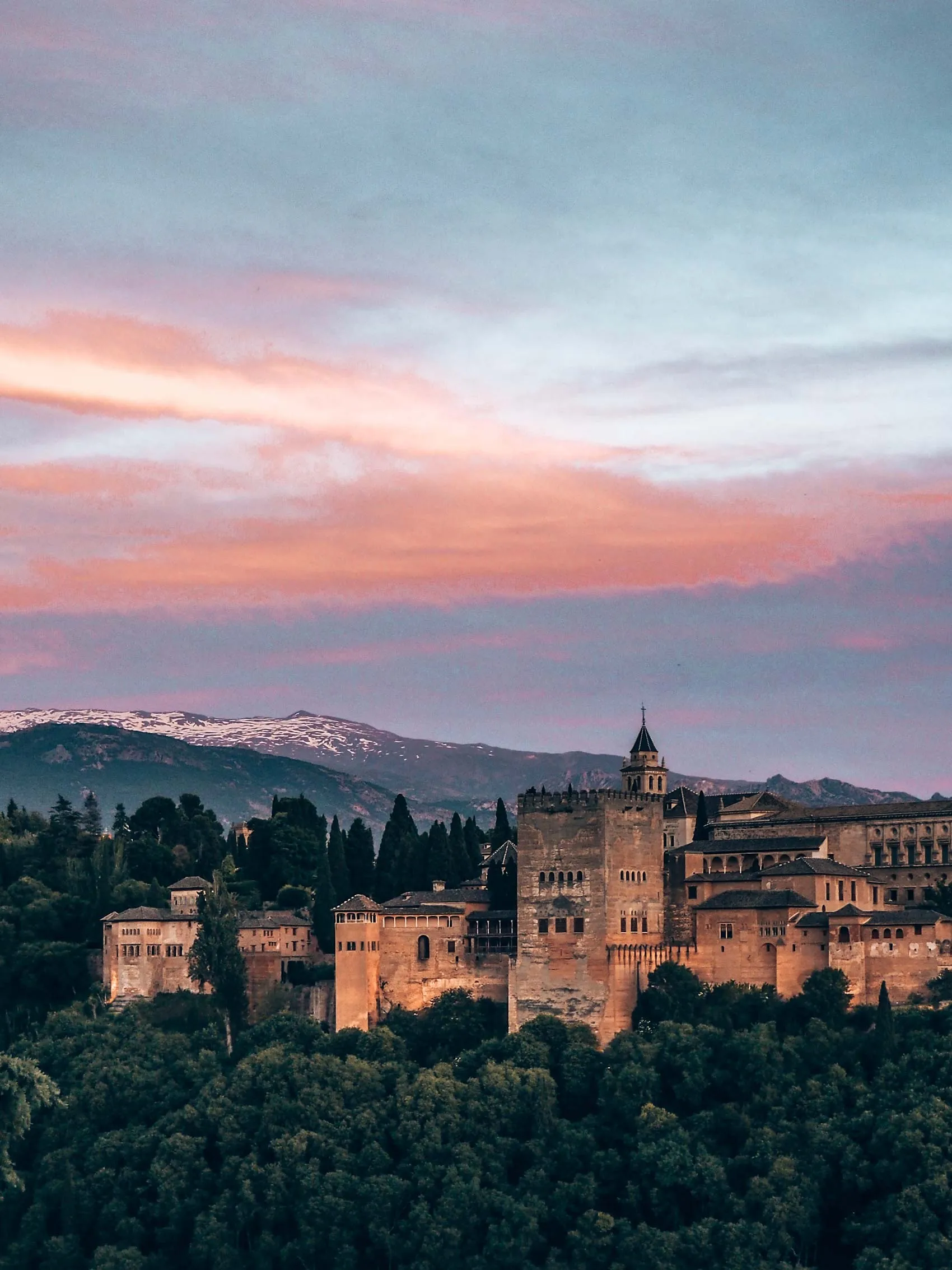
Luxury Spanish Honeymoon
from $16,800 per person
Spain guide
Ten tastes of Spain, each in the place it comes from, from a tapas bar in Seville to a cider house in Oviedo.
By Ramin Jafari · Published · Facts checked
Spanish gastronomy is regional: tapas in Seville, paella in the Albufera outside Valencia, jamón ibérico from Guijuelo near Salamanca, three-star tasting menus in Barcelona, wine in Rioja, sherry in Jerez, cider in Asturias, chocolate con churros in Madrid and the pastries of Bilbao. Each region keeps its own dishes and its own drink. This guide takes them one by one in the place they come from, with when to go and what we can arrange around each.
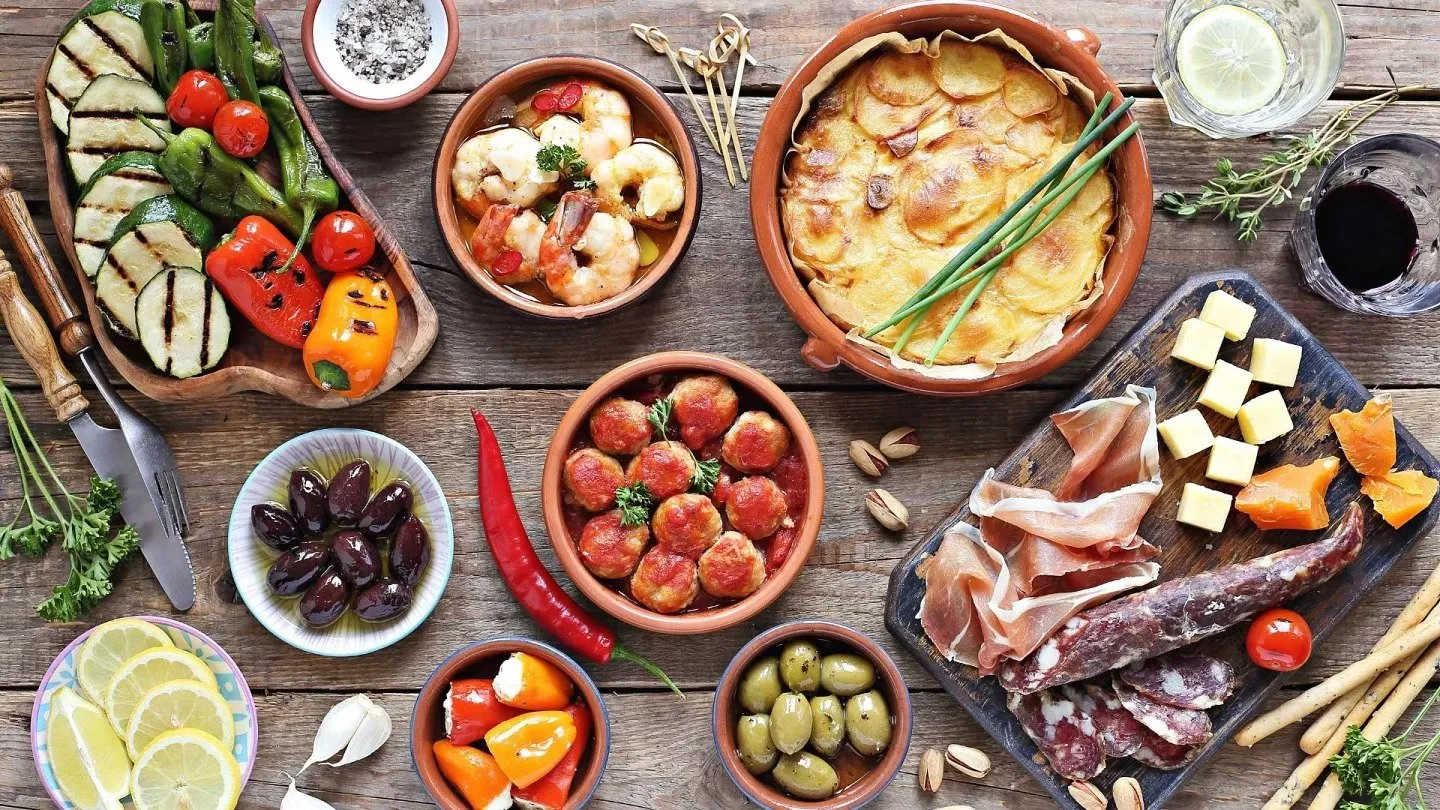
Spain eats at the bar as often as at the table. Two cities show it best.
Seville, Andalusia
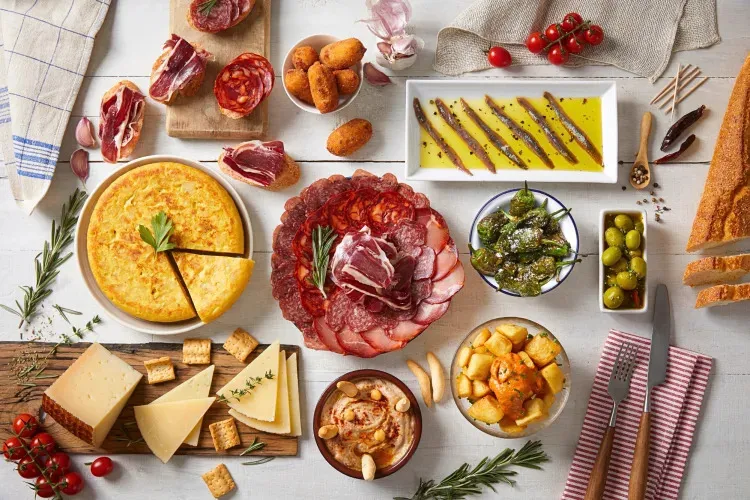
Seville is a city of bars: its tourism office counts more than 3,000 bars and restaurants, one for every 230 residents, and calls the city the cradle of tapas. The bars serve the city’s own cooking in small portions: gazpacho, and salmorejo, the cold cream of tomato, bread, olive oil and garlic, in summer; spinach with chickpeas; oxtail; and pringá, the beef, chorizo, black pudding and ham of the stew, in a little roll. Drink a manzanilla with them, the dry sherry aged under its veil of yeast in the bodegas of Sanlúcar de Barrameda, at the mouth of the Guadalquivir.
We can arrange an evening through the bars of Santa Cruz and Triana with a guide, on request.
Madrid and Barcelona
In Madrid, the city’s tourism blog counts the bocadillo de calamares, fried squid in a bread roll, among the rituals that have to be kept, and there is hardly a bar on the Plaza Mayor that does not serve one. A few steps away, the Mercado de San Miguel, an iron market hall of 1916, became Madrid’s first gourmet market in 2009, its stalls selling food to eat on the spot.
In Barcelona the morning belongs to the Boqueria on La Rambla, where meat was already sold in 1217 and whose market hall was begun in 1840. We can arrange either market with a food guide, on request.
The table
Paella where it was born, ham where it is cured, and Barcelona’s tasting menus.
The Albufera
Paella was born in the Albufera, the lagoon and rice fields 10 km south of Valencia, in the 16th century, in the words of the city’s tourist board. The Valencian paella is chicken, rabbit, ferradura green beans, garrofó beans and tomato, seasoned with olive oil, saffron, sweet paprika and rosemary, on the round rice of the D.O. València, in the wide, shallow pan over gas or a wood fire. In El Palmar, the village in the lagoon, the other dish is all i pebre, eel stewed with potato, garlic and paprika.
A paella class with a chef at a farmhouse near the Albufera, over a wood fire, or a boat across the lagoon at sunset, can be arranged on request.
Guijuelo, Salamanca
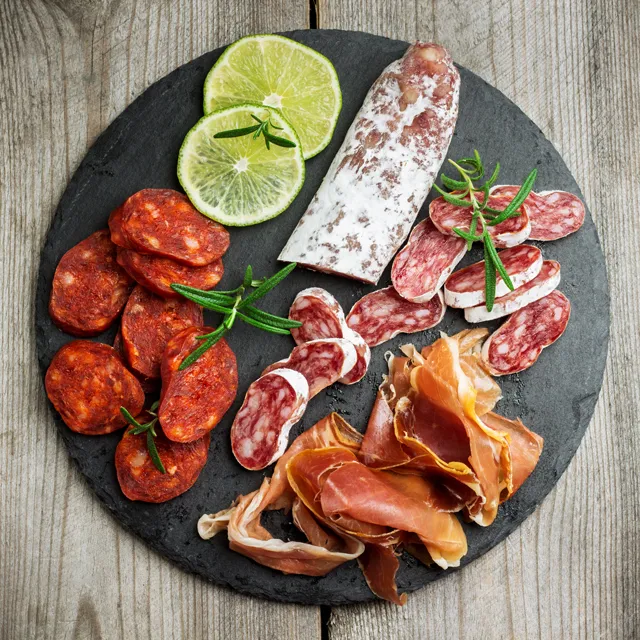
Salamanca’s ham is cured in the sierra in the south-east of the province, around Guijuelo, where the Protected Designation of Origin Guijuelo dries its hams above 1,000 metres, sheltered by the mountains of the Sistema Central, in cold, dry winters and short, mild summers. Its hams and shoulders come from pure Iberian pigs or from crosses with no more than a quarter Duroc. The bellota grade is from pigs fattened in the montanera on the acorns and grasses of the dehesa; the ibérico grade from pigs fed on natural feed, with acorns or without.
A tasting in Salamanca, with the wines to go with it, or a day at a producer in Guijuelo, on request.
Barcelona, Catalonia
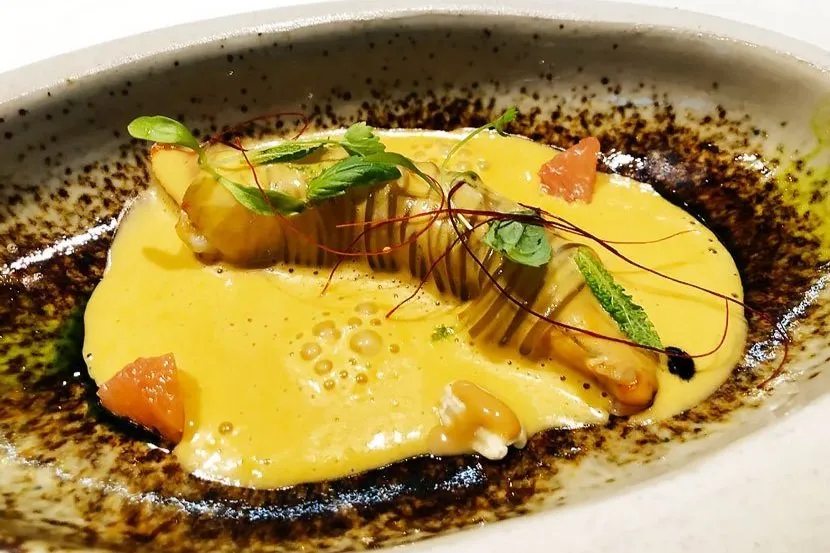
Barcelona has four restaurants with three MICHELIN Stars in the 2026 Guide: ABaC, Cocina Hermanos Torres, Disfrutar and Lasarte. Disfrutar was opened in 2014 by three chefs who met and trained at elBulli, Oriol Castro, Eduard Xatruch and Mateu Casañas, and its two tasting menus gather the dishes it is known for and the season’s newest. Lasarte is Martín Berasategui’s restaurant in the city, where head chef Paolo Casagrande takes the season as his compass.
Disfrutar always has a waiting list, in the Guide’s words, so we reserve the starred tables as soon as your dates are fixed. The city’s everyday table, from pa amb tomàquet to crema catalana, is in our Barcelona food guide.
In the glass
Three drinks that belong to their country: the reds of the Ebro, the wines of Jerez, and the cider of Asturias.
La Rioja and Álava
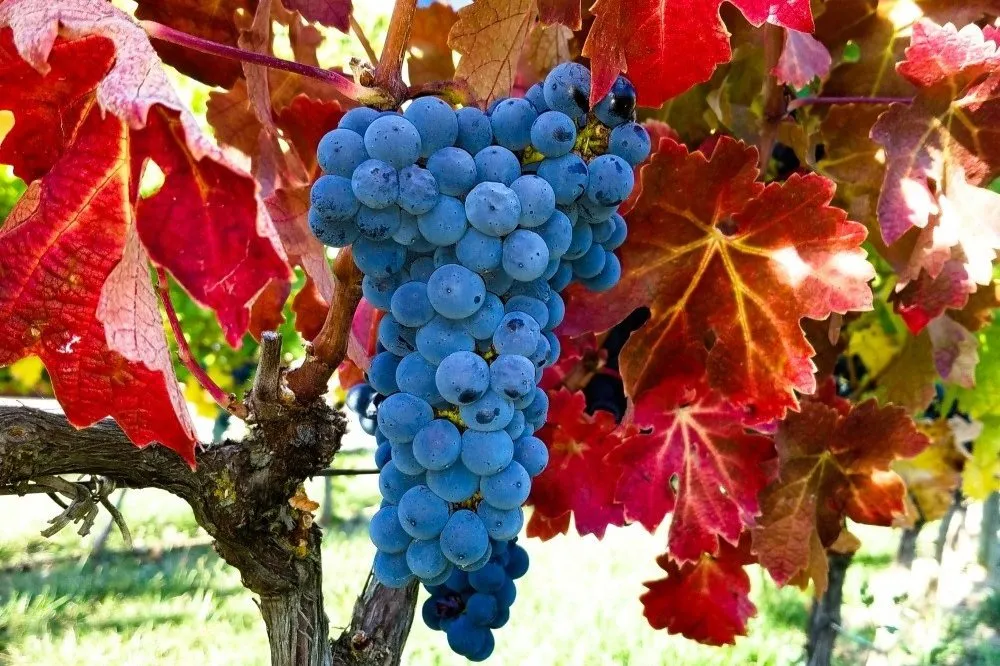
Rioja’s vineyards follow the Ebro through La Rioja, Álava and Navarra, in three zones, the Rioja Alta, the Rioja Alavesa and the Rioja Oriental, and in 1991 Rioja became Spain’s first Denominación de Origen Calificada. Tempranillo fills most of the vineyard. Haro’s station quarter holds what the regional tourist board calls the greatest concentration of century-old bodegas in the world, and across the river in Álava the walled hill town of Laguardia keeps its cellars beneath its streets. At the table: potatoes Rioja-style, lamb cutlets grilled over dried vine prunings, and cod.
We plan a day with a driver among the bodegas that receive guests, with a tasting at each; there is more on our wine tasting in Rioja page.
Jerez, Andalusia
Sherry is the wine of the country around Jerez de la Frontera, El Puerto de Santa María and Sanlúcar de Barrameda, the triangle at the heart of the D.O. Jerez-Xérès-Sherry. Palomino makes the dry wines, Pedro Ximénez and Moscatel the sweet. Fino ages under a veil of yeast, the flor, in the bodegas of Jerez and El Puerto, and manzanilla only in Sanlúcar; oloroso is fortified so that no flor grows, and ages in contact with the air.
Jerez calls itself the cradle of flamenco, and the bulería is its own. Some of its bodegas add a flamenco or a horse show to a tasting, or open their collections of paintings. We arrange a day among the bodegas with a guide, and an evening of flamenco in the city, on request; the sherry country is in our wine regions guide.
Oviedo, Asturias
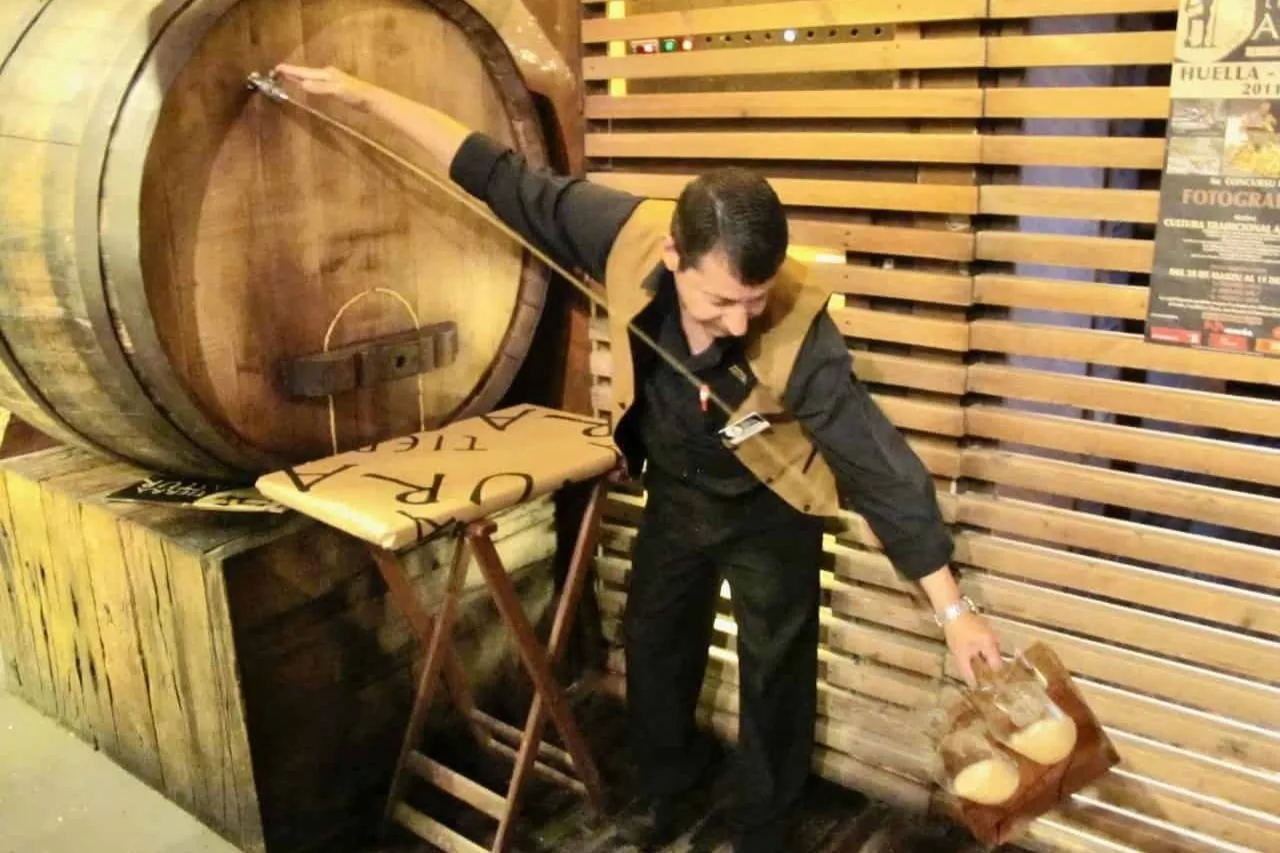
Natural cider is Asturias’ own drink, fermented from the must of the region’s native apples, and since 2024 Asturian cider culture has been on UNESCO’s list of the Intangible Cultural Heritage of Humanity. In the sidrería it is poured from a height, the arm stretched up, so that it breaks against the rim of the glass, and drunk a couple of fingers at a time, a culín. In Oviedo, the capital, the place for it is Calle Gascona, the Cider Boulevard, lined with cider houses.
With it come the dishes the region pairs it with: fabada, chorizo or clams cooked in cider, Cabrales cheese and a cachopo. The apples are picked in October and November, and the cider festivals fill the summer. A visit to a cider house with a tasting can be arranged on request.
Breakfast and sweets
Chocolate con churros in Madrid, and the pastry shops of Bilbao.
Madrid
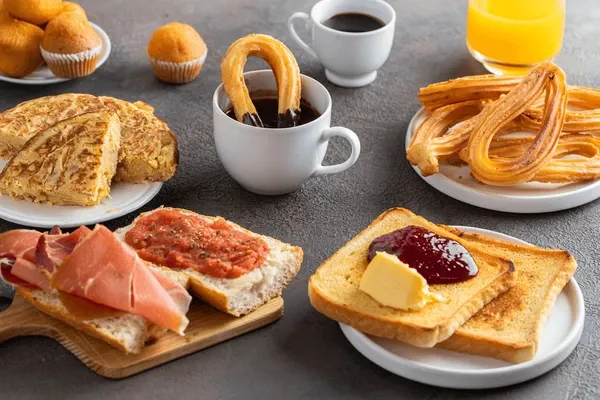
Nothing is more typical of Madrid, in the words of the city’s own tourism blog, than chocolate con churros: a cup of thick hot chocolate with fried dough to dip in it, the thin looped churros or the thicker porras, at breakfast or in the late afternoon. The classic address is the Chocolatería de San Ginés, in the passage beside the Puerta del Sol, which has served it since 1894.
The Basque Country
Bilbao’s pastry shops keep three sweets of their own, as Biscay’s tourist board tells them. The bollo de mantequilla came with two Swiss cousins who opened a pastry shop in the old town: they split the brioche of their country in half and filled it with butter. The pastel de arroz is puff pastry filled with cream, a recipe Basque fishermen brought home from the Philippines at the end of the 19th century. And the carolina, a pastry tartlet under a peak of meringue tipped with yolk and chocolate, began as a pastry cook’s present to his daughter Carolina about a century ago.
Take them in a pastry shop in the old town, for breakfast or in the afternoon. The burnt cheesecake the Basque Country is known for is San Sebastián’s, from the La Viña bar: see our San Sebastián food guide.
from $16,800 per person
from $15,300 per person
from $9,400 per person
from $9,800 per person
The wine regions worth a journey, from Rioja to the Priorat.
Coastal towns from the Costa Brava to Asturias, and the best beach at each.
The national parks, from the Picos de Europa to the volcanoes of the Canaries.
The cities at the table: our food guides to Seville, Barcelona, Madrid, San Sebastián and Mallorca; our culinary and wine tours across Spain; and all our Spain guides.
Tell us your dates and who is travelling. Everything else we can work out together.
Plan your Spain trip Our Spain page
Usually answered within one business day.