Luxury Spanish Honeymoon
from $16,800 per person
Spain guide
Six wine countries, from the Tempranillo of the Ebro and the Duero to the Albariño of the Galician coast.
By Ramin Jafari · Published · Facts checked
The wine regions we would travel for in Spain are Rioja and the Ribera del Duero for Tempranillo, the Priorat for Garnacha and Cariñena grown on slate, the Penedès for cava, the Rías Baixas for Albariño and Jerez for sherry. Rioja and the Priorat are Spain’s only two Denominaciones de Origen Calificadas. Each region has its own landscape and its own way with wine; this guide takes them one by one, with when to go and the wineries we would visit.
The reds
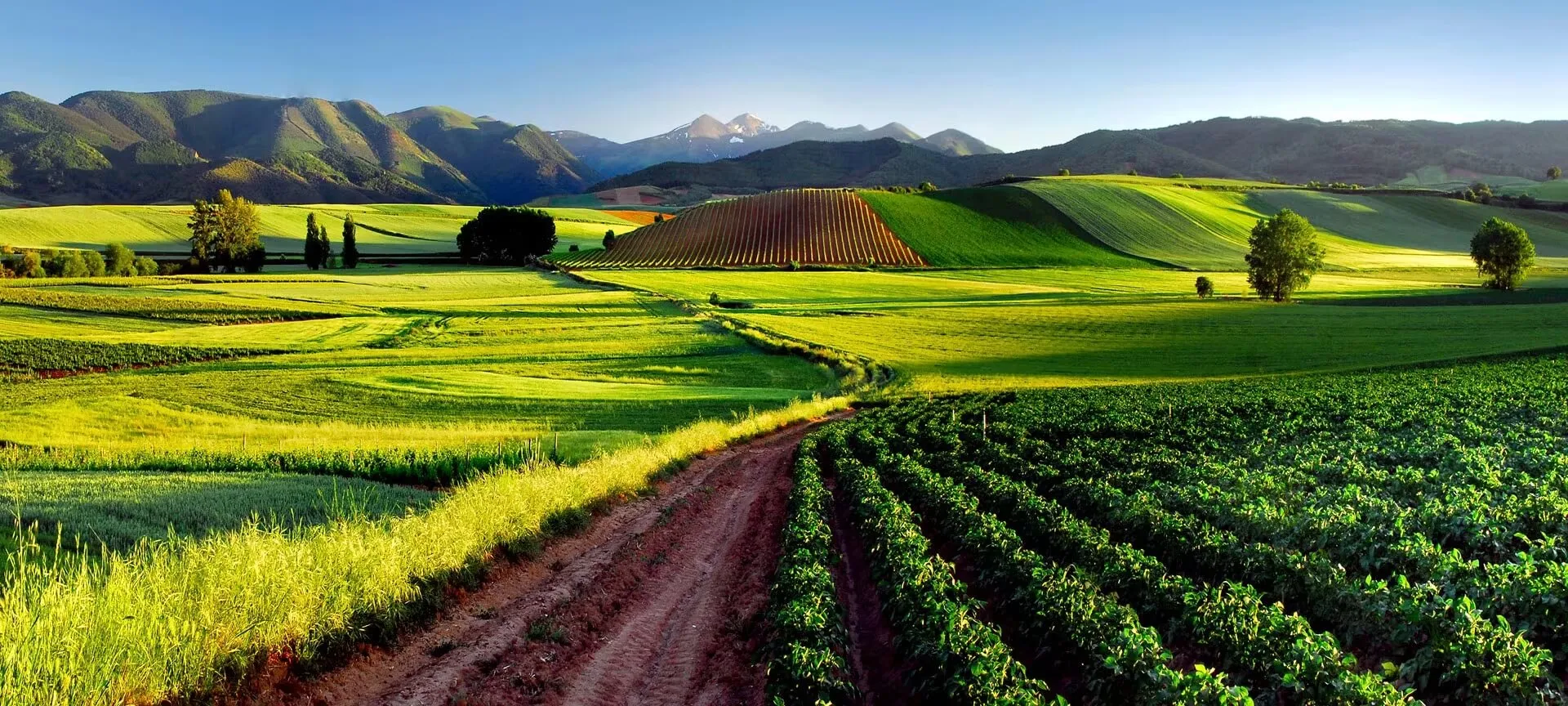
Tempranillo along the Ebro and the Duero, and Garnacha and Cariñena on the Priorat’s slate.
The Ebro valley
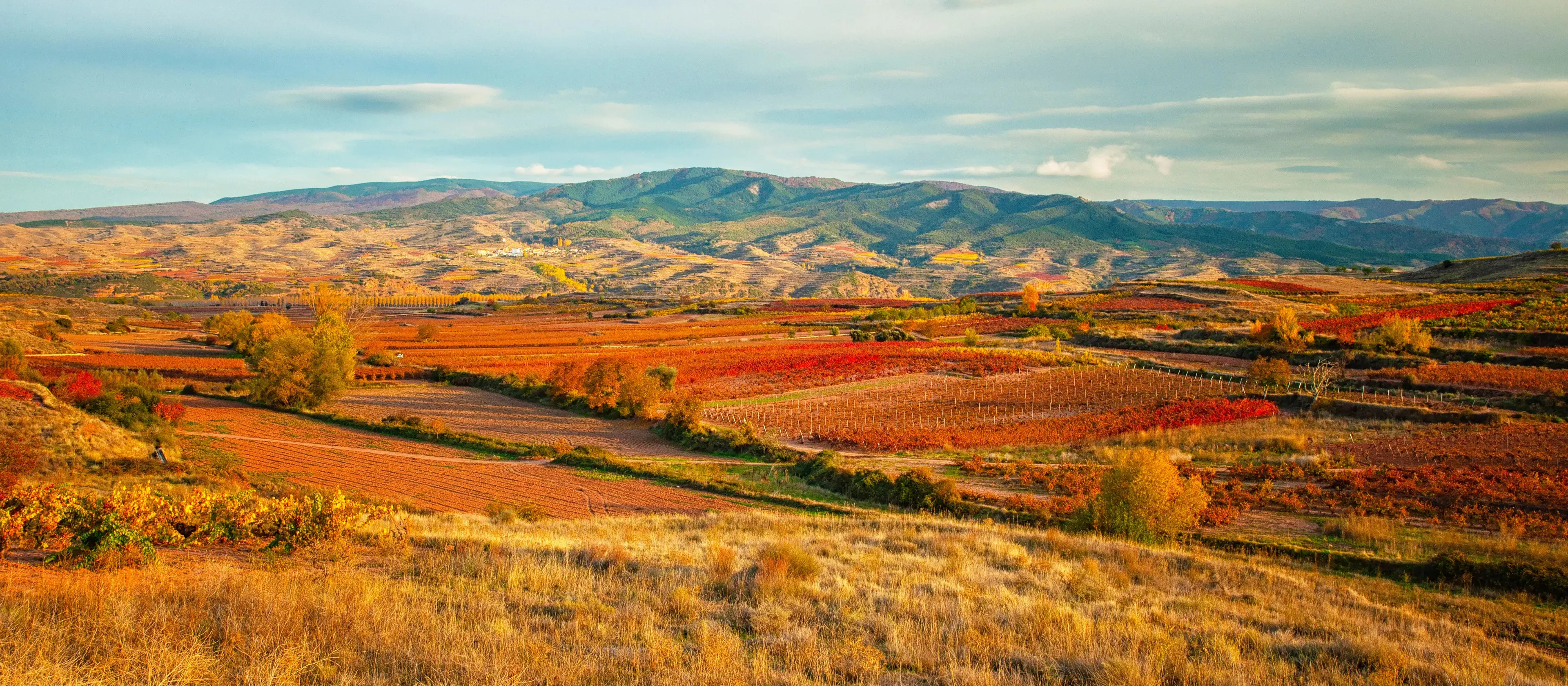
Rioja follows the Ebro across La Rioja, Álava and Navarra in three zones, the Rioja Alta, the Rioja Alavesa and the Rioja Oriental, and in 1991 became Spain’s first Denominación de Origen Calificada. Tempranillo fills most of the vineyard. Haro’s station quarter has what the regional tourist board calls the greatest concentration of century-old bodegas in the world.
We would visit Muga there, founded in 1932, which ferments in oak vats and has its own cooperage; Marqués de Riscal at Elciego, the bodega of 1858 beside the hotel Frank Gehry designed; and the Vivanco Museum of Wine Culture at Briones, with a garden of more than 220 vine varieties. The table is the region’s own: lamb cutlets grilled over vine prunings, and potatoes Rioja-style. More on our wine tasting in Rioja page.
Castilla y León
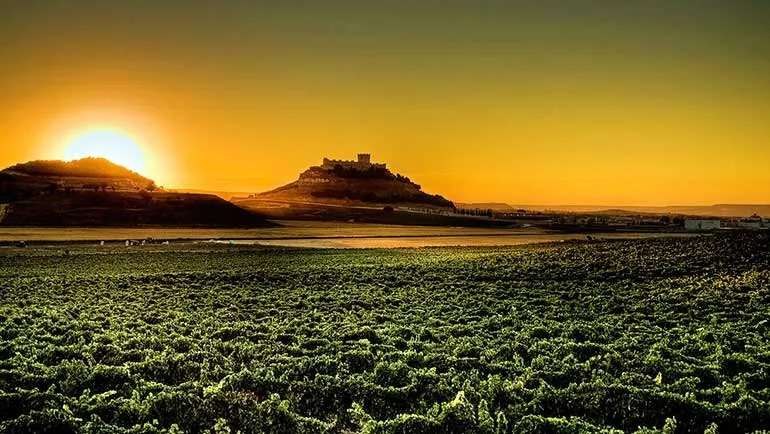
The Ribera del Duero grows its vines between 720 and more than 1,000 metres up on the plateau of Castile, in what its Consejo calls an extreme climate: dry summers, long hard winters, little rain, and temperatures that run from 42 °C down to −20 °C. Tempranillo, called Tinto Fino or Tinta del País here, makes its reds.
At Peñafiel, Protos, making wine since 1927, ages it in more than two kilometres of galleries dug into the hill beneath the castle, beside a winery of laminated-timber arches by Richard Rogers’ practice with Alonso Balaguer; the castle itself holds the provincial wine museum. Downriver at Valbuena de Duero, Vega Sicilia makes its Único only in exceptional years and ages it for at least ten.
Below the Montsant
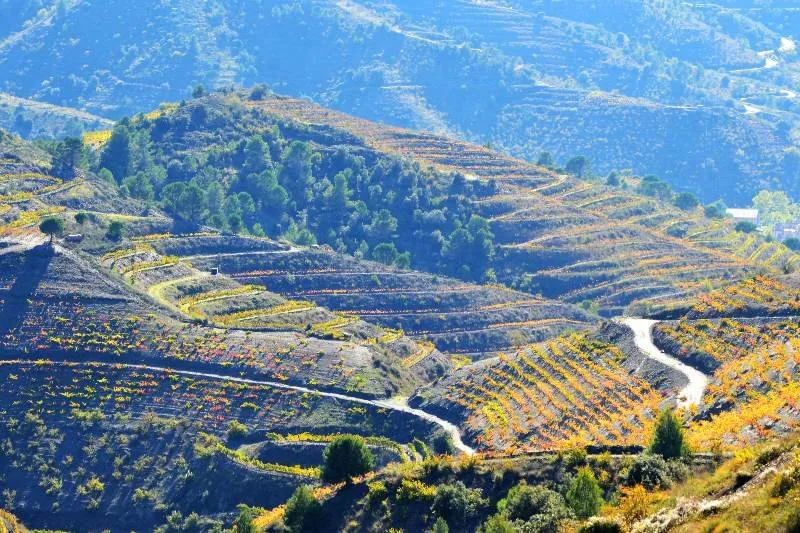
The Priorat’s vines climb slopes that average close to 30 per cent below the Montsant ridge, on llicorella, the local slate, where the Carthusians of Scala Dei made wine from the 12th century. Garnacha and Cariñena are its grapes. Catalonia made it a Denominació d’Origen Qualificada in 2000, one of Spain’s two, and most of the villages of the D.O. Montsant, a denomination of 2001, lie in the same comarca.
We would visit Cellers de Scala Dei beside the old charterhouse, which bottled the first Priorat wine in 1878; Clos Mogador at Gratallops, whose first vintage in 1989 was among those that, in its own words, turned the Priorat’s wines around; and Mas Doix at Poboleda, in the cooler part of the region, whose oldest vines on the slate were planted in 1902.
Sparkling wine from the country behind Barcelona, and white wine from the Galician coast.
Sant Sadurní d'Anoia
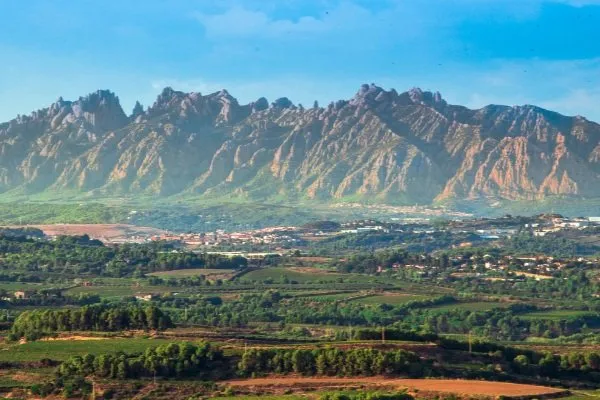
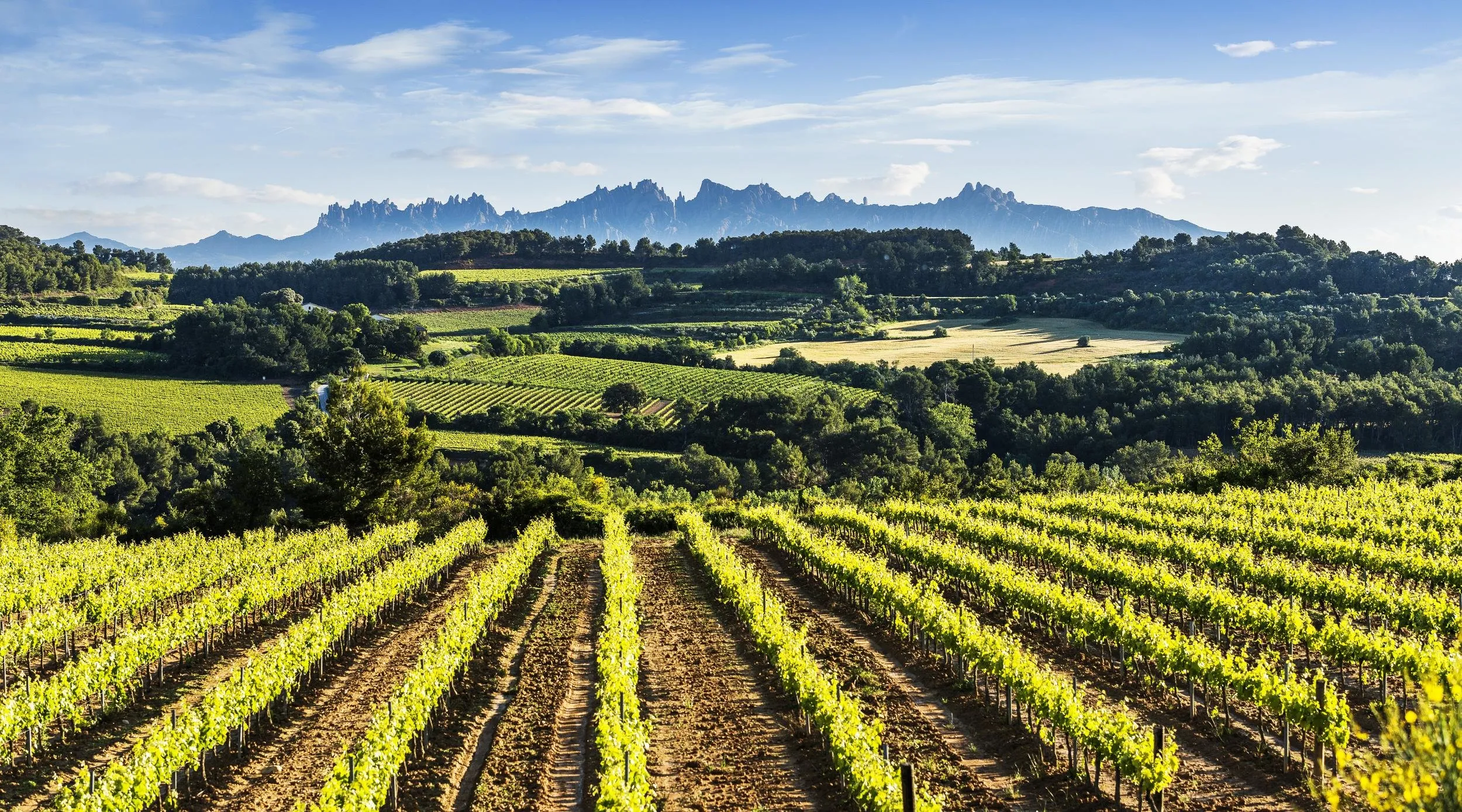
The Penedès runs from the sea up to about 800 metres beneath Montserrat, and Xarel·lo, native here, leads its whites. Cava began in the Penedès: the first bottles made by the traditional method, fermented a second time in the bottle, came out of Sant Sadurní d’Anoia in 1872, and the town is called the capital of cava. Cava is graded by its time on the lees, from nine months to more than three years, and Brut Nature is the driest, with no sugar added. Since the 2025 harvest every wine of the D.O. Penedès is organic.
In Sant Sadurní we would visit Codorníu, whose winery Josep Puig i Cadafalch enlarged from 1895, a monument since 1976, with its cellars toured by train; Freixenet, whose first cava dates from 1914; and Gramona, where long-aged Xarel·lo makes sparkling wines sold under the Corpinnat name rather than as cava. Vilafranca, the Penedès’ town, is 50 km from Barcelona, and the city’s tables are in our Barcelona food guide.
The Galician coast
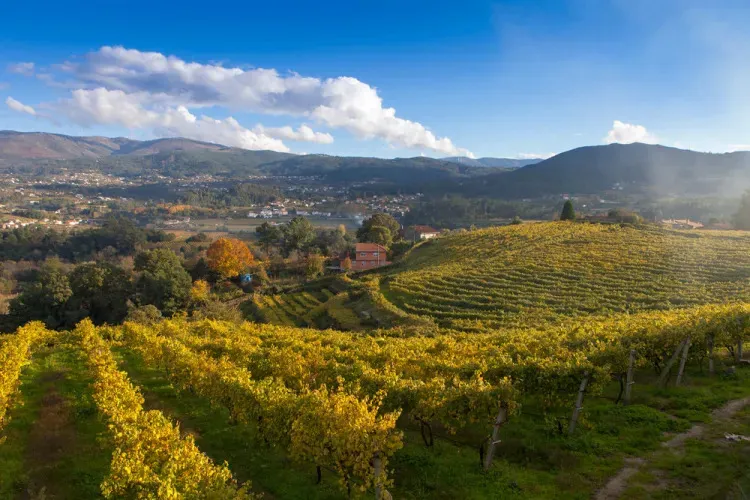
The Rías Baixas are the long sea inlets of south-western Galicia, and their wine country is Atlantic: mild, wet winters, some 1,600 mm of rain a year, and granite almost everywhere. Albariño makes up 96 per cent of the harvest, across five sub-zones from the Val do Salnés to O Rosal. Cambados holds the Fiesta del Albariño in the week of the first Sunday of August, as it has since 1953, a festival of international tourist interest.
We would visit Martín Códax at Cambados, founded by some fifty growers in 1985 and named after a 13th-century Galician troubadour; Mar de Frades at Meis, on a granite hill above the Ría de Arousa; and Pazo de Señoráns, also at Meis, for its 16th-century manor and gardens. With the wine, the clams and cockles gathered on the beaches of the rías.
Spain’s fortified wines, from the white chalk country around Jerez.
Andalusia
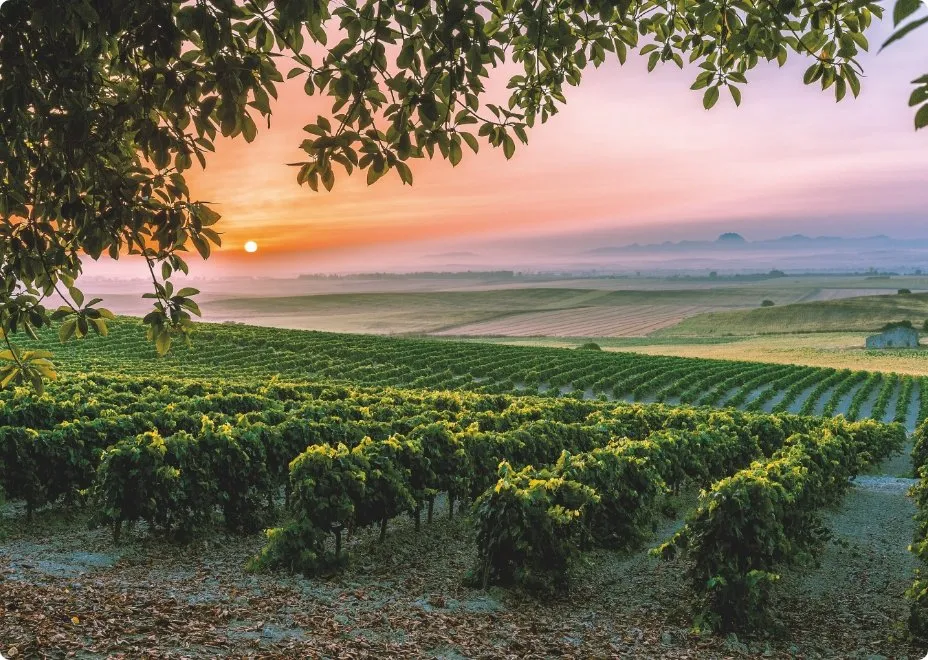
Sherry comes from the chalk country around Jerez de la Frontera, El Puerto de Santa María and Sanlúcar de Barrameda, the triangle at the heart of the D.O.: low hills of albariza, a limestone soil that turns a dazzling white in the dry months and stores the winter’s rain for the vines. Palomino makes the dry wines, Pedro Ximénez and Moscatel the sweet. Fino ages under a veil of yeast, the flor, and manzanilla the same way in Sanlúcar alone; amontillado begins under flor and finishes in contact with the air; oloroso is fortified so that no flor grows.
In Jerez we would visit González Byass, the house of Tío Pepe since 1835, whose La Concha bodega is attributed to Gustave Eiffel; Lustau, which makes its wines in all three towns of the triangle; and Bodegas Tradición, for its long-aged sherries and its collection of Spanish painting, Goya, Velázquez, Murillo and El Greco among it. Jerez’s horse fair, the Feria del Caballo, runs from 24 April to 1 May in 2027 (our Feria de Jerez guide), and the harvest from August into September. Sherry at the table is in our guide to Spanish gastronomy.
from $16,800 per person
from $13,200 per person
from $15,300 per person
from $27,200 per person
Spain's food and drink, region by region, from tapas to sherry.
The palaces, castles and fortresses worth the journey, region by region.
More to read: our wine travel in Spain page; the food guides to Seville, Madrid, San Sebastián and Mallorca; and all our Spain guides.
Tell us your dates and who is travelling. Everything else we can work out together.
Plan your Spain trip Our Spain page
Usually answered within one business day.