Spring March to May
Fresh and green: highs rise from about 16°C (61°F) in March to 22°C (72°F) in May, but this is the wettest season, with rain on seven or eight days in April and May.
Rioja guide
Century-old bodegas and architects' wineries, long lunches among the vines, and the harvest on both banks of the Ebro.
By Ramin Jafari · Facts checked
The best wine tasting in Rioja is in Haro’s station quarter, among its century-old bodegas, and north of the Ebro in the Rioja Alavesa, where Laguardia keeps its cellars beneath its streets, Santiago Calatrava and Iñaki Aspiazu built wineries among the vines, and Frank Gehry a hotel for Marqués de Riscal; the best time is the harvest, in September and October. We plan it privately, for a first taste of Spanish wine or a collector’s week: the wineries that receive guests, a tasting at each, a long lunch between them and a driver.
The region
Three zones, three bases, and one grape above the others.
Rioja follows the Ebro through La Rioja, Álava and Navarra in three zones, the Rioja Alta, the Rioja Alavesa and the Rioja Oriental, and in 1991 it became Spain’s first Denominación de Origen Calificada. Tempranillo fills most of the vineyard.
Three places hold most of what a wine traveller comes for. Haro, in the Rioja Alta, has around its railway station what the regional tourist board calls the greatest concentration of century-old bodegas in the world. Laguardia, across the river in the Rioja Alavesa, is a walled town on a hill with cellars beneath its streets, and the wineries of the architects are around it. Logroño, the capital of La Rioja, has the Calle Laurel, with a pincho bar at every door, and its Michelin-starred tables.
We plan the days privately, with a guide where you want one, a tasting at each winery and a driver between them. How Rioja compares with Spain’s other wine country is in our guide to the best wine regions of Spain.
The wineries
The old houses of Haro on one bank, the new buildings of the Rioja Alavesa on the other.
Haro, the Rioja Alta
Haro’s own saying makes it the capital of Rioja, and around its railway station stands what the regional tourist board calls the greatest concentration of century-old bodegas in the world. We would visit Muga, founded in 1932 in a two-century-old house in the quarter, which ferments in oak vats and keeps its own cooperage, and ends its visit with a tasting. At Briones, 9 km away, the Vivanco Museum of Wine Culture tells the history of wine over more than 4,000 m², with a garden of more than 220 vine varieties.
Elciego, the Rioja Alavesa

The bodega of 1858 at Elciego, its buildings by Ricardo Bellsola, stands beside the hotel Frank Gehry designed for it in ribbons of titanium. Its visit takes in the century-old cellars and the vineyard, with a tasting; the hotel is one of the two we feature in Rioja.
Laguardia, the Rioja Alavesa
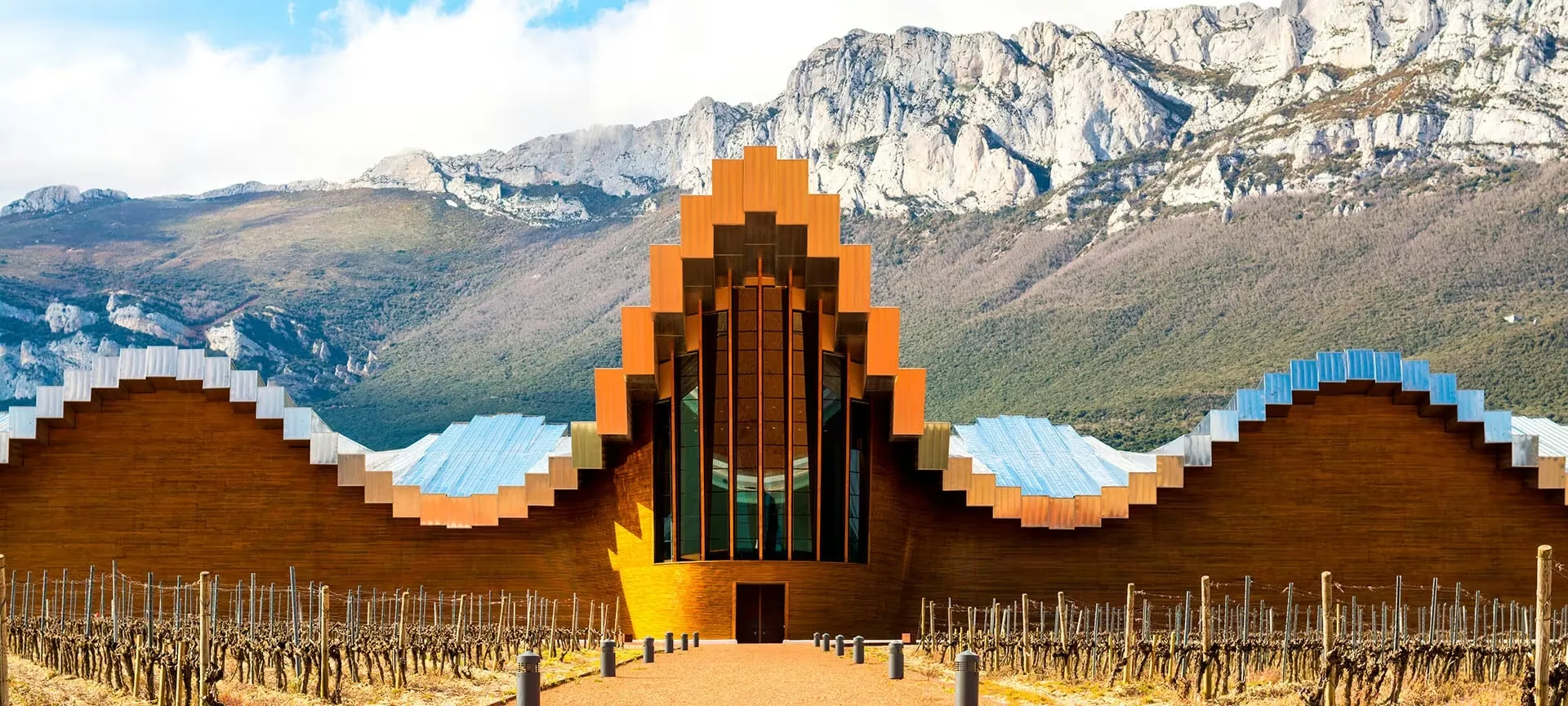
Santiago Calatrava’s winery stands among the vines below the Sierra de Cantabria, outside Laguardia: a long timber building under a rippling steel roof, the cover of this guide. It receives visitors, and we arrange the visit and the tasting.
Samaniego, the Rioja Alavesa
Iñaki Aspiazu built Baigorri in concrete, glass and steel to make wine by gravity, its floors going down below ground so that the wine moves from one stage to the next of its own weight. The guided visit goes down through them and ends with a tasting, and the bar looks across to the Sierra de Cantabria and the village of Samaniego.
The table
A Rioja day turns on its lunch: at a winery’s own table, among the vines, or along the Calle Laurel.
Outside Logroño
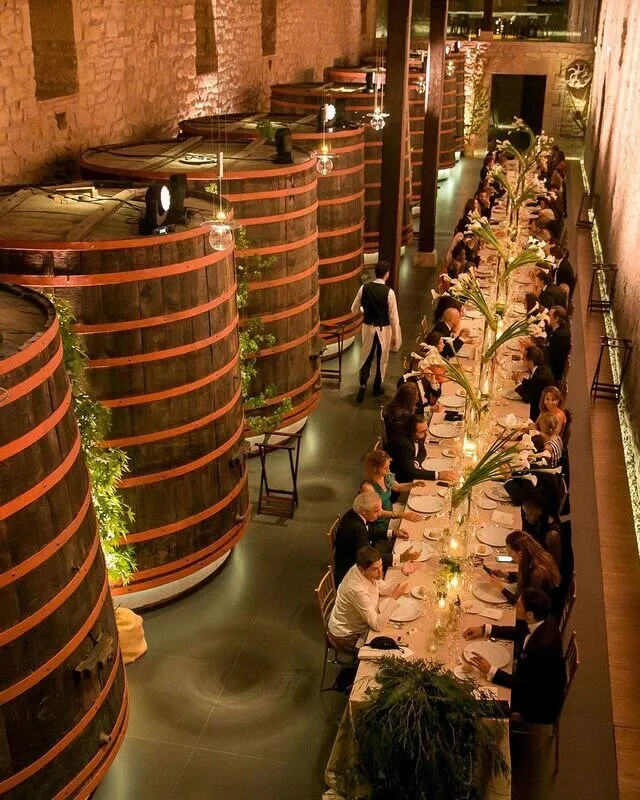
Five kilometres from Logroño, the Castillo de Ygay is the seat of Marqués de Murrieta and has been a museum since 2019. Its visit ends with a tasting of three of its wines, or with lunch, a menu paired with four of them; a private visit is quoted on request.
Logroño
Logroño’s most visited street has a bar at every door, each with its own pincho and a Rioja to go with it; the Calle San Juan is quieter and more the locals’ own. For a longer evening, we reserve a tasting menu at one of the city’s Michelin-starred tables.
Baigorri serves a tasting menu of the region’s produce with its own wines, looking over the vineyards and the barrel hall. Among the vines themselves we arrange a picnic and a tasting with a sommelier, lunch with the winemaker, or a cooking class in the region’s own dishes: potatoes Rioja-style, and lamb cutlets grilled over dried vine prunings, on request and subject to availability. Tell us about any dietary needs and we tell every kitchen ahead.
When to go
Wine country has something in every season; the harvest is the one to plan first.
At harvest time we arrange a walk through the vines with a viticulturist, on request. In Logroño the harvest festival of San Mateo reaches its height on the saint’s day, 21 September, when the first grapes are trodden and the first must is offered to the Virgen de Valvanera, La Rioja’s patroness; later in the week the city holds a public treading of its own. It is the season everyone wants, so we reserve the hotels for it as soon as your dates are set.
Fresh and green: highs rise from about 16°C (61°F) in March to 22°C (72°F) in May, but this is the wettest season, with rain on seven or eight days in April and May.
Warm, dry and bright: highs of 27°C (81°F) in June and 30°C (86°F) in July and August, nights near 16°C (61°F), and rain on three to five days a month.
EventsHaro's Batalla del Vino each 29 June, the feast of San Pedro: a wine fight on the Riscos de Bilibio, of national tourist interest.
Harvest time, which generally runs through September and October: highs ease from 26°C (79°F) to 20°C (68°F), and the rain returns in October.
Cold and often grey: highs of 10–14°C (50–57°F), frost on nine or ten nights in January, and fog on six to eight days a month from November to January.
Region by region across Spain, our best time to visit Spain guide.
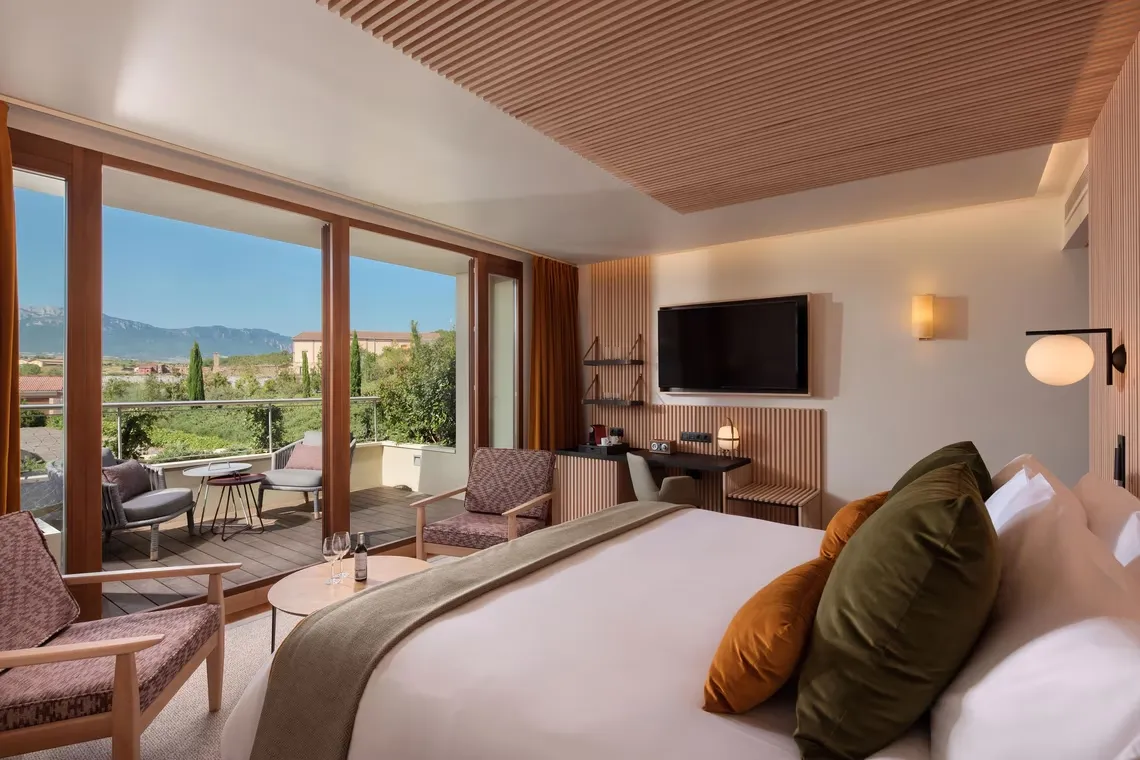
Both hotels we feature stand among the vineyards of the Rioja Alavesa, north of the Ebro, and Marqués de Riscal has a vinotherapy spa.
Elciego
Sixty rooms in and beside Frank Gehry's ribboned building, in the grounds of the Marqués de Riscal winery at Elciego.
Villabuena de Álava
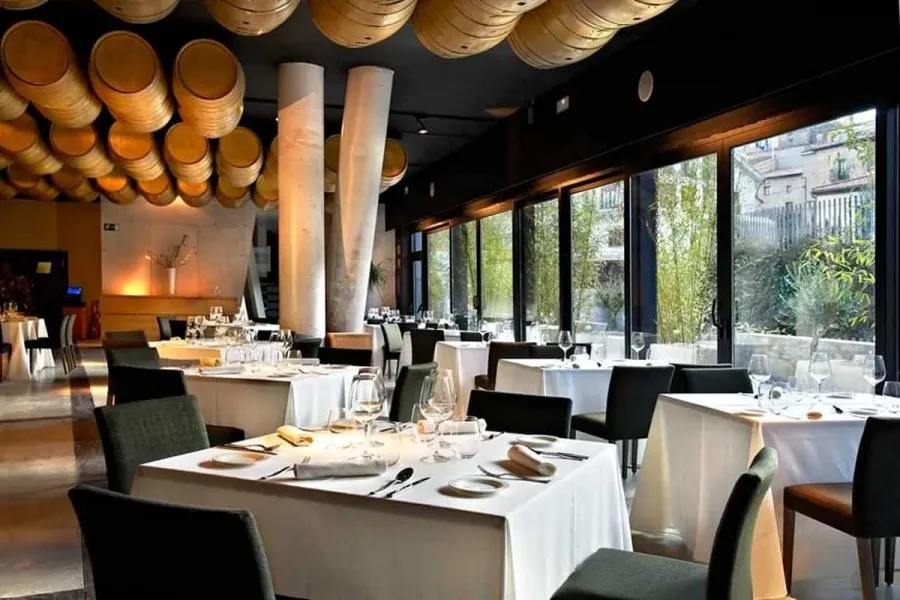
A four-star house of 33 rooms in stacked concrete cubes on the church square of Villabuena de Álava, with its cellar in an old underground passage.
The two are compared, with the map, in where to stay in Rioja, and we arrange other houses to suit you as well; our hotels across the country are in Spain’s luxury hotels.
Three days
A starting point, not a programme: every trip is planned around who is travelling.
Day 1
Arrival
From Bilbao’s airport, about 100 km from Haro, or by train to Logroño, with a private transfer to your hotel.
Afternoon
A tasting at one of Haro’s century-old bodegas.
Evening
Dinner at your hotel, with the wines of the region.
Day 2
Morning
Two of the architects’ wineries of the Rioja Alavesa, with a tasting at each.
Lunch
Lunch among the vines.
Afternoon
A guided walk through Laguardia’s walled old town, and a tasting at sunset if you wish.
Day 3
Morning
A walk in the vineyards, or the harvest itself in September and October.
Afternoon
Time at the spa, then departure, or the drive to your next stop.
Further. San Sebastián is about 145 km from Haro and Bilbao under 100, so the Basque Country and its tables follow naturally; the Duero Valley, a second wine country, is about 190 km south-west; long-distance trains run from Logroño to Madrid and Barcelona; and the Canary Islands are there for the sea after the vines. Our Spain’s Culinary Heritage itinerary spends three nights in La Rioja on its way across Spain.
from $16,800 per person

from $15,300 per person
The wine regions worth a journey, from Rioja to the Priorat.
Spain's food and drink, region by region, from tapas to sherry.
Where to taste Spain, its wine regions, and sample culinary itineraries.
Across Spain: planning a trip to Spain, wine travel in Spain and private flamenco in Seville; or all our Spain guides.
Tell us your dates and who is travelling. Everything else we can work out together.
Plan your Rioja trip Our Rioja page
Usually answered within one business day.